By Mwanamkasy Mahendo
Tanzania’s economic expansion is opening new avenues for wealth creation, yet a persistent gap remains between rising incomes and effective investment.
For many households, the challenge is no longer earning – but converting savings into sustainable, long-term wealth through diversified and professionally managed instruments.
This gap is increasingly being addressed by the emergence of structured investment solutions, ranging from collective investment schemes and pension products to wealth management and capital markets participation. As the country’s financial ecosystem matures, these instruments are becoming central to both personal financial security and broader economic transformation.
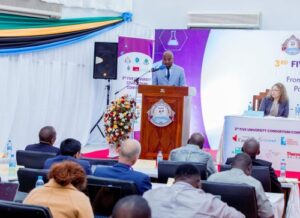
According to Azmina Mohamed (pictured above), Marketing Officer at African Pension Fund Limited (APeF), Tanzania’s macroeconomic stability – characterised by consistent GDP growth, controlled inflation, and improving investor confidence – is creating fertile ground for a new investment culture.
“This is a defining moment. As Tanzania consolidates its position among East Africa’s fastest-growing economies, the demand for accessible, structured and innovative financial solutions is accelerating,” she observes.
From savings to structured wealth
Historically, a large share of Tanzanian savings has remained informal or locked in low-yield instruments, limiting wealth accumulation. However, recent trends suggest a gradual but significant shift.
The strong uptake of the Ziada insurance-linked unit trust scheme, managed by APeF, offers a compelling case in point. The fund surpassed expectations with a 138 percent subscription rate, mobilising over TSh 13.8 billion against a TSh 10 billion target.
Beyond its headline figures, the oversubscription reflects a deeper behavioural change. Tanzanians are increasingly recognising the value of formal investment vehicles that offer professional management, risk diversification, and potentially higher returns compared to traditional savings methods.
Deepening financial markets
This transition is taking place alongside the gradual expansion of Tanzania’s capital markets, anchored by institutions such as the Dar es Salaam Stock Exchange.
While participation levels remain relatively modest compared to more mature markets, growing interest in unit trusts and collective investment schemes is widening access to financial assets.
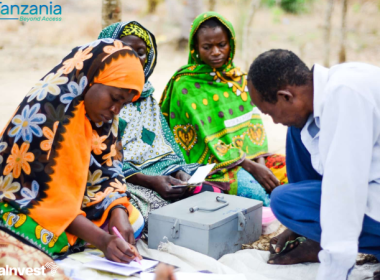
Structured investments allow individuals to pool resources, lowering entry barriers and enabling participation in a broader range of opportunities – from equities and bonds to real estate-linked assets. This democratisation of investment is particularly significant in a market where retail investors have historically been underrepresented.
At the same time, pension sector reforms and the expansion of private fund managers are reinforcing the shift towards long-term financial planning. These developments are critical in a country with a young and rapidly urbanising population, where future income security is becoming an increasingly pressing concern.
Economic multiplier effects
The implications extend far beyond individual portfolios. Increased uptake of structured investments plays a pivotal role in mobilising domestic capital – an essential ingredient for financing Tanzania’s development ambitions.
By channelling savings into productive sectors, these instruments support infrastructure development, industrialisation, and enterprise growth. They also reduce dependence on external financing, enhancing economic sovereignty and resilience.
Furthermore, deeper financial markets improve liquidity and price discovery, making the economy more efficient and attractive to both domestic and foreign investors.
Financial inclusion and literacy
However, unlocking the full potential of structured investments requires more than product availability. Financial literacy remains a critical constraint.
Many Tanzanians – particularly within the emerging middle class—continue to prioritise consumption and lifestyle spending over long-term financial planning. While awareness is improving, there remains a need for sustained education on risk, returns, and the benefits of disciplined investing.
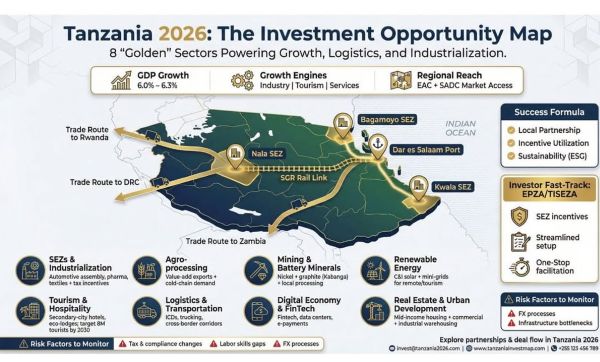
Institutions such as APeF are increasingly stepping into this role, not only as service providers but also as educators. By simplifying investment processes and offering advisory services, they are helping bridge the knowledge gap and build trust in formal financial systems.
The road ahead
Looking forward, the growth of structured investment solutions is likely to accelerate, driven by digital financial platforms, regulatory reforms, and expanding middle-class incomes.
Technology, in particular, is expected to play a transformative role by lowering transaction costs, improving access, and enabling real-time engagement with financial products. Mobile-based investment platforms could prove especially impactful in extending services beyond urban centres.
As Tanzania advances towards its long-term development ambitions, including Vision 2050, structured investments will be a critical pillar in shaping an inclusive and self-reliant economy. The shift underway is subtle but profound. Tanzanians are moving from passive savers to active investors – participants in a financial system that not only preserves wealth but grows it. In doing so, they are not just securing their own futures, but also contributing to the country’s broader economic transformation.