By Peter Nyanje, Dodoma
When Tanzania completed major projects such as the Standard Gauge Railway (SGR), the Julius Nyerere Hydropower Project and the Kigongo-Busisi Bridge, the country solved one of its biggest development challenges: infrastructure.
Now the government wants to answer a far more difficult question.
What comes next?
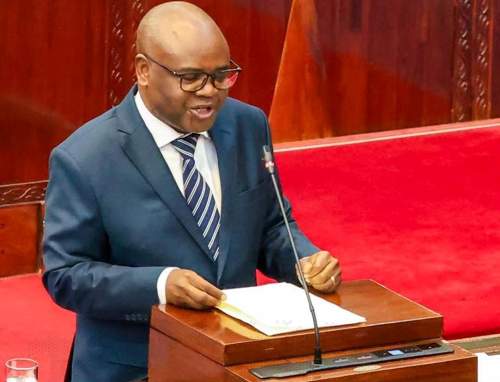
Presenting the country’s economic blueprint in Parliament on Thursday, Minister of State in the President’s Office for Planning and Investment, Prof. Kitila Mkumbo, unveiled a new generation of flagship development programmes that could define Tanzania’s industrial future for decades.
Unlike previous investments that focused largely on creating enabling infrastructure, the new projects are designed to build entire industrial ecosystems around mining, logistics, manufacturing, agriculture, energy and urban development.
“This is the first phase of implementing Vision 2050,” Prof. Mkumbo told Parliament as he outlined seven flagship programmes that will form the backbone of the country’s Fourth Five-Year Development Plan.
Together, the projects represent Tanzania’s most ambitious attempt yet to move beyond being a supplier of raw materials and become a regional processing, logistics and industrial hub.
The industrialisation question
For years, Tanzania’s economic growth has been supported by construction, transport, telecommunications and natural resource extraction.
The next stage of development, however, requires something different.
It requires factories instead of raw exports.
Processing instead of extraction.
Industrial clusters instead of isolated projects.
Government planners believe the answer lies in developing interconnected economic zones capable of attracting billions of dollars in private capital while creating large numbers of skilled jobs.
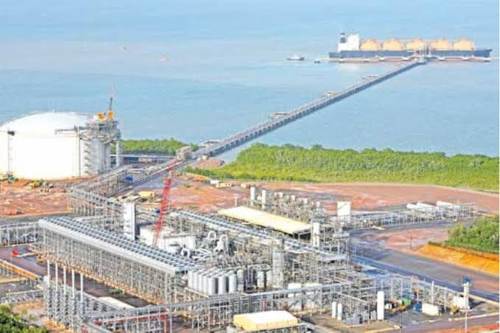
The projects are expected to support the government’s goal of accelerating economic growth from 5.9 per cent in 2025 to 6.3 per cent in 2026. Mining, one of the fastest-growing sectors of the economy, expanded by 9.4 per cent last year and is expected to play a central role in this transformation.
Bagamoyo’s second chance
Perhaps the most intriguing project is the proposed Bagamoyo Marine Eco-City and Integrated Transport Corridor.
For more than a decade, Bagamoyo has been associated with plans for a mega-port capable of competing with major logistics hubs across the Indian Ocean.
While earlier proposals stalled, the new concept goes much further than a port.
Government planners envision an integrated logistics, manufacturing and urban development ecosystem combining transport infrastructure, industrial activities and modern urban planning.
The objective is to create a gateway capable of serving not only Tanzania but also neighbouring countries including Rwanda, Burundi, Uganda, Zambia and the Democratic Republic of Congo.
If realised, Bagamoyo could emerge as one of East Africa’s most significant logistics and industrial centres.
Dodoma’s rare earth ambition
While Bagamoyo is focused on trade, Dodoma is being positioned at the centre of a global race for critical minerals.
Prof. Mkumbo told the Parliament that the government plans to establish a Rare Earth Elements and Mineral Processing Hub in the capital city, reflecting rapidly growing global demand for minerals used in electric vehicles, batteries, renewable energy technologies and advanced electronics.
Across the world, governments and investors are scrambling to secure supplies of rare earth minerals, which have become strategically important to the energy transition.
For Tanzania, the opportunity extends beyond mining itself.
“The goal is to process minerals locally before export, capturing more value within the domestic economy and creating skilled industrial jobs.
That approach aligns with the broader national strategy of increasing local value addition across all extractive industries,” he emphasised.
LNG and Lindi’s long wait
Few projects have generated as much anticipation as Tanzania’s liquefied natural gas project.
For years, discussions surrounding LNG development have centred on the enormous gas reserves discovered offshore in southern Tanzania.
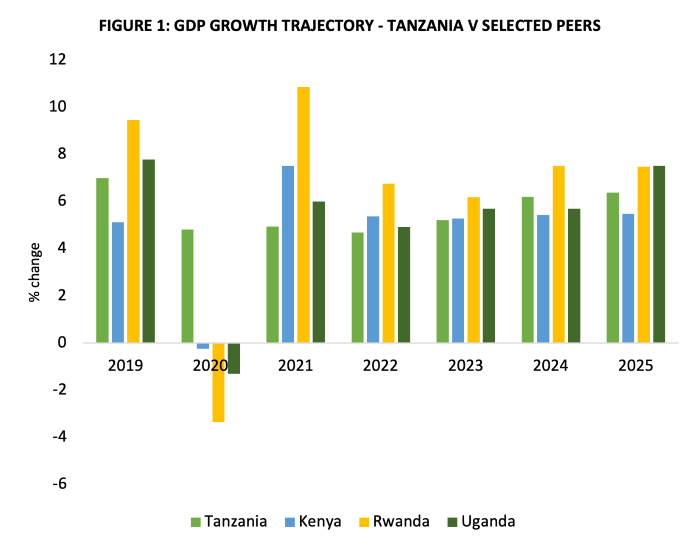
Now the government is once again placing the LNG project at the centre of its industrial strategy.
The Lindi LNG programme consists of multiple interconnected projects intended to transform Tanzania into a major energy-processing and exporting nation.
If completed, LNG could become one of the country’s largest sources of export earnings while simultaneously supplying reliable energy to support industrialisation.
At a time when energy security has become a strategic concern globally, Tanzania’s gas reserves represent a potentially powerful competitive advantage.
Mchuchuma and Liganga return
Another familiar name has reappeared in Tanzania’s industrial plans.
The Mchuchuma coal and Liganga iron ore complex has been discussed for decades as one of the country’s most important industrial opportunities.
Successive governments have viewed the project as the foundation for a domestic steel industry capable of supplying construction, manufacturing and infrastructure sectors.
Under the new development plan, Prof. Mkumbo said, Mchuchuma and Liganga are once again being prioritised through a cluster of interconnected projects designed to unlock coal, iron ore and industrial processing capacity.
For manufacturers, the implications could be significant.
A domestic steel industry would reduce import dependence, strengthen industrial supply chains and support broader manufacturing growth.
Agriculture’s industrial moment
The industrialisation agenda extends beyond mining and energy.
The government has also identified a National Irrigation and Agro-Processing Programme as a flagship initiative.
The programme aims to combine irrigation expansion with investment in agricultural processing facilities, helping farmers move up the value chain while reducing post-harvest losses.
For a country where agriculture remains the largest employer, this may prove one of the most consequential investments in the entire development strategy.
A different kind of development
What makes these projects unique is that they are not being presented as standalone investments.
Instead, government planners describe them as interconnected development ecosystems designed to generate synergies between infrastructure, industry, logistics, energy and urban growth.
The approach reflects a broader shift in Tanzania’s development philosophy.
The first phase of economic transformation focused on building roads, railways, power stations and ports.
The next phase is about using that infrastructure to create industries.
According to Prof. Mkumbo, the new flagship programmes will serve as the foundation for implementing Vision 2050 and transforming Tanzania into a more competitive and industrialised economy.
Whether it is rare earth processing in Dodoma, LNG in Lindi, steel production in Liganga or logistics in Bagamoyo, the message from government is increasingly clear.
Tanzania’s next development chapter will not be written in kilometres of roads or megawatts of electricity. It will be written in factories, processing plants and industrial corridors.