

By Business Insider Reporter
Exchange-traded funds (ETFs) are gaining prominence at the Dar es Salaam Stock Exchange (DSE), offering Tanzanians new ways to invest in financial markets through diversified portfolios rather than relying solely on individual company shares.
The emerging investment segment has recorded remarkable growth this year, driven partly by demand for exposure to large companies across East Africa. Its expansion signals growing interest in accessible investment products and highlights the potential of capital markets to mobilise domestic savings.
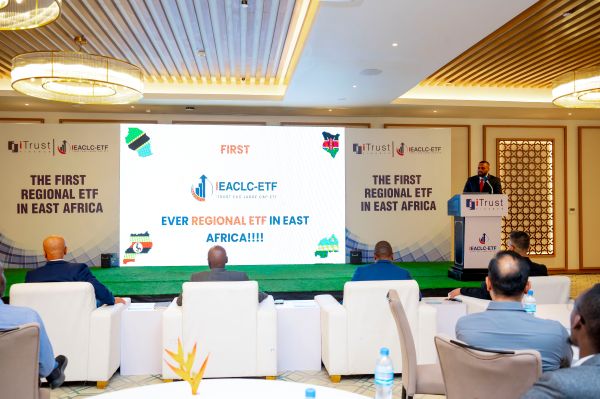
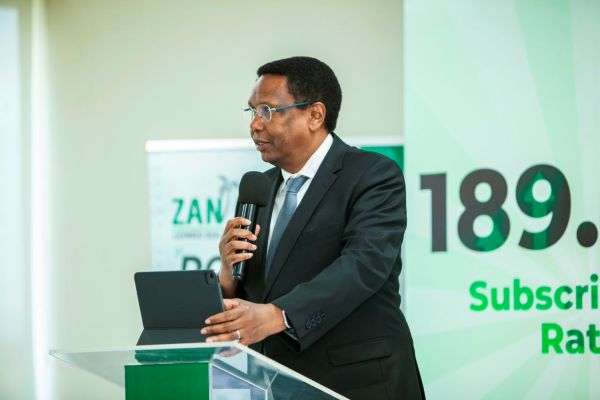
Isaac Lubeja of Zan Securities says the value of ETFs at the DSE has grown more than elevenfold, from TSh21.6 billion to TSh238.9 billion, following the listing of the iTrust EAC Large Cap ETF in February 2026. The fund attracted subscriptions equivalent to 540 per cent of its initial TSh10 billion offer.
Trading activity has also strengthened, with ETF turnover reaching over TSh28 billion in the third quarter, more than double the about TSh11.8 billion recorded in the second quarter.
“During the third quarter ended September 30, ETFs recorded turnover of TSh28.7 billion, with 23.36 million units traded during the period. ETFs provide access to diversified portfolios through a single investment instrument,” the CEO of the stock mart, Peter Nalitolela told Business Insider in a recent interview.
Introduced in October 2025, ETFs are becoming an important addition to Tanzania’s investment landscape. However, understanding their significance requires looking beyond headline growth to how they work and the opportunities and risks they present.
Understanding ETFs and their importance
An ETF is an investment fund whose units are listed and traded on a stock exchange, much like ordinary company shares. It pools investors’ money to hold a portfolio of securities or other eligible assets according to a defined investment strategy.
Rather than buying shares in several companies individually, an investor can purchase units in an ETF and gain exposure to its underlying portfolio. Depending on the fund, investments may include equities, government and corporate bonds, or money-market instruments.
The principal advantage is diversification. Spreading investments across multiple holdings reduces dependence on the performance of a single company. ETFs can also simplify access to investment opportunities that might otherwise require more capital, time and expertise to assemble independently.
Their exchange listing allows investors to buy and sell units during trading hours, subject to market liquidity. Nevertheless, ETFs are not risk-free. Prices can fall, trading may be limited, and management fees and transaction costs can reduce returns. Diversification cannot eliminate losses arising from wider market declines.
Three products, expanding opportunities
The DSE’s ETF market has evolved from domestic investment exposure towards regional and multi-asset opportunities.
The Vertex International Securities ETF, introduced in October 2025, was the first product, offering exposure to a diversified portfolio of domestic shares. Its initial public offer attracted subscriptions exceeding the amount sought.
The iTrust EAC Large Cap ETF, listed in February 2026, expanded investors’ options by providing exposure to large companies across eligible East African markets. Its offer attracted applications equivalent to 540 percent of the TSh10 billion target, indicating substantial demand for regional investment opportunities.
In August 2026, Zan Securities introduced the Zan Timiza ETF, using a fund-of-funds structure to provide diversified exposure through underlying collective investment schemes. Depending on the underlying funds, this can include equities, government and corporate bonds, and money-market instruments.
Together, these products give investors different approaches to diversification, although the actual benefits depend on each fund’s holdings, investment strategy, costs and risk profile.
Growth figures need careful interpretation
By September 30, 2026, ETF market capitalisation had reached TSh238.89 billion, up from TSh199.47 billion at the end of August. September turnover alone stood at TSh11.93 billion.
These figures demonstrate expansion, but market capitalisation and turnover measure different things. Market capitalisation reflects the value of outstanding ETF units at prevailing prices, while turnover measures the value traded during a particular period.
Neither figure, on its own, establishes the returns earned by investors. Increased turnover also does not necessarily represent an equivalent inflow of new capital because the same units can change hands repeatedly.
Trading remains concentrated in the iTrust EAC Large Cap ETF, which accounted for about 96 percent of ETF turnover in September, according to Kadoo Securities Research. This concentration suggests that activity has yet to spread evenly across the available products.
Retail participation and the challenges ahead
Individual investors accounted for 99.44 percent of participation in the iTrust ETF offer, highlighting the potential of these products to broaden access to capital markets.
ETFs can help individuals access diversified portfolios without selecting and managing numerous securities independently. Regional funds also provide exposure to investment opportunities beyond Tanzania through a single listed instrument.
However, strong subscription figures do not establish whether investors remain active or whether participation will be sustained. Long-term success depends on converting initial enthusiasm into informed investment.
Liquidity is a major challenge. Limited trading can widen the difference between buying and selling prices or make large transactions difficult to execute without affecting market prices. ETF units may also trade above or below the net asset value of their underlying holdings.
Regional investments introduce additional risks, including currency movements, differences in economic conditions and company performance. Investors therefore need to examine each fund’s objectives, holdings, fees and risk disclosures before committing their money.
Investor education will be equally important. Fund managers, securities firms, the exchange and regulators must support transparency and help investors understand that ETFs are investment instruments, not guaranteed savings products.
Supporting capital-market development
As Tanzania pursues its long-term development ambitions under Dira 2050, ETFs offer another channel for connecting domestic savings with financial markets and regional business opportunities. Analysts say that tTheir contribution should not be measured by market capitalisation alone. Sustained investor participation, improved liquidity, informed decision-making and access to transparent investment products will ultimately determine whether this rapidly growing segment becomes a durable avenue for wealth creation and deeper capital-market development.