
By Correspondent Asia Singano, Dodoma
The government has outlined measures to ensure economic growth translates into higher household incomes, employment opportunities and improved access to social services, while tightening controls on gambling and reviewing the framework governing unclaimed financial assets.
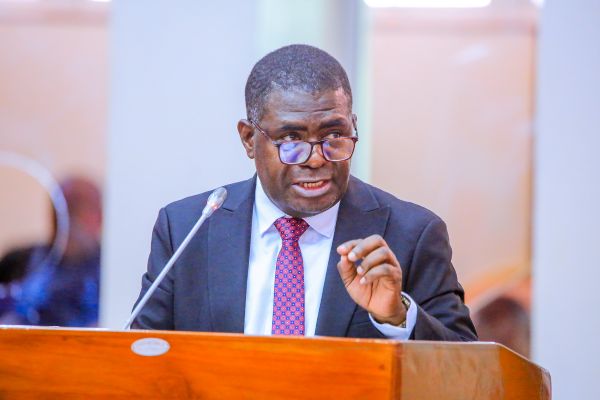
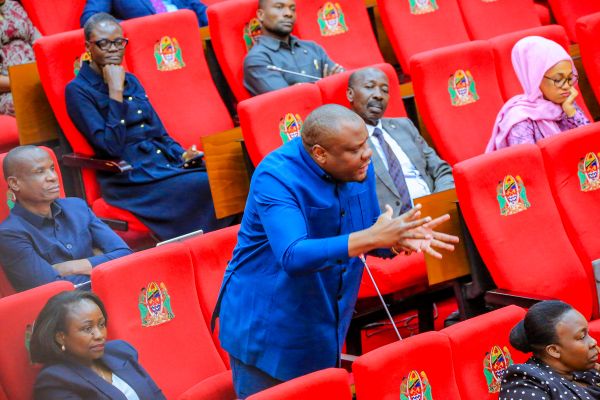
Deputy Finance Minister Mshamu Ali Munde (pictured above), told the Parliament that economy continued to expand in 2025 and was expected to strengthen further in 2026. However, a key economic question remains: how can this growth deliver tangible improvements in people’s livelihoods?
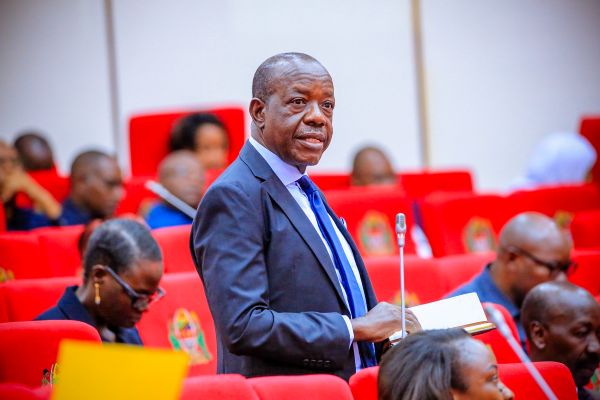
Munde was responding to a question from Kigoma Urban MP Clayton Revocatus Chipando, who wanted to know how the government intended to ensure that economic growth was reflected in people’s incomes.
He said the economy grew by 5.9 percent in 2025, up from 5.6 percent in 2024, and was projected to reach 6.3 per cent in 2026.
“Following these efforts, the country’s economic growth continued to improve, reaching 5.9 percent in 2025, compared with 5.6 percent in 2024, and is expected to reach 6.3 percent in 2026,” Munde said.
Turning growth into household income
The government has identified several measures intended to boost productive activity and expand economic opportunities. These include increasing access to credit for the private sector, investing in economic and social infrastructure, providing subsidies for fertilisers and agricultural inputs, and creating a more favourable environment for private investment and business.
From a business perspective, these measures could help reduce some of the constraints facing farmers, manufacturers and entrepreneurs. Access to credit can enable businesses to expand, while improved infrastructure can lower transport costs and make markets more accessible.
However, growth in gross domestic product does not automatically mean that every citizen benefits equally. The impact also depends on access to decent-paying jobs, opportunities for small businesses, productivity and households’ ability to meet the cost of living.
Munde said citizens could benefit by participating in productive and service-sector activities, including agriculture, construction, manufacturing and mining, as well as social services provided by the government in education, health and water.
His remarks underline the importance of broadening public participation in income-generating activities. For businesses, the challenge is to ensure that the investment climate supports expansion and job creation, rather than economic growth being reflected mainly in headline national statistics.
Government tightens controls on slot-machine gambling
In a separate development with economic and social implications, the government has announced measures to strengthen oversight of gambling activities involving slot machines, commonly known locally as madubwi.
Responding to a question from Special Seats MP Husna Juma Sekiboko about the regulation of these machines, Munde said the Gaming Board of Tanzania (GBT) had suspended the issuance of new licences to foreign operators to assess the social and economic effects of the games and strengthen regulatory controls.
The board also plans to work with the President’s Office – Regional Administration and Local Government (PO-RALG), particularly to oversee gambling activities in rural areas. It has also begun developing a technology-based system to monitor the operation of the machines.
According to Munde, the government has been conducting operations against illegal operators in collaboration with security and law-enforcement agencies, the Tanzania Revenue Authority (TRA) and local government authorities.
He said 1,702 machines had been seized and destroyed over the past three years.
The board is also continuing public education campaigns, particularly targeting young people, on the risks associated with uncontrolled gambling and the importance of responsible gaming.
The measures are significant because gambling raises questions about business regulation, government revenue and consumer protection. However, the statement did not specify the value of revenue lost through illegal operations, the size of the slot-machine gambling market or the findings of the assessment of its effects on households.
A technology-based monitoring system could strengthen oversight, but its effectiveness will depend on implementation, the proportion of machines brought under the system and the authorities’ ability to take action against operators who breach the rules.
Review of unclaimed financial assets
The government has also begun a process to improve the legal framework governing financial assets and funds that have not been claimed by their rightful owners.
Munde made the disclosure while responding to a question from Makete MP Festo Richard Sanga, who asked whether the government planned to establish a dedicated authority to oversee unclaimed financial assets.
He said the assets were currently administered under various financial-sector laws by institutions including the Bank of Tanzania (BoT), the Capital Markets and Securities Authority, the Tanzania Insurance Regulatory Authority and the Tanzania Cooperative Development Commission. The Ministry of Finance has prepared a concept paper proposing improvements to the legal framework and is continuing to conduct a detailed review and gather views from stakeholders in both the public and private sectors.