
By A Special Correspondent
East Africa’s emerging carbon market is receiving a fresh push after the Voluntary Carbon Markets Integrity Initiative (VCMI) and the Eastern Africa Alliance on Carbon Markets and Climate Finance (EAA) announced a partnership aimed at helping countries build stronger institutions, policies and expertise to participate in the global carbon economy.
The partnership, announced on September 1, 2026, comes as governments across the region seek to turn carbon markets into a source of climate finance, investment and economic opportunity while ensuring that projects deliver credible environmental and social benefits.
For Tanzania, the development is particularly significant. The country is a founding member of the Eastern Africa Alliance on Carbon Markets and Climate Finance, which was established in June 2019 by Burundi, Ethiopia, Kenya, Rwanda, Tanzania and Uganda. The alliance has since expanded to eight members, with Somalia and Sudan joining the regional coalition.
The EAA was created to strengthen the region’s readiness to participate in international carbon markets, including mechanisms under Article 6 of the Paris Agreement, while improving access to climate finance for implementing national climate commitments.
Its secretariat is hosted by the UNFCCC Regional Collaboration Centre for East and Southern Africa in Kampala.
A new phase for East Africa’s carbon economy
Under the new VCMI-EAA partnership, governments will receive technical assistance to develop national carbon-market strategies, establish or strengthen market authorities and build the institutional capacity needed to participate in high-integrity carbon markets.
The support will be delivered through VCMI’s Access Strategies programme, which works with emerging and developing economies on carbon-market development, climate finance and national policy. A VCMI policy expert based in Kampala will maintain regular engagement with the alliance.
The initiative also builds on previous work by the two organisations to address one of Africa’s biggest carbon-market constraints: a shortage of Africa-based validation and verification bodies.
That capacity gap can delay projects and increase transaction costs. VCMI says shortages of verification bodies can contribute to delays affecting up to half of projects.
The economic opportunity is substantial. East Africa already accounts for about 10 per cent of global voluntary carbon-market credits. Projects in the region issued almost 115 million credits between 2022 and 2025, with Kenya, Uganda, Malawi, Zimbabwe and Zambia among the largest contributors.
VCMI estimates that demand for high-integrity carbon credits from Europe alone could represent a US$1 billion opportunity for East Africa by 2030, potentially supporting 1.7 million jobs.
Yet the wider African market remains largely untapped, with VCMI estimating that the continent has captured only about two per cent of its potential carbon-credit capacity. For Tanzania, that gap represents both an opportunity and a warning.
Tanzania’s carbon-market opportunity
Tanzania has many of the natural and economic assets required to develop a substantial carbon market. Research by the National Carbon Monitoring Centre, Carbon Tanzania and Sokoine University of Agriculture identifies opportunities across forests, agriculture, coastal and marine ecosystems, renewable energy, transport and waste management.
The country has also established a regulatory foundation for the sector.
The Environmental Management (Control and Management of Carbon Trading) Regulations, 2022 provide a framework for controlling and managing carbon-trading activities, while the National Carbon Trading Guidelines set principles including environmental integrity, transparency, local participation, sustainable development and socio-economic benefits.
Tanzania’s National Carbon Monitoring Centre is also mandated to support reporting on carbon stocks and changes and coordinate national measurement, reporting and verification processes.
The country’s carbon market is therefore moving beyond the stage of simply identifying opportunities. The bigger challenge is now turning the regulatory framework into a functioning, transparent and investment-ready market.
Implementation remains the challenge
A 2025 performance audit by Tanzania’s National Audit Office highlighted several weaknesses that could limit the country’s ability to capture the full value of carbon markets.
The audit found outdated greenhouse-gas baseline data, delays in project reviews, inadequate coordination and weaknesses in legal oversight. It also raised concerns over monitoring, carbon-credit pricing and the transparency of benefit-sharing arrangements.
The audit found that of 56 registered carbon-trade projects between January 2023 and July 2024, only four had reached implementation, while 52 remained at the planning stage. Forestry accounted for 55 per cent of projects and energy 32 per cent, while agriculture, waste management and livestock accounted for smaller shares. No projects had been registered in transport or industrial processes and product use.
These figures illustrate the central challenge facing Tanzania: possessing significant carbon assets does not automatically translate into carbon finance.
Projects require credible measurement and verification, predictable regulation, transparent revenue-sharing arrangements, access to investors and buyers, and the technical capacity to navigate increasingly sophisticated international markets.
From carbon credits to investment
This is where the VCMI-EAA partnership could become important for Tanzania.
Rather than treating carbon credits simply as environmental commodities, the emerging regional approach places greater emphasis on building systems that can attract long-term investment while protecting communities and ensuring environmental integrity.
That distinction matters because the global carbon market is becoming more demanding. Buyers are increasingly looking for credits that can demonstrate real emissions reductions, credible monitoring, additionality, transparency and measurable benefits for local communities.
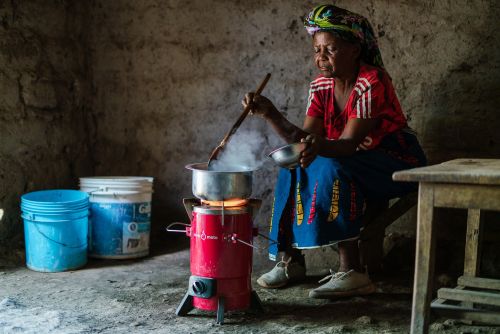
Tanzania’s opportunity extends well beyond forests. Sustainable agriculture, clean cooking, renewable energy, waste management, mangrove and coastal conservation, and other nature-based solutions could potentially create new streams of climate finance.
Carbon markets could therefore become part of a wider investment ecosystem linking conservation, agriculture, energy, technology and rural development.
For communities, the critical issue will be whether the financial benefits of carbon projects are transparent and fairly distributed. For investors, the priority will be certainty over regulations, project approval, credit ownership and market access. For government, the challenge will be balancing investment promotion with national climate objectives and environmental safeguards.
The EAA’s regional approach gives Tanzania an opportunity to learn from neighbouring markets while contributing its own experience.
As a founding member, Tanzania is not entering the regional carbon-market conversation from the sidelines. It has been part of the alliance since its establishment and is already building the institutional framework required to participate in international carbon markets and Article 6 mechanisms.
The new partnership with VCMI could now help move that agenda from policy preparation towards implementation.
For East Africa, the prize is potentially billions of dollars in climate finance. For Tanzania, the opportunity is to convert its forests, farms, renewable-energy resources and other natural assets into a credible source of investment and development finance – without compromising environmental integrity or community interests. The region’s carbon economy is beginning to scale. The next test will be whether countries such as Tanzania can build the institutions, markets and safeguards needed to ensure that the value created by carbon finance is retained and shared locally.