
By Business Insider Correspondent, Addis Ababa
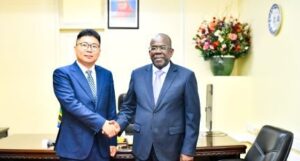
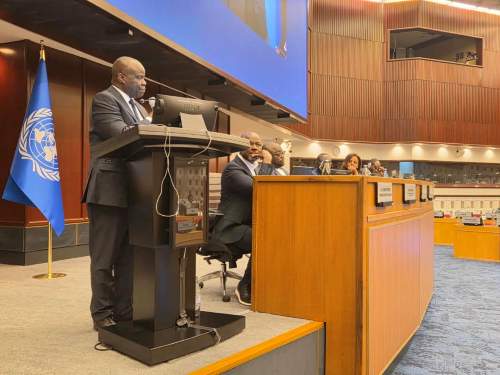
Africa must seize its vast critical-minerals wealth to build industries, expand electricity generation and create jobs at home instead of continuing to export raw materials with little or no value addition, the Secretary-General of the Vice-President’s Office, Dr. Richard Muyungi (pictured above), has said.
Dr Muyungi made the call while presenting Tanzania’s contribution to the 14th Session of the Committee of Experts of the Conference of African Ministers of Environment (CCDA-XIV) in Addis Ababa, arguing that a just transition away from fossil fuels must go beyond changing energy sources to transforming the economic systems that underpin the transition.
He said the central question for Africa was whether the continent would remain a supplier of minerals needed for the global green economy or use those resources to build industries, expand power generation, develop technology and create jobs within Africa.
“Africa must use its critical-minerals wealth to build industries, increase electricity generation and create jobs within the continent, rather than continuing to export raw materials without adding value,” Dr. Muyungi said.
According to Dr. Muyungi, Africa holds a substantial share of the world’s critical-mineral resources but has limited capacity to process and refine them.
The continent accounts for about 29 percent of global bauxite reserves, yet has less than one per cent of the world’s alumina-refining capacity. It also holds around seven percent of global nickel reserves, while its refining capacity remains below two per cent.
The minerals challenge is compounded by an energy deficit. About 600 million Africans still lack access to electricity, limiting the continent’s ability to develop energy-intensive industries and participate effectively in emerging global supply chains.
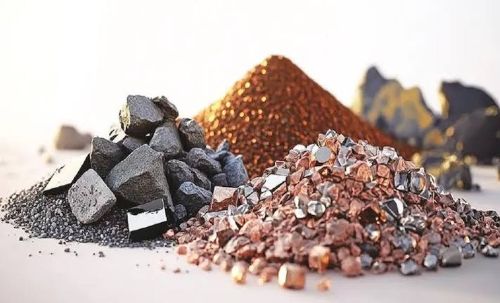
For Tanzania, Dr. Muyungi identified graphite, nickel, cobalt, copper and rare earth elements as strategic resources that could position the country within the rapidly expanding clean-energy and advanced-manufacturing economy.
He singled out the Kabanga project as one of Tanzania’s major opportunities in the critical-minerals value chain. The project has estimated mineral resources of 52.2 million tonnes, with nickel grading at about 1.98 percent, alongside copper and cobalt.
Tanzania also has substantial graphite resources and the Ngualla rare-earths project, giving the country an opportunity to participate in several emerging mineral value chains rather than relying solely on traditional mining exports.
But Dr Muyungi cautioned that Tanzania should not stop at extraction.
Instead, he said the country should use its mineral resources to establish domestic and regional value chains, including opportunities to process graphite for battery-anode materials while using nickel, cobalt and copper to support battery manufacturing and electricity infrastructure.
That approach would potentially shift Tanzania’s position from a supplier of raw minerals towards a participant in the higher-value stages of the global clean-technology economy.
Energy remains the missing link
Dr. Muyungi said critical minerals could not drive a just transition unless Africa also addressed its energy deficit.
He highlighted Mission 300, which aims to connect 300 million Africans to electricity by 2030, alongside the implementation of the Dar es Salaam Energy Declaration, endorsed by 48 African countries in January 2025.
He said that by June 2026, more than 50 million people in 40 African countries had gained access to electricity through Mission 300.
Clean cooking must also form part of the transition, he added, because access to cleaner cooking technologies has direct implications for public health, the environment and household welfare, particularly for women.
The connection between minerals and energy is increasingly important.
Mining and mineral processing require reliable and affordable electricity, while the technologies needed for Africa’s energy transition – including batteries, electricity grids and renewable-energy systems – themselves depend on critical minerals.
For Tanzania, this creates a strategic policy challenge: develop the minerals without allowing inadequate energy supply to become a bottleneck to value addition.
Regional supply chains
Dr. Muyungi also called for greater use of the African Continental Free Trade Area (AfCFTA) to develop regional processing and manufacturing hubs.
Rather than every country attempting to establish complete mineral value chains independently, African economies could build complementary regional supply chains based on their respective resource endowments.
He pointed to the potential complementarity between Tanzania’s graphite and nickel, cobalt from the Democratic Republic of Congo, copper from Zambia, and manganese and Platinum Group Metals from Southern Africa.
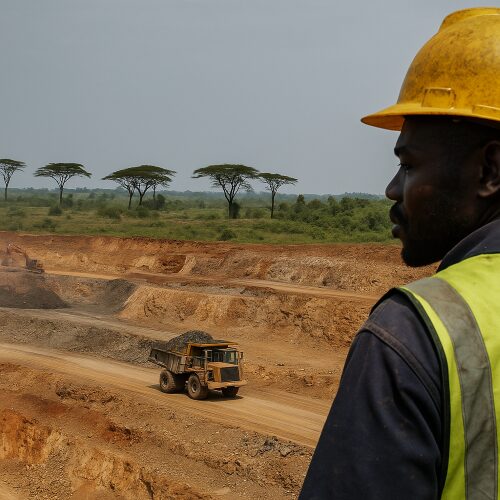
Such an approach could allow the continent to pool markets, infrastructure, skills and investment while creating economies of scale that individual countries may struggle to achieve alone.
It would also give African producers greater bargaining power in global mineral markets.
Skills and technology
Dr. Muyungi said Africa’s ability to capture greater value from its mineral wealth would ultimately depend on its people.
Investment in skills, research and innovation would therefore be critical if the continent is to avoid reproducing the traditional pattern of exporting raw materials and importing finished products. He cited the African Green Minerals Strategy, which recommends that investors allocate at least five per cent of payroll towards developing local STEM skills and one per cent of sales towards research, development and innovation.