By Peter Nyanje
Tanzania is stepping up efforts to turn its growing portfolio of state-owned assets into commercially productive investments, with the Government seeking to move public enterprises beyond ownership and towards stronger financial returns, greater self-reliance and wider economic impact.
The shift is being driven by the Office of the Treasury Registrar (OTR), which is pursuing institutional and financial reforms aimed not only at increasing non-tax revenue, but also at improving the performance and value of Government investments.
The strategy comes as the value of investments under OTR supervision continues to rise. Official figures show that Government investment increased from TSh67.73 trillion in 2020/21 to TSh92.28 trillion in 2024/25, representing growth of about 37.7 percent over five years.
The increase has placed greater pressure on public enterprises to demonstrate that Government ownership can generate measurable economic returns.
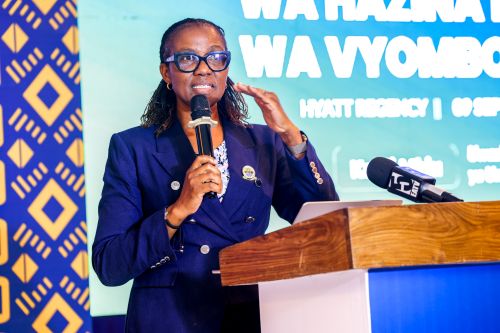
Speaking at a meeting with media editors ahead of the C-CEOs Forum 2026, Acting Treasury Registrar Lightness Mauki (pictured above) said the reforms were designed to ensure that public institutions become more financially sustainable, efficient and capable of generating greater value from Government assets.
“The reforms are not aimed at revenue collection alone, but also at building institutions that can operate independently, work efficiently and increase the value and returns from Government assets and investments,” Ms. Mauki said.
She said the Government was increasingly focusing on the performance of public investments rather than simply measuring the size of its asset portfolio.
That approach represents an important change in the way the State views public enterprises: from institutions that primarily provide services or hold strategic assets to businesses and investment vehicles expected to contribute more directly to economic growth.
From ownership to returns
The shift is already reflected in the Government’s approach to commercially oriented public institutions.
According to Mauki, Government support for non-commercial public institutions has declined by an average of 12.8 percent over the past five years, as more institutions have increased their ability to finance operations from internally generated revenue.
Some have moved further towards financial independence.
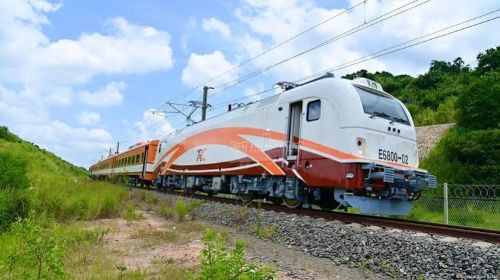
Tanzania Railways Corporation (TRC), for example, has begun financing employee salaries from its own resources, while the Tanzania Petroleum Development Corporation (TPDC) and State Mining Corporation (STAMICO) have reached financial self-reliance. The Tanzania Bureau of Standards (TBS) is also nearing that position.
The objective is not to eliminate the public sector’s role, but to reduce dependence on Government funding while improving the commercial discipline of institutions that have the capacity to generate income.
The Government is also reviewing the legal and operational environment governing public enterprises, including rules affecting recruitment and procurement, to give commercially oriented institutions greater ability to compete in domestic and international markets.
Mining expands the portfolio
The transformation is taking place alongside an expansion of Government investment in strategic sectors.
In mining, Mauki said the Government now holds interests in 16 mining projects, up from 10 in the 2024/25 financial year.
The expansion increases the potential for the State to benefit directly from Tanzania’s mineral wealth through equity participation and other investment arrangements.
But greater ownership also brings greater expectations. The challenge is no longer simply securing a Government stake in a project; it is ensuring that the investment generates adequate financial and economic returns.
That is why OTR has engaged 13 consulting firms to conduct independent assessments of the performance of public institutions under its supervision.
The exercise, which began in January 2026, is intended to identify institutional strengths, weaknesses and areas requiring improvement. The first phase has already been completed.
For investors and taxpayers, the significance of such assessments extends beyond administrative performance. They could provide a clearer picture of which public enterprises are creating value, which require restructuring and which have the potential to attract additional capital.
A potential route to the capital market
The Government’s longer-term strategy could also bring some public enterprises closer to Tanzania’s capital markets.
OTR plans, over the next three to five years, to facilitate up to TSh1 trillion in capital for eligible institutions, with development financing increasingly provided through equity injections rather than conventional grants.
Over the longer term, institutions that meet the required criteria could raise capital through the capital markets, including by selling shares to the public through initial public offerings (IPOs).
Such a move could fundamentally change the relationship between the State and its commercial assets.
Rather than relying indefinitely on Government financing, financially viable public enterprises could potentially access private capital, broaden their shareholder base and become subject to stronger market discipline.
The immediate challenge, however, is ensuring that the institutions are commercially strong enough, transparent enough and sufficiently well governed to attract investors.
Beyond dividends
OTR’s strategy is also being aligned with Tanzania’s long-term development ambitions under Dira 2050, which identifies energy and mining, transport and logistics, financial services, tourism and agriculture as important sectors for future growth.
OTR Director of Non-Commercial Enterprises David Shambwe said the focus was increasingly shifting towards ensuring that Government assets become productive investments capable of generating measurable value and returns rather than remaining assets held simply for ownership purposes.
“The emphasis now is on making Government assets investments that generate productivity, returns and measurable results,” Shambwe said.
The scale of the portfolio makes that imperative increasingly important.
OTR currently oversees 308 public institutions and enterprises, meaning even modest improvements in productivity, governance and financial performance could have significant implications for public finances and the wider economy.
OTR Director of Finance and Accounting Hassan Mohamed said Tanzania would need to identify and mobilise new sources of finance over the next 25 years to support productive sectors.
Public enterprises, he said, should contribute not only through revenue generation but also by increasing production, creating decent jobs, expanding Tanzania’s participation in regional and international markets and increasing foreign-exchange earnings.
The wider economic argument is therefore bigger than dividends paid to the Treasury.
A profitable public enterprise can generate revenue for Government, create employment, support domestic suppliers, attract private investment and stimulate activity in other sectors.
The upcoming C-CEOs Forum 2026, themed “High-Performing Public Institutions for a Competitive, Inclusive and Resilient Economy: Driving Dira 2050 Forward”, is expected to bring together board chairpersons, chief executives and other stakeholders to discuss governance, accountability, institutional performance and strategies for improving results.
For Tanzania, the test of the reforms will ultimately be simple: whether TSh92.28 trillion of Government investment can generate substantially greater economic value than it does today. The emerging policy direction suggests that the era in which public assets could be judged mainly by what the Government owned is giving way to one in which the more important question will be what those assets actually produce – in profits, dividends, jobs, exports, investment and economic growth.