
By Correspondent Benny Mwaipaja, Kigali
Tanzania has strengthened its systems for combating money laundering, terrorism financing and the financing of weapons of mass destruction, Finance Minister Khamis Mussa Omar has said, as the country works to close remaining gaps identified by a regional financial crime assessment.
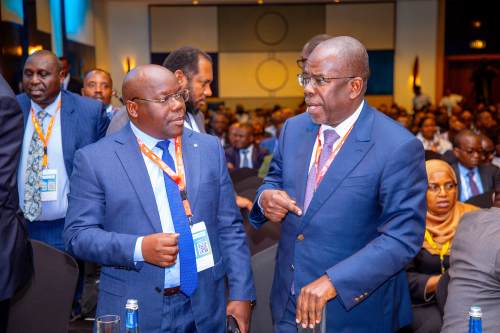
Omar said Tanzania had made significant progress in strengthening its legal and institutional framework during the 26th Council of Ministers meeting of the Eastern and Southern Africa Anti-Money Laundering Group (ESAAMLG), held in Kigali, Rwanda.
The minister said Tanzania had successfully undergone an ESAAMLG mutual evaluation, while the Government was continuing to address outstanding weaknesses identified during the assessment.
“We have laws and a national committee to combat these issues. The progress is significant, but there are still 15 areas we are working on, including amendments to 12 laws identified as requiring improvement in both Mainland Tanzania and Zanzibar,” Omar said.
The reforms are significant for Tanzania’s financial sector, where stronger anti-money laundering and counter-terrorism financing controls are increasingly important for maintaining confidence among banks, investors and international financial institutions.
Closing regulatory gaps
Omar said four laws relating to Mainland Tanzania had already been passed by Parliament during its current session. The Revolutionary Government of Zanzibar, he added, was expected to table bills to amend a further three laws as part of the wider reform process.
The Government’s response involves several institutions, reflecting the increasingly complex nature of financial crime and the need for coordination between financial regulators, law enforcement agencies and policymakers.

Omar attributed the progress to cooperation among the Ministry of Finance, banking-sector regulators, the Ministry of Constitutional and Legal Affairs, the Ministry of Home Affairs and other institutions represented on Tanzania’s National Committee for combating money laundering and related crimes.
For the financial sector, the reforms have a direct business dimension. Effective anti-money laundering controls help financial institutions identify suspicious transactions, strengthen customer due diligence and reduce exposure to financial crime risks.
They can also influence how international banks and investors assess a country’s financial system and the risks associated with doing business there.
Regional response
The Kigali meeting brought together ministers, permanent secretaries and senior officials responsible for finance, constitutional and legal affairs and home affairs from ESAAMLG member states.
The discussions focused on strengthening regional cooperation against money laundering, terrorism financing and the financing of weapons of mass destruction.
The cross-border nature of financial crime makes regional cooperation particularly important. Illicit funds can move between jurisdictions through banking systems, businesses and other financial channels, making cooperation between regulators and law enforcement agencies essential.
Tanzania’s delegation included Constitutional and Legal Affairs Minister Dr Juma Homera; Permanent Secretary in the Ministry of Constitutional and Legal Affairs Dr Seif Abdallah Shekalaghe; Zanzibar Deputy Permanent Secretary in the Ministry of Finance and Planning Aboud Hassan Mwinyi; and Financial Intelligence Unit Commissioner Majaba Magana.
Also attending was Bank of Tanzania Deputy Governor Sauda Msemo, who chairs the National Committee of Experts on Anti-Money Laundering, alongside heads of institutions, financial-sector specialists, regulators and development partners from the region and beyond.
A business imperative
Tanzania’s remaining reform agenda now shifts towards implementation.
The Government’s challenge will be to ensure that legislative changes translate into stronger enforcement, better institutional coordination and more effective supervision across the financial system.
For banks and other financial institutions, this means continued investment in compliance systems, staff expertise, transaction monitoring and risk management.

For Tanzania’s wider economy, the stakes are equally high. A credible financial crime-control framework can strengthen confidence in the country’s financial system and support its efforts to attract investment and deepen integration with regional and global markets. The Kigali meeting therefore comes at a critical point for Tanzania: the country has made progress, but the credibility of its reforms will ultimately be measured by how effectively the remaining gaps are closed and the new rules are implemented.