Emergency ministerial meeting to coordinate action as East Africa moves to protect public health, cross-border trade and economic stability
By Business Insider Reporter
The East African Community (EAC) will convene an emergency meeting of regional health ministers this week as governments intensify efforts to contain a growing Ebola outbreak that threatens not only public health but also trade, investment and economic activity across East Africa.
The extraordinary virtual meeting of the EAC Sectoral Council of Ministers responsible for Health, scheduled for June 1-2, comes as regional authorities respond to an outbreak of the rare Bundibugyo strain of Ebola virus disease in the Democratic Republic of Congo (DRC) and Uganda.
The high-level discussions will focus on coordinated regional measures aimed at preventing cross-border transmission, strengthening disease surveillance and protecting the movement of people and goods within one of Africa’s fastest-growing economic blocs.
The outbreak was officially declared on May 15 and has rapidly become a regional concern because of its location in areas characterised by intense population movement and trade links.
According to the latest figures, the DRC had reported 121 confirmed cases and 17 confirmed deaths by May 26, while more than 1,000 suspected cases and 246 suspected deaths were under investigation. Uganda has confirmed seven cases and one death, with the first infections linked to travellers arriving from the DRC.
Economic risks beyond public health
While Ebola outbreaks are primarily viewed as public health emergencies, they often carry significant economic consequences.
East Africa’s interconnected economies depend heavily on cross-border trade, labour mobility and regional supply chains. Any disruption at key border crossings can affect the movement of agricultural products, manufactured goods, livestock, fuel and essential commodities.
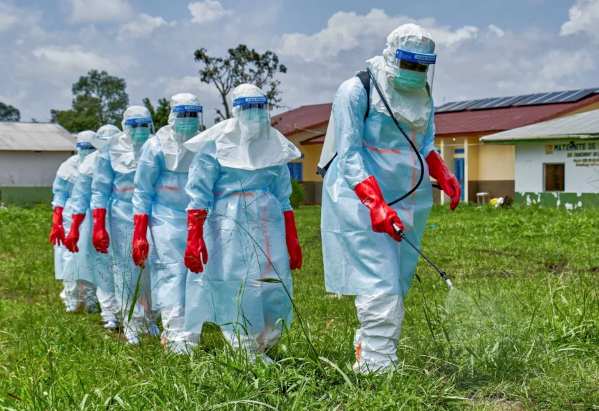
Previous outbreaks in Africa demonstrated how disease-related restrictions can reduce trade volumes, weaken tourism performance, discourage investment and increase public spending on emergency health responses.
For countries such as Tanzania, Kenya, Rwanda, Burundi and South Sudan, the concern is not only the direct health impact but also the potential disruption to regional commerce under the East African Community Common Market framework and the African Continental Free Trade Area (AfCFTA).
Recognising these risks, the EAC Secretariat has accelerated preparedness measures designed to maintain both public safety and economic continuity.
“The EAC remains committed to ensuring that every outbreak meets a prepared community,” said EAC Secretary General Stephen Mbundi.
“Our focus is to support Partner States to prevent cross-border transmission while safeguarding the health, social wellbeing and economic stability of East Africans.”
Tanzania strengthens border preparedness
For Tanzania, preparedness efforts are particularly important given its shared borders with the DRC, Burundi, Rwanda and Uganda, as well as its strategic role as a regional logistics hub.
The EAC has identified Tanzania’s Kagera and Kigoma regions as strategic locations for enhanced disease surveillance and rapid testing.
Under a German-funded regional preparedness programme, mobile laboratories are being deployed across high-risk border areas to enable faster diagnosis and monitoring of potential Ebola cases.
The mobile laboratory network forms part of a broader regional strategy aimed at reducing delays in detection, improving outbreak response times and preventing wider transmission.
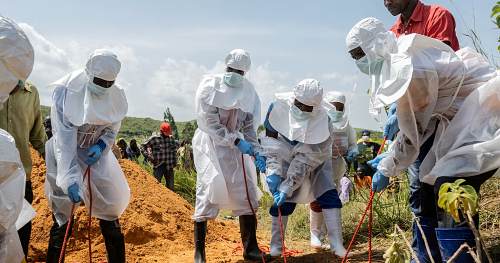
Health experts note that rapid diagnosis remains one of the most effective tools for containing Ebola outbreaks before they evolve into broader regional crises.
Protecting trade corridors
The outbreak has highlighted the importance of maintaining resilient trade corridors during health emergencies.
The EAC Secretariat is working with national governments, the Africa Centres for Disease Control and Prevention (Africa CDC), the World Health Organisation (WHO) and development partners to strengthen surveillance at border posts while minimising unnecessary disruptions to legitimate trade.
Particular attention is being paid to border areas serving major regional transport routes linking the DRC with neighbouring countries.
The epicentre of the outbreak in Ituri Province, eastern DRC, is located within a region characterised by extensive cross-border commerce and frequent population movement, making coordinated regional action essential.
Analysts note that lessons learned from the Covid-19 pandemic have significantly improved regional preparedness, with governments now placing greater emphasis on balancing public health protection with economic continuity.
Building regional response capacity
Beyond surveillance and laboratory testing, the EAC is activating a network of more than 180 trained emergency response specialists capable of supporting outbreak management across the region.
The bloc is also implementing specialised training programmes focused on infection prevention, clinical management, emergency response and risk communication.
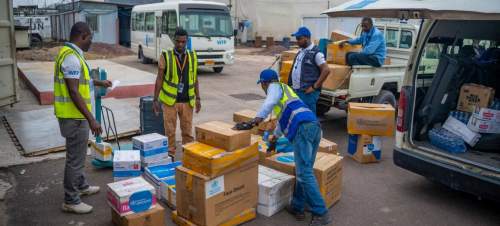
Additional support is being provided through the procurement of personal protective equipment (PPE) for frontline healthcare workers and the strengthening of regional laboratory systems.
One area receiving particular attention is the accelerated approval and regulation of Ebola vaccines, diagnostics and therapeutics.
Regional regulators are currently exploring mechanisms that could enable faster approval and deployment of medical countermeasures during future outbreaks, reducing delays that often hamper emergency responses.
A test of regional integration
The current outbreak represents another important test of East Africa’s growing regional integration agenda.
The EAC’s ability to coordinate surveillance, information sharing, laboratory services and emergency response capabilities across multiple countries will be closely watched by public health experts and development partners.
Success could strengthen confidence in regional institutions and demonstrate the value of collective action in managing transboundary health threats.
Failure, however, could expose vulnerabilities in the region’s public health systems and create broader economic consequences for trade, tourism and investment.
For now, East African governments are moving quickly to prevent that scenario.
As health ministers prepare to meet this week, the objective is clear: contain the outbreak before it evolves into a wider regional crisis and ensure that East Africa’s economic momentum remains intact. With regional trade volumes rising, investment flows increasing and integration deepening, the cost of inaction has never been higher.