
By Anatoli Rugaimukamu
For more than three decades, Tanzania has invested heavily in the fight against corruption. New laws have been enacted, oversight institutions strengthened, audits expanded, and anti-corruption campaigns intensified. Yet corruption remains one of the most persistent obstacles to economic transformation, public trust and efficient governance.
This raises an uncomfortable question: if institutions, laws and enforcement mechanisms have multiplied, why does corruption continue to thrive?
The answer may lie beyond legal frameworks and administrative reforms. Corruption in Tanzania is not simply a governance problem; it is increasingly becoming a moral, social and cultural challenge. While institutions remain critical, they operate within a society whose values, incentives and norms ultimately determine what is rewarded and what is condemned.
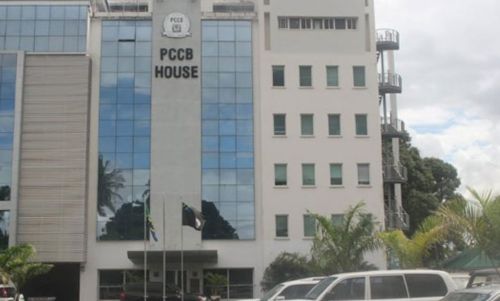
In recent years, Tanzania has made notable progress in strengthening accountability systems. The Prevention and Combating of Corruption Bureau (PCCB), the Controller and Auditor General (CAG), parliamentary oversight committees and public procurement reforms have all contributed to improving transparency. Yet scandals continue to emerge across different sectors, suggesting that corruption is often adapting faster than the systems designed to combat it.
This reality points to a deeper problem. Corruption flourishes when ethical standards weaken and when society gradually normalizes behaviour that was once considered unacceptable. When individuals who accumulate wealth through questionable means are celebrated rather than scrutinized, corruption ceases to be merely a legal violation and becomes a socially tolerated path to success.
For investors and businesses, this is not a minor issue. Corruption increases transaction costs, distorts competition and undermines confidence in public institutions. It creates uncertainty in the regulatory environment and discourages long-term investment. In effect, corruption acts as a hidden tax on economic growth.
Part of the challenge lies in the nature of governance itself. Across many developing countries, including Tanzania, formal institutions often coexist with informal networks of influence, patronage and personal loyalty. In such environments, decisions are not always determined by merit, rules or public interest but by relationships and access to power.
Over time, this creates a culture where loyalty is rewarded more consistently than competence. What begins as political patronage gradually evolves into a broader social expectation. Corruption is then reframed not as wrongdoing but as reciprocity, gratitude or loyalty to those within one’s network.
The consequences extend far beyond government offices. They influence recruitment, procurement, business opportunities and access to public services. As these practices become normalized, ethical boundaries begin to erode.
Tanzania’s political evolution offers an important lens through which to understand this transformation. During the era of Mwalimu Julius Nyerere, public service was anchored in the values of Ujamaa and utu. Leadership was framed as a moral responsibility rather than a route to personal enrichment. While the system had its limitations, it cultivated a strong ethical narrative around integrity, equality and collective welfare.
The liberalization period that followed brought undeniable economic opportunities, but it also introduced new social pressures and incentives. Wealth increasingly became the primary measure of success. Material accumulation emerged as a powerful symbol of achievement, often overshadowing questions about how that wealth was acquired.
Political rhetoric over the years has, intentionally or unintentionally, reflected this shift. Phrases that entered public discourse under successive administrations often blurred the distinction between acceptable behaviour and ethical compromise. The cumulative effect has been a gradual transformation in how society interprets accountability, responsibility and public service.
Today, one of the most visible manifestations of this trend is the rise of uchawa – a culture of excessive praise and loyalty to those in positions of power. While loyalty is not inherently problematic, it becomes dangerous when it replaces honest feedback, constructive criticism and merit-based decision-making.
For businesses, the implications are significant. Economies perform best when institutions reward innovation, competence and productivity. When access and influence become more important than performance, resources are allocated inefficiently, entrepreneurship is discouraged and economic competitiveness suffers.
Another overlooked factor is the incentive structure facing public servants. The generation that served during the early post-independence period was often encouraged to prioritize integrity and sacrifice. Yet many retired with modest means, while others who accumulated wealth through questionable practices frequently enjoy greater social status and economic security.
This creates a troubling message for younger generations entering public service: integrity may be praised publicly, but wealth is often rewarded socially. Such contradictions weaken the moral foundations of governance and encourage behaviour that prioritizes accumulation over service.
Religious institutions, which possess considerable moral influence in Tanzanian society, also face an important challenge. While corruption is routinely condemned in sermons and public statements, it is not always addressed as a systemic threat to national development, social justice and future generations. In some cases, close relationships between religious leaders, political actors and wealthy individuals can blur the moral clarity required to confront corruption effectively.
Ultimately, Tanzania’s fight against corruption cannot be won through arrests, audits and legislation alone. These tools remain indispensable, but they address symptoms more than causes.
The deeper challenge is rebuilding a culture in which integrity is valued, ethical leadership is rewarded and corruption carries social as well as legal consequences. This requires reforms in education, leadership development, religious engagement and public discourse. It requires restoring the connection between public service and moral responsibility.
A nation that normalises corruption risks undermining not only its governance systems but also its economic future. Conversely, a nation that succeeds in rebuilding ethical foundations creates an environment where institutions can function effectively, businesses can compete fairly and citizens can trust the systems that govern them.
The fight against corruption, therefore, is not only about strengthening institutions. It is about rebuilding the moral architecture upon which those institutions ultimately depend.
For personal comments and opinion the author can be reached at:
Wiseruggy@gmail.com+255759722237