
By Business Insider Reporter
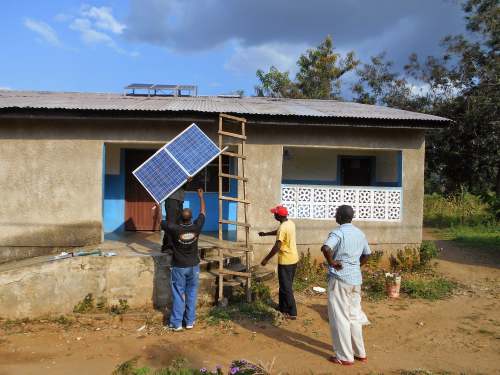
Africa’s solar energy sector is entering a defining period of growth.
In just the first six months of 2026, the continent added more than 2 gigawatts (GW) of new grid-connected solar capacity, already exceeding the total installed during the whole of 2025.
The milestone signals that solar power is no longer an emerging technology in Africa – it is rapidly becoming a mainstream source of electricity for industries, businesses and households.
The surge comes as governments intensify efforts to improve energy security, electricity demand continues to rise, solar equipment prices remain at historic lows, and battery energy storage systems become increasingly affordable. Together, these developments are reshaping Africa’s energy landscape and strengthening confidence among investors.
A continent gathering momentum
The latest industry tracking by African Energy shows that 2026 has already outperformed the previous year in utility-scale solar additions despite being only halfway through the year. The pace reflects stronger project execution and an expanding pipeline across several African markets.
The broader trend is equally encouraging. According to the Global Solar Council, Africa installed approximately 4.5GW of new solar photovoltaic capacity in 2025, representing a 54 percent increase over 2024 – the fastest annual growth ever recorded on the continent.
Eight African countries each commissioned more than 100MW during the year, illustrating that solar deployment is spreading beyond a handful of established markets.
What’s driving the growth?
Several factors are accelerating Africa’s solar expansion:
- Falling technology costs:
- Solar modules are cheaper than ever, making projects commercially attractive.
- Battery storage:
- Declining battery prices are enabling solar plants to deliver electricity beyond daylight hours.
- Rising electricity demand:
- Population growth, industrialisation and digitalisation are increasing demand for reliable power.
- Private sector investment:
- Businesses are increasingly investing in captive solar plants to reduce electricity costs and improve reliability.
- Climate commitments:
- Governments are expanding renewable energy to reduce emissions while improving energy access.
Africa’s enormous solar advantage
Few regions possess Africa’s natural solar potential.
The continent receives some of the world’s highest levels of solar irradiation, with more than 85 percent of its land area receiving at least 2,000 kilowatt-hours of solar energy per square metre annually.
Scientists estimate Africa possesses roughly 40 percent of the world’s solar energy potential, making it one of the most promising renewable energy markets globally.
Yet Africa still contributes only a small fraction of global installed solar capacity, highlighting the enormous room for future growth.
Leaders of Africa’s solar transition
South Africa continues to dominate utility-scale deployment, supported by an active independent power producer programme and growing corporate demand for clean electricity.
Nigeria has emerged as one of the continent’s fastest-growing distributed solar markets, while Egypt, Algeria, Kenya, Morocco and Namibia continue expanding utility-scale projects.
The market is also becoming more geographically diverse, with new projects emerging across East, West and Southern Africa rather than being concentrated in only a few countries.
Tanzania’s growing solar opportunity
Although Tanzania is not yet among Africa’s largest utility-scale solar markets, the country’s long-term prospects remain exceptionally strong.
Tanzania enjoys abundant sunshine across most regions, receiving between 2,800 and 3,500 hours of sunshine annually, providing ideal conditions for solar electricity generation.
Solar energy has become an increasingly important solution for expanding electricity access, particularly in rural communities beyond the national grid.
Several trends are positioning Tanzania for faster growth:
- Rising demand for electricity driven by industrialisation and urbanisation.
- Expansion of mini-grids and stand-alone solar systems in rural areas.
- Increasing use of rooftop solar by commercial buildings, hotels, hospitals and factories.
- Growing private investment in solar-powered irrigation and agricultural processing.
- Government commitment to increasing renewable energy within the country’s electricity mix.
The Rural Energy Agency (REA) has played a major role in supporting solar mini-grids and off-grid electrification, helping extend modern energy services to remote communities where grid expansion remains costly.
Solar is also becoming an important source of backup power for businesses seeking to reduce dependence on diesel generators and improve energy reliability.
Solar and Tanzania’s development agenda
The rapid expansion of solar aligns closely with Tanzania’s broader economic ambitions.
Reliable electricity remains essential for:
- Manufacturing and industrial parks.
- Mining operations.
- Healthcare facilities.
- Digital infrastructure.
- Agricultural value addition.
- Tourism facilities.
- Small and medium-sized enterprises.
Affordable solar power can also help reduce production costs, improve competitiveness and attract new investment into energy-intensive industries.
Battery storage changes the equation
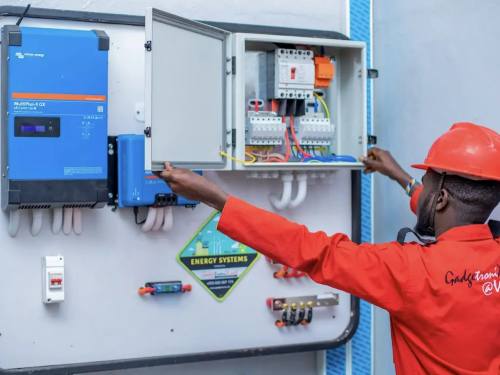
One of the biggest developments accompanying Africa’s solar boom is the rapid growth of battery energy storage systems.
Historically, solar’s greatest limitation was its dependence on daylight. Today’s batteries enable electricity generated during the day to be stored and supplied during evenings or periods of peak demand.
For Tanzania and many other African countries where power reliability remains a concern, combining solar generation with battery storage offers an increasingly practical and cost-effective solution.
Financing remains the biggest hurdle
Despite impressive progress, financing continues to constrain Africa’s renewable energy expansion.
Industry estimates suggest the continent requires hundreds of billions of dollars in additional investment this decade to unlock its renewable energy potential and meet rising electricity demand.
Improving access to affordable finance, strengthening regulatory frameworks and expanding transmission infrastructure will remain critical.
Looking ahead
Africa’s energy transition is no longer a distant aspiration – it is unfolding at an accelerating pace.
The addition of more than 2GW of grid-connected solar capacity within just six months demonstrates that renewable energy has become central to the continent’s development strategy rather than a niche alternative.
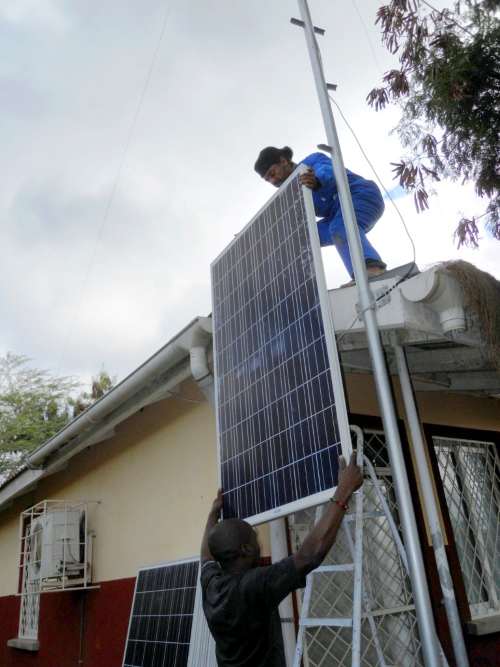
For Tanzania, the trend presents a significant opportunity. With abundant sunshine, growing electricity demand, supportive rural electrification programmes and increasing investor interest, the country is well positioned to expand its solar footprint in the years ahead. If current momentum continues, solar power will play an increasingly important role in strengthening energy security, supporting industrial growth, reducing carbon emissions and advancing Tanzania’s long-term vision of sustainable and inclusive economic development.