
By Business Insider Reporter
Tanzania’s long-term economic transformation will depend not only on industrialisation and infrastructure investment but also on the health of its soils, with the government calling for greater public and private sector action to protect one of the country’s most valuable natural assets.
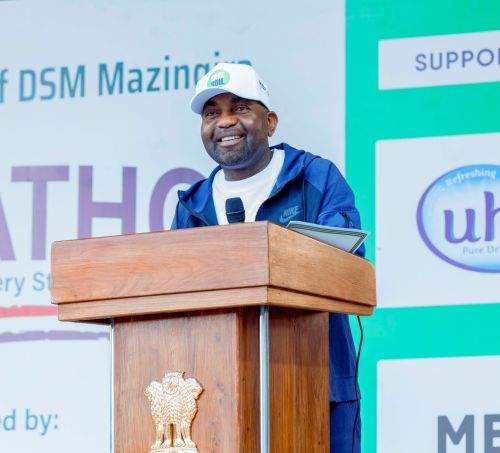
Speaking during the Save Soil Walkathon held in Dar es Salaam on July 19, Minister of State in the Vice President’s Office (Union and Environment), Eng. Hamad Yussuf Masauni, said sustainable soil management must become a national priority if Tanzania is to achieve the ambitions outlined in Dira 2050.
He said the government’s environmental agenda, championed by President Samia Suluhu Hassan, recognises environmental sustainability and climate resilience as central pillars for delivering inclusive, green and sustainable economic growth.
“The health of our soils forms the foundation of food security, environmental conservation and national economic prosperity,” Masauni said. “Without healthy soils, we cannot achieve sustainable agriculture, protect our ecosystems or secure long-term economic development. Every Tanzanian has a responsibility to conserve our environment and ensure that our land remains productive for present and future generations.”
The minister noted that Dira 2050 explicitly identifies environmental sustainability as a strategic enabler of economic transformation, reflecting Tanzania’s commitment to balancing growth with responsible management of natural resources.
Agriculture remains the backbone of Tanzania’s economy, employing the majority of the workforce while contributing significantly to export earnings and industrial raw materials. Experts have increasingly warned that soil degradation, declining fertility and climate change pose growing risks to agricultural productivity unless conservation measures are strengthened.
Masauni said the implementation of Tanzania’s environmental agenda also presents new opportunities for international cooperation, particularly with India.
“As we embark on this transformative programme, we see significant opportunities to deepen our partnership with the Republic of India,” he said. “We look forward to expanding cooperation in technology transfer, research and innovation, capacity building, sustainable land restoration, environmental monitoring, green investment and climate-smart solutions.”
The Save Soil Walkathon, organised by the Lions Club of Dar es Salaam Mazingira, forms part of a wider public awareness campaign promoting soil conservation as a catalyst for economic, social and environmental development.
Lions Club President Lion Ramadevi said the initiative goes beyond a symbolic walk.
“This is not simply a walkathon. It is a movement aimed at changing attitudes and increasing public understanding of the critical role healthy soils play in national development,” she said. “We want communities, institutions and the private sector to work together to safeguard the environment for future generations.”
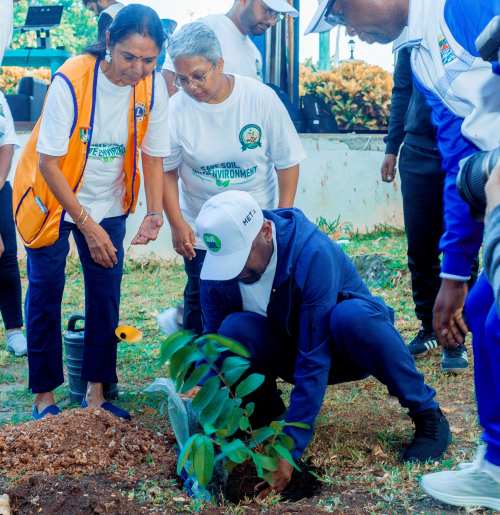
India’s Ambassador to Tanzania, Lakshay Anand, welcomed the growing public commitment to environmental conservation, describing it as an essential prerequisite for sustainable development.
“It is encouraging to see communities recognising the importance of protecting the environment,” he said. “Environmental stewardship is fundamental to human well-being, and every individual has a role to play in conserving our natural resources.” The renewed emphasis on soil health comes as Tanzania seeks to accelerate climate-smart agriculture, expand sustainable land management and attract green investment under Dira 2050. Analysts argue that improving soil quality will not only strengthen food security but also enhance agricultural productivity, reduce climate vulnerability and support the country’s broader transition towards a greener, more resilient economy.