By Peter Nyanje
Higher Education Students’ Loans Board (HESLB) is considering issuing a bond and tapping the capital markets to mobilise additional financing, marking a potential shift towards investment-driven funding for higher education.
The proposed initiative forms part of a broader alternative financing strategy designed to strengthen the Board’s liquidity, diversify revenue sources and expand educational opportunities beyond what government budgetary allocations and student loan repayments can currently support.
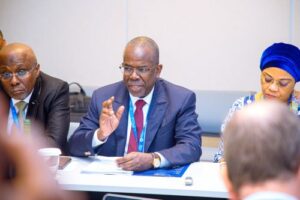
HESLB Executive Director, Dr. Bill Kiwia (pictured above), disclosed the plans on Monday, October 12, 2026, while addressing media editors at a meeting convened by the Office of the Treasury Registrar (TR) in Dar es Salaam.
He said the institution was exploring opportunities to raise capital through financial markets, invest the proceeds and use investment returns to support students pursuing higher education and diploma programmes.
“We are even considering going to the capital markets because they provide an opportunity to raise capital,” Dr. Kiwia said. “Our ambition is to issue a bond that will enable us to mobilise funds, invest them and subsequently use the investment returns to finance students.”
He explained that the initiative was under consideration, with technical expertise available to examine its feasibility and implementation.
Although no timetable, proposed bond value or issuance structure has been announced, the proposal signals HESLB’s ambition to evolve from a predominantly government-funded institution into a more diversified and financially sustainable student financing organisation.
Dr. Kiwia said the Board’s improving financial performance and growing loan recovery capacity provided a foundation for attracting investors.
According to figures presented during the meeting, HESLB collected a record TSh235.5 billion in loan repayments during the 2025/26 financial year, exceeding its Sh220 billion target by seven per cent.
Cumulative loan recoveries between 2005/06 and June 2026 reached TSh1.91 trillion, equivalent to 69 percent of the TSh2.77 trillion in matured loans.
The growing collections, Dr. Kiwia argued, demonstrate the institution’s strengthening financial position and its potential attractiveness to capital market investors.
He cited Kenya’s exploration of bond financing for higher education as an example of how student loan institutions could pursue innovative financing arrangements to widen educational access.
However, a potential HESLB bond would require careful consideration of investment returns, borrowing costs, repayment obligations and the regulatory requirements governing capital market instruments.
The Board would also need to establish whether projected income from its investments could sustainably cover financing costs while generating additional resources for students.
Beyond the proposed bond, HESLB has already begun implementing an alternative financing programme aimed at attracting institutional partners and development organisations.
Dr. Kiwia said the initiative, introduced this year, had attracted three strategic partners, with arrangements already advancing in several areas.
Among them is the Ngorongoro Scholarship, established in collaboration with the Ngorongoro Conservation Area Authority (NCAA), targeting students living within the conservation area who wish to pursue conservation-related studies.
He said the necessary preparations had been completed and beneficiaries would be announced soon.
Another partnership involves the Bank of Tanzania, which is collaborating with HESLB to administer the Mwalimu Julius K. Nyerere Memorial Master’s Degree Scholarship.
The Board is also engaging potential partners, including Compassion and other organisations, to mobilise additional educational funding.
Dr. Kiwia said existing legislation permits HESLB to receive grants and other forms of financial assistance, creating opportunities for private institutions, development partners and philanthropic organisations to participate in student financing.
Such partnerships could help reduce pressure on government resources while extending financial support to students who might otherwise miss educational opportunities.
The diversification strategy comes amid rising demand for higher education financing.
For the 2026/27 academic year, the government has allocated a record TSh1.06 trillion to HESLB, representing a 15.6 percent increase from TSh916.7 billion in 2025/26.

The allocation is expected to benefit at least 300,000 students, compared with 289,932 in the previous academic year.
Already, the Board has announced first-phase allocations worth TSh535.7 billion covering 165,775 students.
Funding has also expanded beyond undergraduate degree programmes to diploma courses and specialised scholarships, particularly in science, technology, engineering and mathematics.
Nevertheless, loan recovery remains a significant challenge.
Dr Kiwia acknowledged that approximately TSh800 billion is owed by beneficiaries who have yet to come forward to repay their loans.
He said identifying and reaching borrowers operating in the informal economy remained particularly difficult despite improvements in digital systems and information-sharing arrangements with public institutions.
HESLB has integrated its systems with institutions including the Tanzania Revenue Authority, National Identification Authority, National Social Security Fund and Public Service Social Security Fund to strengthen borrower identification and repayment monitoring.
The Board is also pursuing repayment campaigns encouraging graduates with limited incomes to contribute according to their financial capacity.
Improving collections will be particularly important if HESLB eventually enters the capital markets, where predictable cash flows, financial transparency and investor confidence are central to successful fundraising.
The financing initiative is consistent with HESLB’s sixth strategic plan, covering 2026/27 to 2030/31, which envisages transforming the institution into a broader national student financing fund.
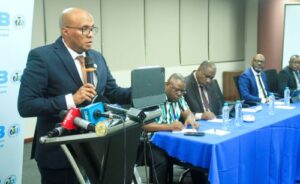
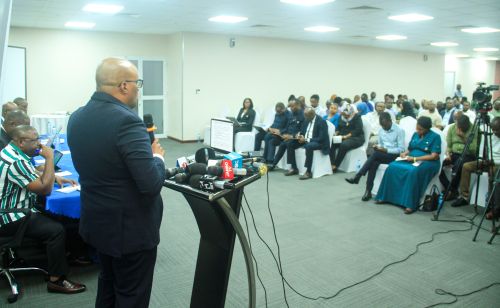
Speaking earlier at the meeting, the Head of Communications at the Office of the Treasury Registrar (OTR), Sabato Kosuri (pictured below), said the engagement formed part of the government’s broader initiative to strengthen transparency, accountability and public understanding of the performance and strategic direction of state-owned institutions. He explained that the Treasury Registrar had established regular engagements between public institutions and media editors to provide a platform for communicating achievements, challenges and future investment priorities.
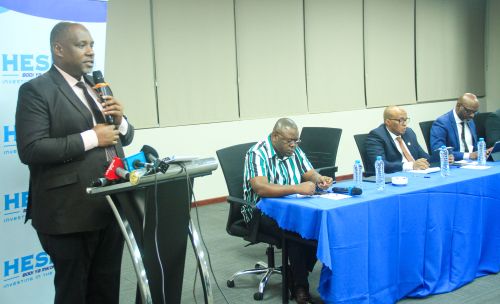
Kosuri said the media played a critical role in bridging the information gap between public institutions and citizens, who are the ultimate stakeholders in government-owned organisations. By engaging editors directly, the Treasury Registrar seeks to ensure that Tanzanians receive accurate and comprehensive information about how public resources are managed, how institutions perform and what strategies are being implemented to improve service delivery. Greater public awareness, he added, could strengthen confidence, encourage cooperation and promote accountability.
He particularly emphasised the strategic importance of HESLB in implementing Tanzania Development Vision 2050, noting that sustainable economic transformation requires more than investment in physical infrastructure and financial capital.
Developing human capital
Mr. Kosurisaid an educated and skilled population would be better positioned to respond to changing economic conditions, embrace emerging opportunities and contribute meaningfully to national development. Against this background, he described HESLB as a critical institution in Tanzania’s efforts to build a knowledgeable, competitive and economically productive population. He encouraged editors to use the meeting to examine the Board’s achievements, understand its financing challenges and explore its strategies for the next five years, particularly their contribution to Dira 2050. The engagement, he said, was intended not merely to publicise institutional successes but also to facilitate constructive scrutiny and informed public debate on how student financing could support Tanzania’s long-term development ambitions.