By Business Insider Correspondent, New York
Tanzania has called for an overhaul of the global financial architecture, warning that high borrowing costs, mounting debt burdens and limited access to affordable long-term capital are constraining investment and slowing economic development across developing countries.
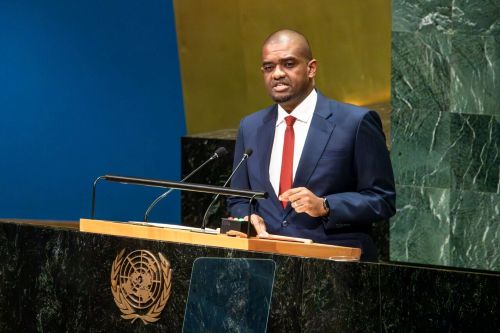
Vice-President Deogratius Ndejembi delivered the message at the 81st United Nations General Assembly in New York, where he represented President Samia Suluhu Hassan.
His intervention puts Tanzania among developing economies pressing for reforms to a global financing system they argue makes it considerably more expensive for poorer countries to finance infrastructure, climate adaptation and other long-term development priorities.
“When developing countries accelerate progress, they are restricted by high borrowing costs, rising debt burdens and limited access to affordable long-term financing,” Ndejembi told the assembly.
He called for increased concessional financing, greater mobilisation of private capital, improved access to development and climate finance and stronger representation for developing economies in global financial decision-making.
The financing question has become increasingly important as countries seek to close investment gaps while simultaneously managing debt and meeting the Sustainable Development Goals (SDGs).
For Tanzania and other developing economies, access to cheaper long-term capital has implications extending beyond public finances. The availability and cost of financing influence governments’ ability to invest in energy, transport, healthcare, water, digital infrastructure and climate-resilient projects that can support private-sector expansion.
Ndejembi’s message was that developing countries cannot be expected to accelerate investment towards global development goals while accessing capital on terms that constrain their ability to make those investments.
Climate finance in focus
Climate finance formed another important part of Tanzania’s argument.
Developing economies face mounting costs from climate change while simultaneously requiring substantial investment to finance adaptation, resilience and the transition towards lower-carbon economic models.
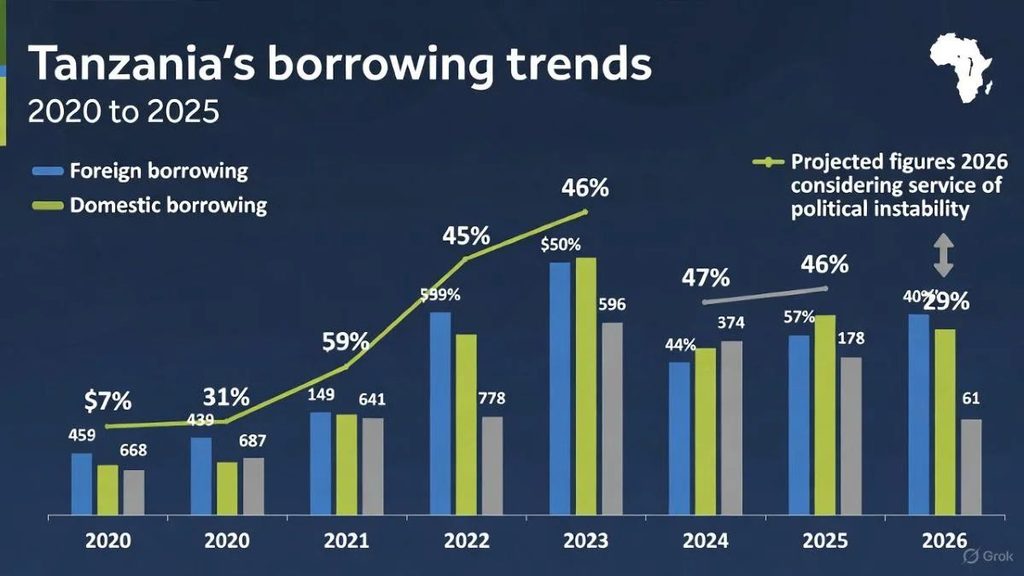
Ndejembi called for improved access to climate and development finance alongside greater mobilisation of private investment.
The challenge for countries such as Tanzania is increasingly to use limited public resources to attract significantly larger pools of private capital into commercially viable infrastructure and development projects.
With the 2030 deadline approaching, Ndejembi said global progress towards the SDGs remained inadequate and argued that greater attention should be paid to implementation and measurable outcomes from development spending.
“Tanzania remains committed to implementing the 2030 Agenda,” he said.
The concern over financing is consistent with one of the major priorities of the current UN General Assembly session. UNGA President Khalilur Rahman has identified closing SDG financing gaps, improving debt sustainability and reforming the international financial architecture among the issues requiring attention as the world approaches 2030.
Tanzania backs UN reform
Tanzania also extended its reform argument beyond international finance to the United Nations itself.
Ndejembi said the institution needed to adjust to changing global realities while protecting its development mandate.
“Managing transformation requires reforming the UN to meet the realities of our time,” he said, commending UN Secretary-General António Guterres for championing the UN80 initiative.
He argued that reform should extend beyond administrative efficiency to organisational effectiveness, accountability and representation.
However, Tanzania cautioned that restructuring should not weaken UN country offices and programmes that deliver development assistance on the ground.

That position reflects the broader debate taking place at the 81st General Assembly, whose theme is “Restoring Trust, Managing Transformation: A United Nations That Delivers for All.”
Security Council bid
Tanzania is also seeking a greater role within the UN’s peace and security architecture.
Ndejembi formally announced the country’s candidacy for a non-permanent seat on the UN Security Council for the 2029–2030 term, with the election scheduled for 2028.
Tanzania’s Vice-President’s Office said the country intends, if elected, to amplify Africa’s voice and advocate preventive diplomacy, peaceful conflict resolution and reform of peacekeeping operations.
The bid adds a diplomatic dimension to Tanzania’s broader call for developing countries, particularly African states, to secure greater representation in international institutions that make decisions affecting finance, development and global security.
Two-state solution
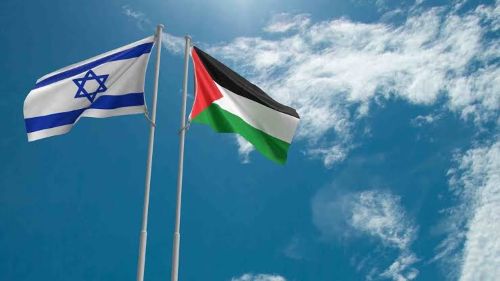
Ndejembi also used the address to restate Tanzania’s position on the Israeli-Palestinian conflict, expressing concern about the humanitarian situation in Gaza and the wider Middle East.
He called for the protection of civilians, unhindered humanitarian assistance and renewed diplomatic efforts towards a lasting settlement.
Tanzania supports a two-state solution in which Israel and Palestine live side by side in peace and security in accordance with international law and relevant UN resolutions, Ndejembi said, while reaffirming Palestinian self-determination.
“We have been consistent on this for the past 50 years. For us, this is a matter of our foreign policy principles,” he said.
Finance at the heart of development
For Tanzania, however, one of the strongest economic messages from New York was that the international development debate increasingly comes down to who can access capital, on what terms and at what cost.
Tanzania is seeking greater concessional financing and climate funding while simultaneously calling for private investors to play a larger role in financing development.
The argument is that without changes to the cost and availability of long-term capital, developing economies could struggle to mobilise the investment required to meet development and climate commitments by 2030.
That makes reform of the global financial architecture more than a diplomatic issue for Tanzania. It is increasingly tied to the country’s ability to finance the infrastructure, climate resilience and productive investment needed to sustain long-term economic growth. I shifted the Middle East section lower in the story because, for a business magazine, the financing architecture, cost of capital, debt and investment implications provide the stronger lead while still preserving the major diplomatic elements of Ndejembi’s address. The wider UNGA high-level week is also explicitly focused on accelerating the SDGs and collective action on development.