By Business Insider Reporter
East Africa’s ambition to build a thriving blue economy is increasingly being challenged by a growing fleet of unregistered vessels that are fuelling organised crime, undermining legitimate trade and threatening the livelihoods of millions who depend on the Indian Ocean.
From trafficking narcotics and weapons to illegal fishing and wildlife smuggling, these unmarked boats have become a critical component of a sophisticated criminal economy stretching from the Horn of Africa to the Swahili Coast.
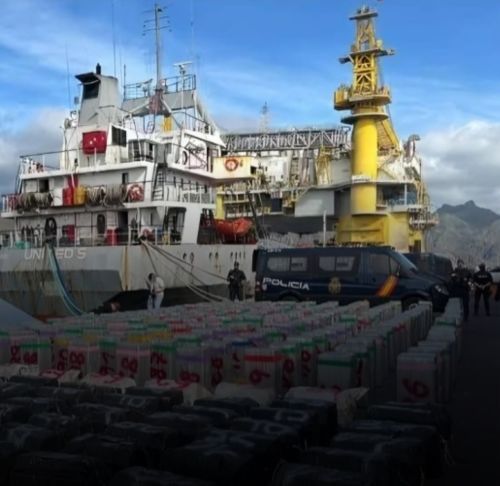
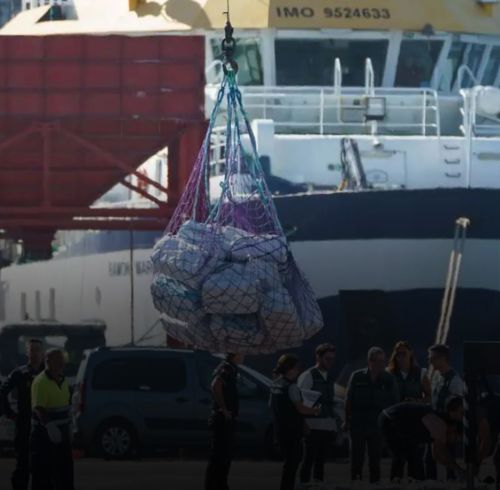
The scale of the threat was laid bare in October 2025 when the Kenyan Navy intercepted the MV Mashallah, an unregistered fishing dhow, some 630 kilometres east of Lamu.
Acting on intelligence from regional and international partners, authorities seized more than one tonne of methamphetamine with an estimated street value of US$63.4 million.
The operation – supported by the Regional Narcotics Interagency Fusion Cell, the Regional Operations Coordination Centre in Seychelles and Interpol – highlighted an alarming shift in regional trafficking patterns.
Rather than simply serving as transit corridors for illicit cargo destined elsewhere, East African ports and coastal communities are increasingly becoming consumer markets for manufactured drugs.
Investigators found that the six Iranian suspects aboard the vessel relied on Thuraya satellite phones and GPS technology to communicate with larger ships operating in international waters, allowing traffickers to evade conventional telecommunications monitoring and maritime surveillance.
A growing risk to investment
The implications extend far beyond law enforcement.
For investors and governments promoting the blue economy as a new engine of growth, weak maritime governance presents a significant economic risk.
Illegal maritime activity erodes fisheries, discourages investment in coastal industries, increases insurance costs for shipping and weakens confidence in regional trade corridors.
The Indian Ocean is one of Africa’s most strategic commercial arteries, connecting East Africa with markets in Asia, the Middle East and Europe.
Criminal networks exploiting its waters threaten not only coastal security but also the broader competitiveness of the region’s maritime economy.
Criminal networks diversify
While drug trafficking often captures headlines, unregistered vessels support a much broader illicit business model.
Off Somalia’s coastline, similar dhows have been used as “mother ships” to launch piracy operations, transport weapons and move supplies for militant organisations.
In April 2025, the United States Africa Command destroyed a vessel suspected of transporting advanced weapons to the militant group al-Shabaab. Earlier interceptions have uncovered shipments containing more than 2,000 AK-47 rifles allegedly destined for extremist groups operating in Somalia.
These same maritime routes are increasingly linked to wildlife trafficking, with rhino horn from northern Mozambique and critically endangered radiated tortoises from Madagascar reportedly transported through unregistered vessels before being transferred to larger ships bound for Asian markets.
The diversification illustrates how organised criminal groups maximise the use of maritime logistics to move multiple forms of illicit cargo using the same networks.
Illegal fishing hurts legitimate businesses
Perhaps the greatest economic damage is felt by coastal communities.
Illegal, unregistered fishing vessels routinely engage in bottom trawling – a destructive practice that drags heavy nets across the seabed, destroying coral reefs, damaging artisanal fishing equipment and indiscriminately capturing marine life, including endangered turtle species.
Without licences or effective monitoring, these vessels overexploit fisheries, reducing fish stocks and intensifying competition for local fishermen.
A recent Transform Bottom Trawling report identified large numbers of unregistered fishing vessels operating in Kenya’s Ungwana Bay, where conflicts with artisanal fishers have become increasingly common.
Further north, the Institute for Security Studies (ISS), through its ENACT programme, identified Bosaso in Somaliland as a major hub where unregistered vessels exploit Somalia’s rich fisheries while benefiting from weak maritime enforcement.
According to the ISS, limited patrol capacity, fragmented governance structures and insufficient coordination between government agencies have created opportunities for both domestic and foreign criminal actors to exploit maritime resources.
“The lack of information sharing among government departments and between states, combined with inadequate legislation, continues to limit coordinated regional action against maritime crime,” notes Denys Reva, a maritime security expert at the Institute for Security Studies (ISS).
He argues that stronger regional coordination and more consistent enforcement are essential to deter organised criminal networks operating at sea.
Tanzania’s role in strengthening maritime security
Tanzania has begun strengthening community participation in maritime surveillance.
One example is the Jahazi Project, launched in August 2025, which integrates government maritime security initiatives with community-led monitoring involving fisherfolk, small-boat operators and Beach Management Units.
The approach recognises that local communities are often the first to detect suspicious vessels, identify smuggling routes and report illegal landings.
Security analysts say combining community intelligence with advanced surveillance technologies and regional information-sharing platforms could significantly improve interdiction efforts.
Cooperation becoming a business imperative
East African governments have also committed themselves to the Djibouti Code of Conduct, which seeks to improve maritime surveillance, prosecute illegal maritime activities and strengthen cooperation against piracy, trafficking and unregistered vessels.
The successful interception of the MV Mashallah demonstrated the value of intelligence-sharing between regional institutions and international partners.

However, experts caution that isolated operations are insufficient.
The Institute for Security Studies argues that sustained intelligence cooperation, harmonised legal frameworks and coordinated naval operations are necessary to disrupt increasingly sophisticated criminal networks.
For East Africa, the stakes extend well beyond security.
With governments investing heavily in ports, logistics corridors, fisheries and ocean-based industries, protecting maritime borders has become an economic priority. The future of the region’s blue economy will depend not only on expanding trade and attracting investment but also on ensuring that criminal enterprises cannot continue exploiting the same waters that legitimate businesses rely upon.
(ORIGINAL REPORTING BY ISS)