
Budget 2026/27 signals a strategic shift as government uses taxation not merely to raise revenue, but to reshape the country’s economic future
By Peter Nyanje, Dodoma
Tax policy is often viewed through a narrow lens: how much money governments collect and how much taxpayers pay.
But Tanzania’s 2026/27 budget suggests something more ambitious.
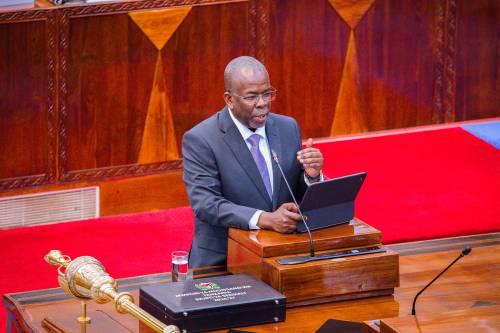
Presenting then budget in P:arliament on June 11, the Minister for Finance, Khamis Mussa Omar said rather than treating taxation simply as a revenue-raising instrument, the government is increasingly deploying tax policy as a tool for industrial development, energy transition, business formalisation and digital transformation.
The Minister described the proposed tax measures as part of a broader strategy aimed at supporting production, protecting domestic industries, attracting investment and advancing the country’s long-term development agenda.
“We are proposing tax reforms that will stimulate investment, production, protect industries and contribute to achieving the objectives of Vision 2050,” the minister told Parliament.
The measures reveal a government attempting to strike a delicate balance: protecting local producers while remaining attractive to investors, encouraging economic growth while broadening the tax base, and supporting emerging sectors while discouraging activities viewed as socially harmful.
The result is perhaps the most targeted and interventionist tax package Tanzania has introduced in recent years.
Building industrial defences
At the heart of the new tax proposals lies a clear policy objective: protecting domestic manufacturing.
For decades, Tanzania’s industrial sector has faced intense competition from imported products, often entering the market at prices local producers struggle to match.
The government now appears determined to use fiscal policy to give domestic manufacturers greater room to compete.
One of the most significant measures is the increase in import duty on cotton fabrics from 25 percent to 35 percent.
At first glance, the adjustment may appear modest. But its implications stretch across the entire textile value chain.
Tanzania is one of Africa’s major cotton producers, yet much of its cotton has historically been exported in raw form while the country imported finished textiles and garments.
By raising tariffs on imported fabrics, policymakers hope to encourage investment in local textile manufacturing, increase demand for locally grown cotton and create employment opportunities across the value chain.
The measure aligns with the government’s broader industrialisation strategy, which seeks to increase domestic value addition and reduce dependence on imported manufactured goods.
A similar logic underpins the decision to introduce a 10 percent import duty on crude edible oils, including palm oil.
Tanzania has substantial agricultural potential for oilseed production, but local producers have often struggled to compete with imported oils.
Government officials believe the new duty will encourage increased domestic production of sunflower, palm and other oil crops while stimulating investment in local processing facilities.
The policy represents a shift from simply importing finished products toward developing entire domestic value chains.
For investors, the message is becoming increasingly clear: Tanzania wants to consume more of what it produces and produce more of what it consumes.
The green transition begins
While some tax measures are designed to protect traditional industries, others are aimed squarely at the future.
Among the most notable reforms are substantial incentives for electric vehicles (EVs).
Import duty on electric vehicles is being reduced dramatically from 25 percent to 10 percent, while value-added tax exemptions are being introduced for equipment used in EV charging stations.

These incentives reflect growing concern about the country’s dependence on imported petroleum products.
Tanzania spends billions of shillings annually importing fuel, exposing the economy to global oil price volatility and foreign exchange pressures.
The government’s response is to begin creating conditions for an eventual transition toward cleaner and potentially cheaper forms of transport.
The move also aligns with broader global trends.
Across Africa, countries are increasingly introducing fiscal incentives to encourage adoption of electric mobility. Nations such as Kenya, Rwanda and South Africa have already begun implementing similar policies, recognising the long-term economic and environmental benefits of electrification.
For Tanzania, the incentives could help attract investors into the emerging EV ecosystem, including vehicle assembly, charging infrastructure and related services.
The government’s own commitment is evident in its directive encouraging public institutions to consider electric and gas-powered vehicles in future procurement plans.
Taken together, the measures suggest that clean energy is no longer being treated solely as an environmental issue but increasingly as an economic strategy.
Relief for small businesses
Perhaps the most politically significant measure in the package is the introduction of a one-year tax holiday for newly registered small businesses under the presumptive tax regime.
The measure acknowledges a long-standing challenge within Tanzania’s economy.
Millions of entrepreneurs operate informally, often viewing formal registration as a pathway to additional costs rather than greater opportunities.
The government hopes the tax holiday will change that perception.
By removing the immediate tax burden associated with formalisation, policymakers aim to encourage more businesses to register, access financial services and enter the formal economy.

The initiative complements broader efforts to formalise informal businesses through business clusters, training programmes and expanded access to finance.
The strategy reflects a growing recognition that sustainable revenue growth is not simply about collecting more taxes from existing taxpayers but bringing more economic activity into the formal system.
Taxing the digital economy
As commerce increasingly migrates online, governments around the world face a common challenge: how to tax economic activity that often occurs across borders.
Tanzania’s response is becoming more assertive.
The budget proposes increasing income tax for non-resident digital service providers from 2 percent to 3 percent.
The measure targets multinational digital platforms and online service providers generating revenue from Tanzanian consumers without maintaining a physical presence in the country.
Supporters argue that the move promotes fairness by ensuring international digital companies contribute to public finances in the same way domestic businesses do.
Critics, however, warn that excessive taxation could discourage investment or increase costs for consumers.
Regardless of the debate, the measure reflects a broader global trend as governments seek ways to capture revenue from the rapidly expanding digital economy.
For Tanzania, it signals a determination to ensure that economic activity increasingly taking place online does not escape the tax net.
Tackling gambling through taxation
One of the more controversial measures is the introduction of a 5 percent excise duty on gaming stakes, including betting and casino activities.
The government argues that the tax serves both fiscal and social objectives.
While it will generate additional revenue, officials have also framed it as a mechanism to address concerns about gambling addiction, particularly among young people.
Over the past decade, betting has become one of Tanzania’s fastest-growing consumer industries, fuelled by widespread smartphone adoption and digital payment systems.
The sector has created jobs and generated tax revenue, but it has also raised concerns among policymakers, parents and religious leaders.
The new levy reflects a growing willingness by government to use taxation not only to raise funds but also to influence behaviour.
Economists often refer to such measures as “sin taxes” – fiscal instruments designed to discourage activities viewed as socially harmful.
Whether the levy ultimately changes gambling behaviour remains to be seen.
Funding universal health coverage
Another notable feature of the tax package is the introduction of targeted levies intended to support universal health insurance.
The government is proposing a specific tax of TSh20 per 1,000 cigarettes and TSh10 per kilogram of sugar.
These measures pursue a dual objective. On one hand, they create a dedicated source of funding for healthcare initiatives. On the other, they potentially discourage consumption of products associated with long-term health risks.
The approach mirrors policies adopted in numerous countries where taxes on tobacco, sugary products and alcohol are increasingly linked to healthcare financing.
For Tanzania, the initiative represents an attempt to create sustainable domestic funding sources for expanding healthcare access while reducing reliance on external financing.
More than a revenue strategy
Viewed collectively, the 2026/27 tax measures reveal a government attempting to do more than balance its books.
The reforms are designed to influence investment decisions, encourage domestic production, accelerate formalisation, promote clean energy, expand the digital economy and improve public health outcomes.
In many respects, the budget reflects Tanzania’s evolving economic ambitions.
As the country moves toward Dira 2050, tax policy is no longer being presented merely as an administrative tool for collecting revenue.
It is increasingly being used as an instrument for shaping the structure of the economy itself.
The success of that strategy will ultimately depend on execution. But one message from the budget is unmistakable: Tanzania is using taxation not only to finance growth, but to determine what kind of growth it wants.