
By Business Insider Reporter
The East African Community (EAC) has unveiled a new package of trade, customs and industrialisation reforms aimed at strengthening regional commerce, reducing the cost of doing business and positioning East Africa as a more competitive investment destination amid growing uncertainty in the global economy.
The measures, adopted during the 48th Meeting of the Sectoral Council on Trade, Industry, Finance and Investment (SCTIFI) in Arusha, signal a renewed push by the seven-member bloc to deepen economic integration at a time when geopolitical tensions, supply chain disruptions and rising protectionism continue to reshape global trade patterns.
For Tanzania and other EAC member states, the decisions could have significant implications for exporters, manufacturers, logistics companies and investors seeking to capitalize on a regional market of more than 330 million consumers with a combined GDP exceeding US$350 billion.
Building resilience through regional integration
Opening the ministerial meeting, EAC Secretary General Amb. Stephen Mbundi warned that East African economies remain vulnerable to external shocks, including disruptions in maritime trade routes, volatile global markets and increasing barriers to international trade.
His message was clear: the region must increasingly rely on its own market to drive growth.
The reforms adopted by ministers are designed to strengthen intra-regional trade, improve customs efficiency, eliminate trade bottlenecks and accelerate industrialization – key pillars of the EAC’s long-term vision of becoming a competitive economic bloc.
For Tanzania, which has positioned itself as a strategic trade and logistics gateway for East and Central Africa, deeper regional integration could enhance export opportunities and strengthen the country’s role in regional supply chains.
Faster cargo movement to reduce business costs
Among the most significant outcomes of the meeting was the endorsement of Time Release Studies covering both the Northern and Central Corridors.
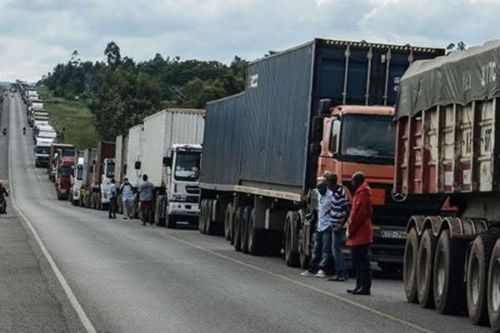
The studies assess how long cargo takes to move through ports, border posts and customs systems, helping governments identify inefficiencies that increase business costs.

The findings showed that closer collaboration among customs authorities, border agencies and the private sector has already improved cargo clearance times. However, ministers acknowledged that further reforms are needed to eliminate operational bottlenecks that continue to affect regional trade.
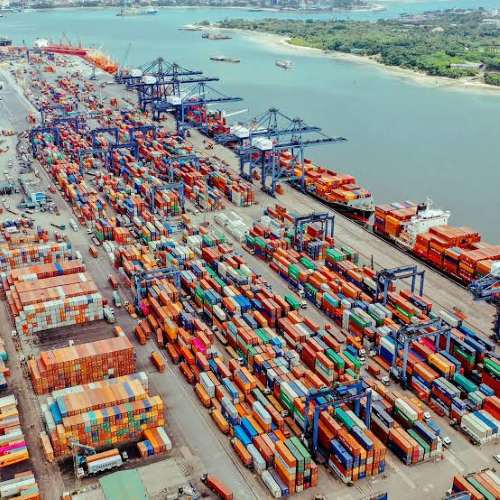
For Tanzania, improved efficiency along the Central Corridor could strengthen the competitiveness of the Port of Dar es Salaam, which serves landlocked markets including Rwanda, Burundi, Uganda, Zambia and the Democratic Republic of Congo.
Faster cargo movement translates directly into lower logistics costs, improved supply-chain reliability and enhanced attractiveness for investors.
Tougher measures against non-tariff barriers
The EAC also intensified efforts to tackle non-tariff barriers (NTBs), long regarded as one of the biggest obstacles to regional trade.
Despite progress under the Customs Union and Common Market frameworks, traders continue to face challenges ranging from administrative delays and multiple inspections to unauthorized fees and restrictive regulations.
Ministers reviewed proposals that could introduce stronger legal mechanisms, including sanctions against entities that impose illegal trade restrictions and compensation for businesses that incur losses due to unjustified barriers.
If adopted, the reforms would represent a major shift in the enforcement of regional trade rules and could significantly improve the ease of doing business across East Africa.
For Tanzanian exporters, particularly those in agriculture, manufacturing and consumer goods, the removal of non-tariff barriers could open access to regional markets more efficiently and at lower cost.
Industrialisation takes centre stage
Beyond trade facilitation, ministers also advanced measures aimed at supporting industrial development and regional value addition.
A major milestone was the approval of revised EAC Rules of Origin, a critical framework that determines which products qualify for preferential tariff treatment within the regional market.
The updated rules are expected to provide greater clarity for manufacturers while encouraging businesses to source inputs within the region.
Analysts say the reforms could boost investment in manufacturing sectors such as agro-processing, textiles, pharmaceuticals, chemicals and consumer goods.
For Tanzania, which has prioritised industrialisation as a central pillar of its economic transformation agenda, stronger regional value chains could help manufacturers expand production and access larger markets.
Singapore signals growing investor interest
In a development that highlights East Africa’s growing economic significance, ministers also considered a proposal from Singapore to negotiate a Free Trade Agreement (FTA) with the EAC.
The move reflects increasing international interest in forging commercial partnerships with one of Africa’s fastest-growing regional blocs.
The EAC agreed to continue engaging Singapore while undertaking technical preparations for future negotiations.
An eventual EAC-Singapore FTA could create new opportunities for investment, technology transfer, logistics partnerships and access to Asian markets.
For Tanzania, stronger economic ties with Singapore could support ambitions to develop world-class logistics, maritime and financial services industries.
Fiscal reforms to support regional trade
The ministers also endorsed a package of fiscal measures for the 2026/27 financial year under the Common External Tariff (CET) framework.
The measures, which are expected to take effect on July 1, 2026, provide the policy foundation for harmonised customs duties across the region.
Such harmonisation is essential for creating a predictable business environment and reducing uncertainty for investors operating across multiple EAC markets.
Businesses have long argued that consistent tariff policies improve planning, lower compliance costs and encourage long-term investment decisions.
What it means for Tanzania
For Tanzania, the outcomes of the Arusha meeting align closely with national ambitions to become a regional trade, logistics and manufacturing hub.
The country’s investments in the Standard Gauge Railway, the Port of Dar es Salaam, road infrastructure and industrial parks stand to benefit from a more integrated regional market.
Reduced trade barriers, improved customs efficiency and stronger regional value chains could enhance Tanzania’s competitiveness while creating new opportunities for exporters and manufacturers.
At a time when global economic conditions remain uncertain, the EAC’s latest reforms reflect a broader strategic shift: strengthening internal markets and regional production networks to drive growth.
The challenge now lies in implementation.
While East Africa has adopted numerous integration agreements over the years, businesses will be watching closely to see whether partner states translate commitments into action. If effectively implemented, the decisions taken in Arusha could accelerate the emergence of East Africa as one of Africa’s most dynamic economic regions – and reinforce Tanzania’s position at the heart of that transformation.