
By Business Insider Reporter
As East African regulators move to eliminate cross-border mobile connectivity barriers, Tanzania stands to gain significantly from reforms that could lower communication costs, strengthen regional trade and accelerate the country’s ambitions to become a digital economy hub.
The proposed Enhanced Regional Mobile Roaming Framework, currently under discussion by telecommunications regulators from the East African Community (EAC), seeks to address long-standing challenges that have made cross-border communication expensive, unreliable and fragmented across the region.
While the initiative may appear technical, its economic implications are far-reaching. For Tanzania, which serves as a strategic gateway linking six EAC countries with Southern Africa and the Democratic Republic of Congo (DRC), seamless mobile connectivity could unlock new opportunities in trade, tourism, logistics, digital finance and investment.
A hidden cost to regional trade
For years, businesses operating across East Africa have faced a common challenge: staying connected across borders.
Transport companies moving cargo between Dar es Salaam, Nairobi, Kampala, Kigali, Bujumbura and eastern DRC often incur high roaming costs. Small-scale traders crossing border posts such as Namanga, Holili, Mutukula, Rusumo and Kabanga frequently switch SIM cards or lose access to affordable communication altogether.
These barriers create hidden costs that undermine the EAC’s broader integration agenda.
According to regional business groups, communication is increasingly becoming as important as roads, ports and railways in facilitating trade. A trader unable to communicate with suppliers, customers or logistics providers in real time faces delays, higher costs and reduced competitiveness.
The proposed roaming framework aims to address these inefficiencies by harmonising pricing structures, improving service quality and strengthening cooperation among regulators and mobile network operators.
For Tanzania, whose economy increasingly relies on regional trade, such reforms could reduce transaction costs and improve the efficiency of cross-border commerce.
Supporting Tanzania’s position as a regional logistics hub
Tanzania has invested heavily in transport infrastructure over the past decade, including the Standard Gauge Railway (SGR), port modernisation projects, strategic roads and airport expansions.
These investments are designed to position the country as East Africa’s leading logistics and trade gateway.
However, physical infrastructure alone is no longer enough.
Modern logistics depends heavily on digital communication systems that allow transporters, customs agents, freight forwarders and cargo owners to exchange information instantly.
Seamless mobile connectivity across East Africa would complement Tanzania’s infrastructure investments by improving cargo tracking, fleet management, customs coordination and supply-chain visibility.
For logistics companies operating from the Port of Dar es Salaam to inland destinations in Rwanda, Burundi, Uganda and the DRC, reduced roaming costs could translate into substantial operational savings.
A boost for tourism and business travel
Tourism is another sector that could benefit significantly.
Tanzania continues to attract growing numbers of regional visitors from Kenya, Uganda, Rwanda and Burundi, while business travel within East Africa has increased steadily as regional economic integration deepens.
Yet many travellers still encounter expensive roaming charges or inconsistent mobile services immediately after crossing borders.
The proposed framework seeks to make roaming services more affordable and predictable, allowing tourists and business travellers to remain connected without incurring excessive costs.
This could improve visitor experiences while encouraging greater movement of people across the region.
For Tanzania’s hospitality industry, stronger regional tourism flows would support hotels, tour operators, restaurants, transport providers and conference organisers.
Accelerating digital financial inclusion
Perhaps one of the most transformative opportunities lies in digital finance.
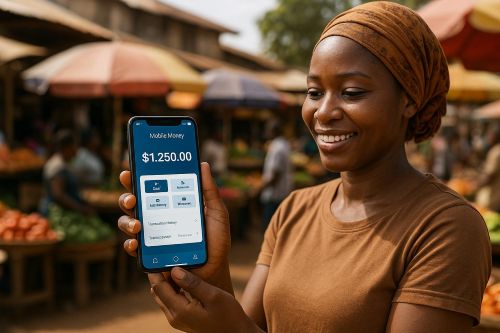
Tanzania is among Africa’s leading mobile money markets, with millions of citizens relying on digital platforms for payments, remittances and financial services.
However, cross-border digital transactions often remain fragmented due to regulatory differences and connectivity challenges.
Improved regional connectivity could strengthen the growth of interoperable mobile money services, making it easier for traders, migrant workers and businesses to transfer funds across borders.
As the EAC advances its vision of a Single Digital Market, mobile connectivity will become a critical enabler of regional digital commerce.
This presents opportunities for Tanzanian fintech companies, banks and telecommunications providers to expand their regional footprint.
Attracting investment into Tanzania’s digital economy
The roaming reforms could also improve Tanzania’s attractiveness as an investment destination.
Investors increasingly evaluate digital infrastructure alongside traditional factors such as transport networks, energy availability and regulatory stability.
A region with predictable and affordable connectivity is more attractive to technology companies, business process outsourcing firms, fintech innovators and digital entrepreneurs.
The proposed framework would create a more harmonised operating environment for telecommunications companies while reducing regulatory uncertainty.
This could encourage additional investment in broadband networks, data centres, digital services and innovation ecosystems across East Africa.

For Tanzania, which is positioning itself as a regional technology and innovation hub, enhanced connectivity could strengthen competitiveness and attract new capital.
Building East Africa’s single digital market
The roaming initiative forms part of broader efforts to establish a Single Digital Market across East Africa.
Just as the EAC has sought to facilitate the free movement of goods, capital and labour, policymakers increasingly recognise that data and digital services must also move seamlessly across borders.
The future of regional integration will depend not only on highways and railways but also on digital networks that connect businesses, governments and citizens.
For Tanzania, the benefits extend beyond lower phone bills.
The reforms have the potential to strengthen regional trade, support tourism, improve logistics, accelerate financial inclusion and attract investment into the country’s digital economy.
As East Africa moves toward deeper economic integration, seamless mobile connectivity may prove to be one of the most important foundations of future growth. In a region where economic opportunities increasingly depend on real-time communication, reducing digital borders could be just as important as removing physical ones.