By Costantine Muganyizi
When Benjamin Mkapa Hospital (BMH) opened its doors in 2015, it symbolized a bold step in Tanzania’s ambition to build a modern referral and teaching hospital capable of delivering advanced medical care.
A decade later, as the country positions itself toward long-term transformation frameworks such as Dira 2050, the hospital’s evolution is increasingly being viewed not just as institutional growth – but as a strategic pillar in the national vision for a high-income, health-secure society.
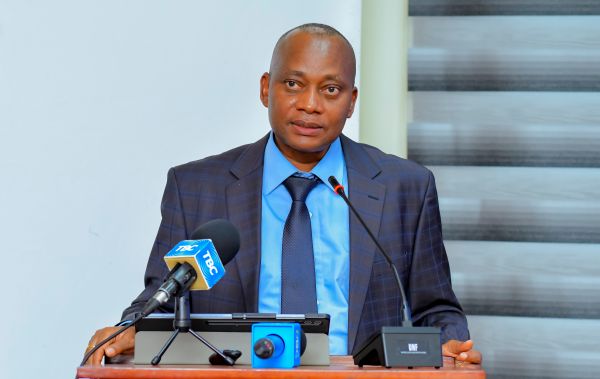
As BMH prepares to mark its 10th anniversary on 15 July 2026, Executive Director Prof. Abel Makubi says the milestone reflects both achievement and urgency.
“We are celebrating a journey of transformation and progress, but we are equally mindful of the fact that advanced healthcare remains financially out of reach for many people who need it most,” he said during a media briefing in Dar es Salaam last month on the hospital’s Silver Jubilee celebrations.
The anniversary will culminate in a national fundraising harambee in Dodoma aimed at raising TSh 7 billion over two years. The funds will support two of the most complex and costly interventions in modern medicine – kidney transplantation and bone marrow transplantation for children with sickle cell disease.
In the context of Dira 2050 aspirations, which emphasize human capital development, universal access to quality services, and a US$ 1trillion competitive knowledge-based economy, this initiative signals a critical shift: Tanzania is no longer only expanding healthcare access, but deliberately investing in high-specialization medicine as a development engine.
A hospital evolving into a strategic national asset
Over the past decade, BMH has grown into a major referral and regional medical hub serving approximately 10 million people across eight regions. With 400 beds and more than 1,073 staff – including over 100 specialists and super-specialists – the hospital now stands among the country’s most advanced public health institutions.
Its service portfolio has expanded to include organ transplantation, cardiac surgery, neurosurgery, advanced radiology, dialysis, and complex orthopaedics – services that previously required patients to seek treatment abroad.
This expansion aligns with Tanzania’s broader policy direction of reducing medical outbound referrals and strengthening domestic tertiary care capacity, a key pillar in long-term development planning frameworks including Dira 2050 and the health sector transformation agenda.
Prof. Makubi underscores this ambition clearly: “Our direction is to ensure Tanzanians access world-class treatment here at home. That is the future we are building toward.”
From service expansion to high-cost health realities
Yet beneath the progress lies a structural challenge that is central to Dira 2050’s equity promise: the affordability gap in advanced healthcare.
Conditions such as kidney failure and sickle cell disease are rising, driven by both non-communicable and genetic factors. While treatment capacity has improved significantly, the cost of transplantation remains prohibitive for most households.
This tension explains why the upcoming harambee is not symbolic, but systemic. It reflects a shift toward blended health financing models, combining government investment, insurance pooling, institutional partnerships, and citizen participation.
The collaboration with the National Health Insurance Fund (NHIF) is particularly significant, signalling an emerging architecture for financing high-cost care in a universal health coverage future.
Regional healthcare hub in the making
Another dimension of BMH’s transformation is its growing role in regional medical diplomacy and health economics.
Patients from Burundi, Comoros, the Democratic Republic of Congo, and other neighbouring countries increasingly seek care in Tanzania. This positions BMH as part of a broader East and Central African healthcare corridor, where medical services are becoming both an export and a source of national competitiveness.
In Dira 2050 terms, this represents the emergence of health as an economic sector, not just a social service – contributing to foreign exchange earnings, skills development, and regional influence.
Quality systems and institutional modernization
Beyond clinical expansion, BMH’s transformation reflects a deeper institutional shift toward global standards.
The hospital has reduced patient turnaround time from eight hours to three through digital systems, introduced structured queuing and feedback mechanisms, and achieved ISO 15189:2022 accreditation for laboratory services.
These improvements align closely with Dira 2050’s emphasis on digital transformation, efficiency, and service quality in public institutions.
Healthcare delivery is increasingly defined not only by what services are offered, but by how efficiently, transparently, and reliably they are delivered.
Infrastructure as long-term national investment
BMH’s infrastructure pipeline – including a cancer centre, kidney treatment facility developed in partnership with Japan, and a bone marrow transplant centre of excellence – reflects long-term strategic thinking.
These are not standalone projects; they are part of a broader effort to build specialized national health infrastructure capable of supporting an ageing and disease-diversifying population.
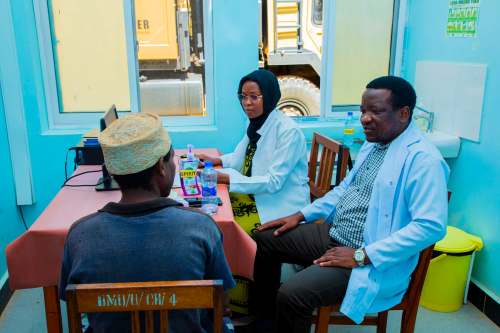
In the Dira 2050 framework, such investments are essential for building a resilient workforce and reducing productivity losses caused by untreated chronic illnesses.
The sustainability question: financing the future of care
Despite impressive progress, a critical question remains: can Tanzania sustain high-cost, high-specialization healthcare without recurring reliance on fundraising campaigns?
Prof. Makubi suggests an emerging hybrid model is the answer – one that blends public financing, insurance systems, partnerships, and citizen contributions.
The 15 July 2026 harambee therefore becomes more than an anniversary – it is a test of national solidarity and system maturity in financing advanced healthcare.
A healthcare system at the heart of Dira 2050
BMH’s 10-year journey mirrors Tanzania’s broader transition – from expanding access to building capability, from general care to specialization, and from isolated institutions to system-wide transformation.
As the country advances toward the ambitions of Dira 2050, the hospital stands as both a symbol and a stress test of that vision.
The challenge ahead is no longer whether Tanzania can build advanced hospitals – but whether it can ensure that every citizen, regardless of income, can access the life-saving care those hospitals now provide.
In Prof. Makubi’s words, the mission is clear: “No Tanzanian should be denied life-saving treatment because of cost or distance.” Whether that promise becomes reality will define not only BMH’s next decade – but Tanzania’s journey toward 2050.
Milestones: Key Achievements in 10 Years
1.Government investment & growth
- TSh 283 billion invested in infrastructure and equipment over 10 years
- Staff increased from 20 (2015) to 1,076 (2026)
2.Expansion of specialized services
- 20 specialist and 17 super-specialist services introduced
- Key services include kidney transplant and bone marrow transplant for sickle cell patients
3.Medical tourism services
- Burundi patients treated: 2,897
- Comoros patients: 526
- Patients also received from DRC and other foreign nationals
4.Royal Clinic initiative
- Established 10 July 2025
- Treated 18,607 patients, including 390 international and VIP patients
5.Quality improvement
- Achieved ISO 15189:2022 international laboratory accreditation
- Improved ICT systems and customer care (queuing system & feedback system)
- Reduced turnaround time from 8 hours to 3 hours
6.Strategic projects
- Cancer centre (TSh 32 billion)
- Kidney treatment building (TSh 44.9 billion, jointly funded by Japan and Government of Tanzania)
- Bone marrow transplant centre of excellence
- Establishment of a diploma-level training institution
Ends…