Treasury Registrar says stronger governance, accountability and professional leadership are critical to improving returns from Tanzania’s expanding portfolio of public investments
By Business Insider Reporter, Zanzibar
The Office of the Treasury Registrar (OTR) has called for stronger governance systems and results-oriented leadership across public institutions and state-owned enterprises, warning that the long-term success of Tanzania’s public investments will depend less on the scale of capital injected and more on how institutions are managed.
The message comes as government investments in public entities and companies where the state holds minority shares have risen to Sh92.3 trillion, reflecting the growing strategic role of public enterprises in driving economic transformation, infrastructure expansion and industrial development.
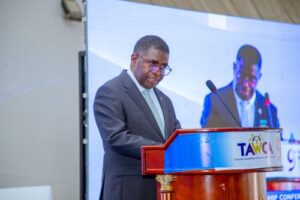
Speaking at a forum for board chairpersons and chief executive officers in Zanzibar, OTR Director of Administration and Human Resources, Mr Chacha Marigiri, said governance failures, weak accountability and poor management practices remain among the biggest risks to achieving sustainable returns from public investments.
Presenting a paper titled “Governance in Public Investment Entities vis-à-vis the Functions and Powers of the Treasury Registrar,” Mr. Marigiri said public investment entities must operate with higher levels of professionalism, transparency and financial discipline if they are to contribute meaningfully to national development goals.
“Sustainable development is not achieved through investment alone. The real impact comes from how effectively institutions manage public resources and translate them into measurable economic and social outcomes,” he said.
Public investments expand across key sectors
According to the OTR, the government’s investment portfolio now spans 308 public investment entities, including commercial corporations, non-commercial public institutions, strategic joint ventures, minority shareholdings and both domestic and foreign investments.
The portfolio covers critical sectors of the economy including transport, energy, agriculture, finance, tourism, mining and industry — areas that the government sees as central to achieving Tanzania’s long-term industrialisation and development ambitions.
Over the past several years, Tanzania has accelerated public investment in strategic infrastructure and productive sectors through institutions such as:
- the Tanzania Ports Authority (TPA),
- Tanzania Electric Supply Company (TANESCO),
- Air Tanzania Company Limited (ATCL),
- Tanzania Railways Corporation (TRC),
- and the National Development Corporation (NDC).
Analysts say the rapid expansion of state-linked investments has increased pressure on regulators and oversight institutions to ensure public assets generate sustainable financial returns instead of becoming fiscal liabilities.
Governance emerging as economic issue
Mr. Marigiri said the role of the Treasury Registrar has evolved beyond routine supervision of public entities to include performance monitoring, investment guidance and ensuring alignment between state enterprises and national development priorities.
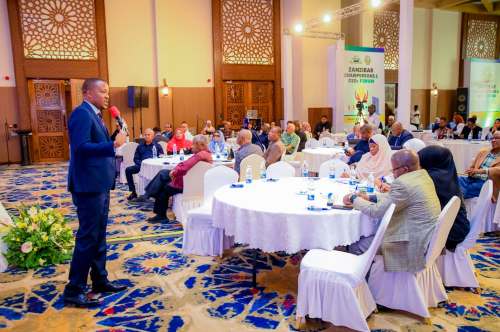
He outlined the OTR’s responsibilities as including monitoring institutional performance, tracking government dividends and returns, advising on board appointments, conducting performance evaluations and supporting strategic investment decisions.
He further urged boards and management teams to strengthen risk management systems, adopt data-driven decision-making and increase the use of technology in governance and operational oversight.
Economic analysts increasingly view governance standards within state-owned enterprises as a critical economic issue, particularly at a time when African governments are under pressure to improve efficiency, reduce debt exposure and maximise returns from public assets.
Lessons from global state-owned enterprises
Drawing comparisons with countries such as Singapore, Norway, China and Malaysia, Mr. Marigiri said successful public investment models globally are built on strong governance systems rather than simply large state ownership.
“No nation succeeds merely by owning public institutions. Success depends on how those institutions are managed with professionalism, accountability and long-term vision,” he said.
Countries such as Singapore have built globally competitive state investment structures through strict performance oversight, merit-based leadership and commercial discipline, allowing state-linked companies to compete effectively in international markets.
Long-term strategy to 2050
Mr. Marigiri revealed that the OTR has already prepared a Long-Term Perspective Plan covering 2025/26 to 2049/50 aimed at transforming the office into a catalyst for economic growth through strategic public investment management.
The strategy aligns with Tanzania’s broader Development Vision 2050 agenda, which places increasing emphasis on industrial competitiveness, private sector participation, energy security, logistics infrastructure and sustainable economic growth. He said future success would depend heavily on stronger collaboration between boards, management teams, government ministries and oversight institutions to build resilient and competitive public enterprises capable of delivering measurable economic value.