By Costantine Muganyizi
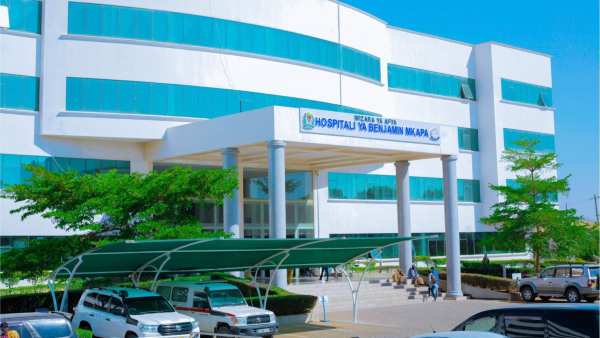
Benjamin Mkapa Hospital (BMH) has recorded a remarkable transformation over the past two years under the leadership of Executive Director Prof Abel Makubi (pictured), positioning the institution among East and Central Africa’s fastest-rising centres for specialized healthcare and medical tourism.
Since assuming office following his appointment by President Dr Samia Suluhu Hassan, Prof Makubi has overseen sweeping reforms focused on improving patient experience, expanding specialised treatment services, strengthening operational efficiency, and advancing the hospital’s ambition of turning Dodoma into a regional medical tourism hub.
In an exclusive interview with Business Insider, he said these landmark achievements – alongside other key milestones – will be commemorated in July as the hospital celebrates its 10th anniversary, a moment expected to reflect on a decade of advancing specialised healthcare services and improving patient outcomes.
Prof Makubi emphasised that the achievements recorded during his tenure would not have been possible without the dedication of staff and the strong coordination with the Ministry of Health and other stakeholders.
“None of what we have achieved would have been possible without the commitment of our healthcare workers, whose professionalism and resilience have been the backbone of this transformation, and the close cooperation we continue to receive from the Ministry of Health,” he said.
He further underscored that sustained and strategic government investment has been the defining pillar of the hospital’s rapid progress, enabling it to expand infrastructure, strengthen specialist services, and improve access to advanced care.
“Of ultimate importance is the unwavering investment by the Sixth Phase Government under the visionary leadership of President Dr. Samia Suluhu Hassan, which has not only transformed BMH’s capacity but is now positioning the institution to evolve into a fully-fledged national referral hospital and a centre of excellence for specialized healthcare in Tanzania and the region,” Prof Makubi added.
Over the past two years, the hospital has introduced major changes aimed at improving service delivery and making it the pillar of medical tourism in the country. These include customer care training for healthcare workers, a 24-hour call centre, an SMS notification system for patients, and interactive WhatsApp platforms that allow patients and citizens to directly engage hospital management.
Shedding more light on the transformation journey, Prof Makubi noted:
“We focused first on changing the mindset of our staff and leaders so that patient care becomes not just treatment, but a service rooted in professionalism, compassion, and dignity.”
The transformation has also been marked by significant breakthroughs in highly specialized healthcare services that were previously inaccessible to many Tanzanians.
Among the major milestones is the successful performance of bone marrow transplants for patients with unmatched blood groups – a breakthrough Prof Makubi described as the first of its kind in Tanzania and the wider Great Lakes region.
In the past five years alone, BMH has performed kidney transplants on 50 patients, conducted 30 bone marrow transplants for children with sickle cell disease, and completed 518 knee and hip replacements as well as 1,347 laser lithotripsy procedures.
The hospital has also carried out 2,074 cath lab procedures, performed open-heart surgeries on more than 73 patients, and implanted pacemakers in 34 others. In addition, BMH has expanded minimally invasive laparoscopic surgery across neurosurgery, urology, gynecology, ophthalmology, and general surgery, enabling faster recovery and fewer complications for patients.
The growing success of these services is increasingly attracting international patients from countries including Comoros, Burundi, Malawi and the Democratic Republic of the Congo, strengthening Tanzania’s emergence as a regional destination for affordable specialized treatment.
Prof Makubi attributed much of the hospital’s progress to sustained government investment particularly in medical equipment, medicines, technology, and human capital development.
During the period, medicine availability at the hospital increased from about 90 percent to nearly 99 percent, while the workforce expanded from around 800 employees to more than 1,100, including specialist doctors whose numbers rose from 60 to nearly 100.

BMH has since earned recognition from the East African Community as a regional Centre of Excellence in bone marrow transplantation services, while its laboratory recently secured international accreditation for quality and diagnostic accuracy. Health sector analysts say the hospital’s progress demonstrates Tanzania’s growing capacity to reduce dependence on overseas treatment while positioning healthcare as a strategic economic sector capable of generating foreign exchange and supporting regional integration.