By Business Insider Reporter, Dodoma
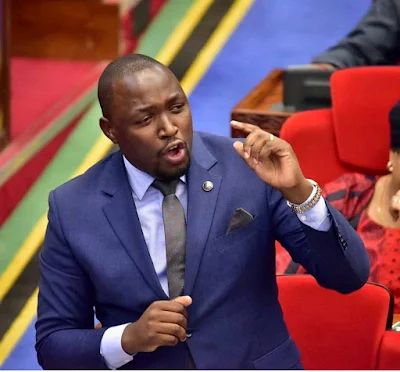
A growing debate over player remuneration has exposed structural weaknesses in Tanzania’s sports economy, after Makete MP, Festo Sanga (pictured above), called on the government to introduce a formal salary framework for athletes.
Speaking during parliamentary deliberations on the budget of the Ministry of Information, Culture, Arts and Sports, Sanga argued that the current system – where individual clubs determine player salaries independently – has created wide disparities, weakened professionalism, and opened the door to unethical practices.
He warned that the absence of standardised pay structures risks undermining the integrity of the sector, particularly in football, which dominates Tanzania’s sporting landscape. According to Sanga, the existing model has fostered conditions in which salary negotiations lack transparency, potentially encouraging favouritism and informal inducements.
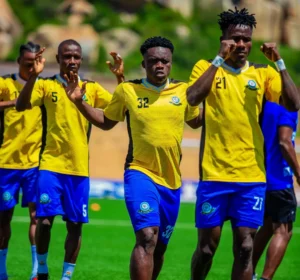
The disparities are stark. In some top-tier football clubs, particularly within the Tanzania Premier League, foreign players can reportedly earn upwards of TSh 80 million per month, while local teammates in the same squad receive as little as TSh 4.3 million.
Such gaps, he argued, not only raise questions of fairness but also erode morale among domestic players who feel undervalued despite contributing to team performance.
“This is not sustainable. We need a system that establishes clear salary benchmarks for our athletes,” Sanga told Parliament, cautioning that failure to act could have long-term consequences for talent development and retention.
The issue of player remuneration has become increasingly prominent as Tanzania’s football industry undergoes rapid commercialisation.
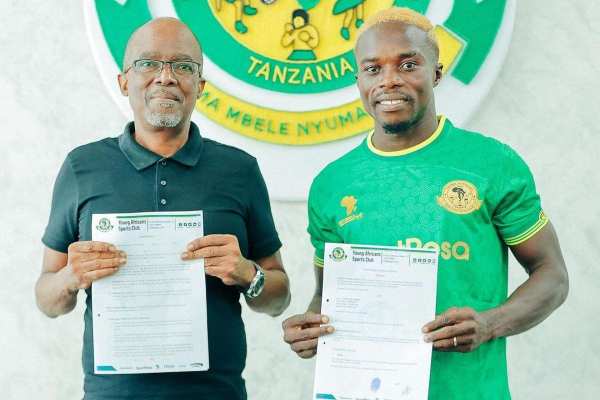
Leading clubs such as Simba Sports Club and Young Africans Sports Club have expanded their players recruitment budgets in recent years, driven by sponsorship deals, broadcasting revenues, and participation in continental competitions organised by the Confederation of African Football (CAF).
This growth has elevated wage bills but also widened inequalities within squads, particularly between high-profile foreign signings and locally developed players. Industry observers note that while foreign talent often commands premium salaries due to experience and market demand, the absence of regulatory guidance leaves room for distortion and inconsistency.
Beyond football, similar concerns are emerging across other disciplines, including athletics and boxing, where many Tanzanian sportsmen continue to operate without formal contracts or reliable income structures. Payments are often irregular, performance-based, or dependent on sponsorships, exposing athletes to financial insecurity even at peak performance levels.
Globally, salary regulation in sport varies widely. Some leagues operate under strict wage caps or collective bargaining agreements that protect minimum earnings and ensure equitable distribution of revenues. In contrast, Tanzania’s largely market-driven model reflects an industry still in transition, where governance frameworks have yet to catch up with commercial expansion.
For policymakers, the challenge lies in balancing regulation with competitiveness.
Introducing salary bands or minimum wage thresholds could enhance fairness and transparency, but overly rigid controls may discourage investment or limit clubs’ ability to attract international talent.
Nevertheless, Sanga’s intervention has reignited discussion on the need for a more structured and professional sports ecosystem – one that safeguards athletes’ welfare while supporting sustainable industry growth. As Tanzania positions sport as both a cultural asset and an economic sector, the question of how players are compensated is likely to remain central to its long-term development strategy.