By Business Insider Reporter
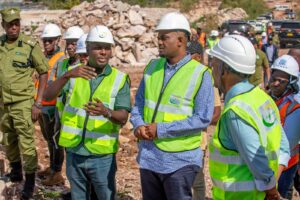
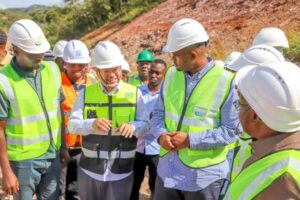
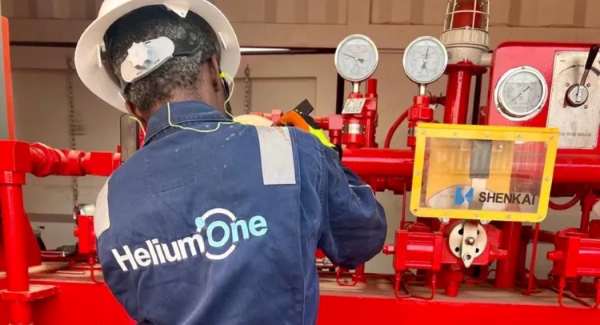
Tanzania’s mining industry could be on the cusp of a structural transformation following a landmark gas extraction agreement between the government and Helium One Global Limited, executed through their joint venture Songwe Helium Limited.
Signed in the Songwe Region on May 2, 2026, the deal is being viewed as a strategic pivot that may redefine the country’s role in the global mining landscape.
At the centre of the agreement is the development of helium resources in the Southern Rukwa Basin, increasingly recognised for its high-grade deposits. Unlike traditional extractive commodities such as gold, helium is a high-value industrial gas with critical applications in medical imaging, semiconductor manufacturing, and aerospace technologies.
This positions the project as a gateway for Tanzania to move beyond volume-driven mineral exports towards participation in specialised, technology-linked global supply chains.
The timing of the project aligns with tightening global helium supplies. Production remains heavily concentrated, with the United States and Qatar accounting for the bulk of output, while countries such as Russia, Algeria and Canada play secondary roles.
Against this backdrop, Tanzania’s entry into the market could prove consequential as global demand, currently estimated at over 6 billion cubic feet annually, continues to rise towards projected levels of more than 8.5 billion cubic feet by the end of the decade.
Government officials say the agreement reflects a deliberate policy shift aimed at maximising national benefit from strategic resources. Under the terms of the deal, the state will retain a 17 percent stake in Songwe Helium Limited, ensuring direct participation in decision-making and revenue streams.
The approach underscores a broader reform agenda within the mining sector, where authorities have increasingly prioritised value retention, transparency, and long-term economic impact.
Beyond fiscal returns, the project is expected to introduce new technical capabilities into Tanzania’s extractive industries.
Helium production requires advanced geological modelling, precision drilling, and specialised processing infrastructure, areas that could drive skills development and technology transfer within the local workforce.
Industry analysts note that such capabilities have historically been limited in Tanzania’s mining sector, which has largely focused on conventional minerals.
The project has already attracted an estimated US$60 million in investment, with expectations of broader economic spillovers as development progresses.
These include increased demand for local suppliers, infrastructure improvements in the Songwe corridor, and expanded employment opportunities, particularly for young Tanzanians.
The extraction of associated gases such as hydrogen could also open additional pathways into emerging energy markets, further strengthening the project’s long-term strategic value.
Confidence in the project’s viability has been bolstered by earlier exploration results. Drilling at the Itambula West-1 well in 2024 confirmed helium concentrations of up to 7.6 percent in subsurface formations, levels considered commercially competitive on a global scale.
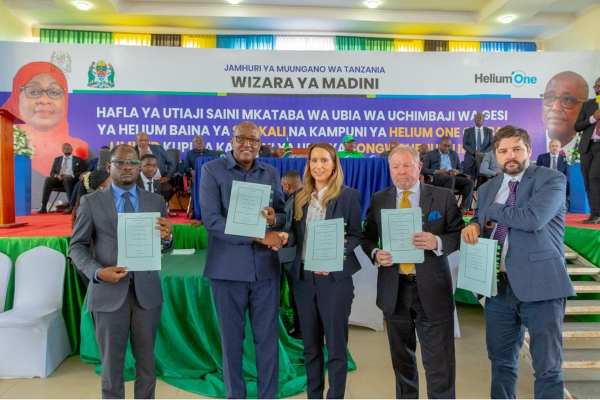
With a mining licence now secured, the joint venture is expected to advance towards full-scale development, including the construction of processing facilities and transport infrastructure.
For Tanzania, the significance of the deal lies not only in its immediate economic promise but also in what it represents for the future of the mining industry.
By entering the helium market, the country is positioning itself within a niche but strategically vital segment of global resources, one that is closely tied to innovation-driven sectors.
If successfully implemented, the Songwe project could mark a turning point, shifting Tanzania’s mining narrative from one centred on traditional commodities to a more diversified and technologically aligned industry. In doing so, it may establish a new benchmark for how the country leverages its natural resources to achieve sustainable and high-value growth.