By Business Insider Correspondent, Dodoma
Tanzania is accelerating its infrastructure transformation through concessional financing from Export-Import Bank of China, with major investments in electricity transmission and rural telecommunications strengthening the backbone of its modern economy.
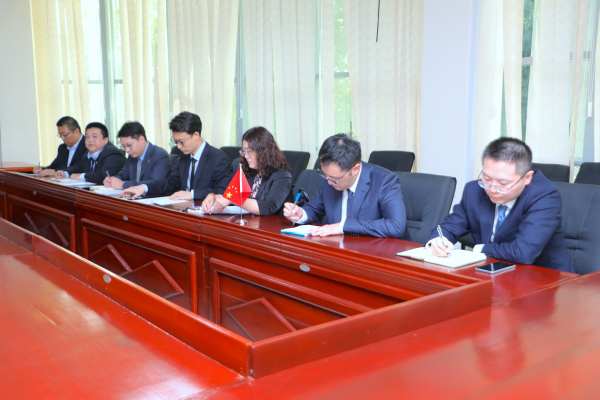
New details emerging from high-level talks in Dodoma between government officials and a visiting delegation from the Chinese lender highlight how strategic financing is being channelled into priority sectors aligned with the country’s long-term development ambitions.
At the centre of the current investment portfolio are two flagship projects: the 400kV North-East power transmission line linking Dar es Salaam to Arusha, and Phase I of the rural mobile network expansion programme. Together, the projects are valued at approximately US$378.9 million, reflecting a significant push to improve both energy reliability and digital inclusion.
Deputy Minister for Finance Mshamu Ali Munde said the projects are critical in reinforcing the national grid while expanding connectivity in underserved rural areas, where digital access remains uneven despite rapid growth in mobile penetration.
The energy project, valued at US$270.3 million, is expected to stabilise electricity supply along one of Tanzania’s most economically active corridors, supporting industrialisation, urban growth, and cross-regional trade. Meanwhile, the US$108.6 million rural telecommunications initiative is designed to bridge the digital divide, enabling broader participation in the digital economy.
These investments come at a time when Tanzania is positioning infrastructure development as a central pillar of its economic transformation agenda under the Tanzania Development Vision 2025 and the emerging Dira 2050 blueprint, both of which prioritise industrialisation, connectivity, and inclusive growth.
Beyond the current projects, negotiations are at an advanced stage for a new concessional loan to finance the establishment of four Technical and Vocational Education and Training (TVET) institutions in Zanzibar, Kigoma, Mtwara, and Mwanza. The initiative is expected to significantly boost skills development and youth employment, addressing one of the key structural challenges in Tanzania’s labour market.
The government is also seeking additional financing support for future energy infrastructure, including the Chalinze–Segera 400kV line, the Segera–Tanga 220kV line, and associated transmission networks. These projects are intended to further strengthen grid resilience and support growing electricity demand driven by industrial expansion and population growth.
From a strategic perspective, the partnership reflects Tanzania’s broader approach to diversifying development financing sources while leveraging concessional loans to unlock large-scale infrastructure investments. China has remained one of Tanzania’s most consistent infrastructure partners, financing roads, railways, ports, and energy projects over the past two decades.
For Beijing, the engagement aligns with its global infrastructure strategy, while for Tanzania, it provides access to long-term, relatively affordable financing critical for capital-intensive projects that might otherwise face funding constraints.
Equally important is the role of such investments in enabling private sector growth. Reliable electricity and expanded digital connectivity are essential enablers for sectors ranging from manufacturing and logistics to financial services and innovation-driven enterprises.
The rural connectivity component, in particular, is expected to have far-reaching implications. By extending mobile and internet coverage to underserved communities, the project supports financial inclusion, digital services adoption, and access to markets, education, and healthcare.
Officials say the continued collaboration between Tanzania and China is anchored in mutual development priorities, with a growing focus on sectors that deliver both economic and social returns. As Tanzania advances towards a more industrialised and digitally connected economy, the scale and scope of infrastructure financing partnerships such as this will remain critical in shaping the country’s growth trajectory.