By Correspondent Benny Mwaipaja, Washington DC
Tanzania is stepping up its strategic engagement with the African Export-Import Bank, unlocking a new wave of financing discussions centred on flagship infrastructure, healthcare investment and energy security – three pillars increasingly shaping the country’s long-term economic trajectory.
Talks held on the sidelines of the Spring Meetings of the World Bank and the International Monetary Fund signal a deepening partnership that goes beyond traditional trade finance into large-scale development financing.
Strategic financing push
At the centre of the discussions is Tanzania’s Standard Gauge Railway (SGR), a flagship infrastructure project designed to reposition the country as a regional logistics hub.
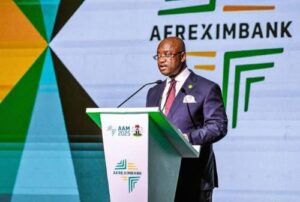
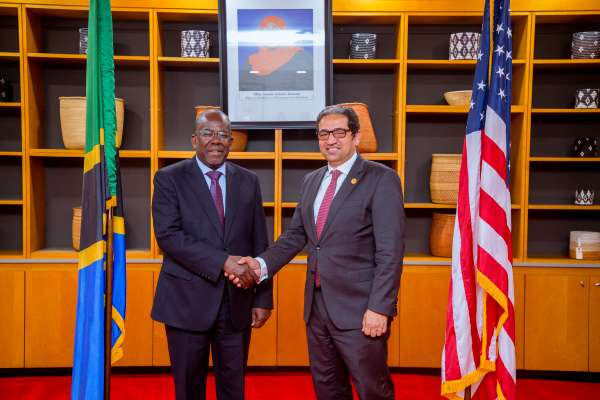
Afreximbank, through its Vice President Haytham ElMaayergi, reaffirmed its readiness to continue supporting financing mobilisation for the railway, alongside new investments in mining and healthcare.
The bank also signalled its willingness to collaborate with the Bank of Tanzania on gold-related initiatives, including value addition – an area aligned with Tanzania’s broader push to maximise returns from its mineral wealth.
SGR and the regional logistics play
The SGR remains one of Tanzania’s most consequential economic projects, linking the port of Dar es Salaam to inland regions and neighbouring countries.
By reducing transport costs and transit times, the railway is expected to strengthen trade corridors across East and Central Africa, enhancing Tanzania’s competitiveness as a gateway economy.
Finance Minister Khamis Mussa Omar underscored the importance of diversified financing sources, noting that while the government is engaging the African Development Bank for later phases of the railway, Afreximbank’s participation remains critical given the scale and urgency of the project.
This reflects a broader financing strategy in which Tanzania is leveraging multiple development finance institutions to close infrastructure funding gaps while maintaining project momentum.
Healthcare as an economic frontier
Beyond infrastructure, the discussions point to a strategic shift towards healthcare investment as a driver of growth.
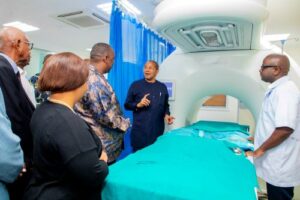
Tanzania is positioning itself to host the Africa Medical Centre of Excellence, a planned world-class medical facility expected to transform specialised healthcare delivery in the country and across the region.
The project aligns with the country’s wider ambition to develop high-value service sectors, including medical tourism, while reducing outbound healthcare spending.
If realised, the AMCE would strengthen Tanzania’s capacity in advanced treatment, attract regional patients, and catalyse investment in associated industries such as pharmaceuticals, diagnostics and medical training.
Energy security and trade stability
Energy supply also featured prominently in the talks, with Afreximbank expressing readiness to support petroleum imports between May and July 2026 in collaboration with the Tanzania Petroleum Development Corporation.
For Tanzania, this is a critical short-term intervention. Stable fuel supply underpins transport, manufacturing and power generation, making it central to economic continuity.
The arrangement reflects Afreximbank’s expanding role not only as a development financier but also as a trade enabler—particularly in supporting African economies to manage external shocks and supply disruptions.
Expanding PPP frameworks
A key outcome of the meeting was Tanzania’s push for expanded public–private partnership (PPP) frameworks.
Minister Omar called for broader financing windows that would enable private developers and contractors to participate more actively in large-scale projects.
This is consistent with the government’s wider economic policy direction, which places the private sector at the centre of growth, particularly under long-term frameworks such as Development Vision 2050.
By opening up PPP structures, Tanzania aims to crowd in private capital, reduce fiscal pressure, and accelerate project delivery across infrastructure and social sectors.
Afreximbank’s growing footprint in Tanzania
Afreximbank has steadily increased its presence in Tanzania in recent years, supporting trade finance, budgetary operations and infrastructure development. Its role as a mandated lead arranger in government financing transactions underscores its importance as a strategic partner.
The latest engagement signals a transition from transactional support to deeper, programme-based collaboration – spanning transport, mining, healthcare and energy.
Financing the next growth phase
The convergence of SGR expansion, healthcare infrastructure and energy security reflects Tanzania’s evolving development model – one that prioritises integrated, high-impact investments.
However, execution will depend on sustained financing flows, effective coordination among development partners, and the successful mobilisation of private capital. If these elements align, Tanzania’s partnership with Afreximbank could play a pivotal role in unlocking the next phase of economic transformation – anchored in infrastructure, industrialisation and high-value services.