
By Business Insider Reporter
Concerns are mounting across the continent as African governments reassess health partnerships with Washington following sweeping policy shifts by the administration of Donald Trump.
The debate comes against the backdrop of substantial American health financing that many African countries – including Tanzania – had come to rely on prior to the new bilateral approach.
A 2023 snapshot of US health assistance illustrates the scale of that support.
Tanzania was the single largest recipient, receiving about US$513 million, narrowly ahead of Nigeria at US$512 million and South Africa at US$481 million.
Other major beneficiaries included Uganda (US$436 million), Mozambique (US$392 million), Kenya (US$377 million), and Zambia (US$371 million). Smaller – but still significant – allocations went to the Democratic Republic of the Congo and Ethiopia (both US$258million), as well as Malawi (US$239 million).
A continent long supported by US health funding
For more than two decades, US global health programs – historically coordinated through agencies such as the now-dismantled United States Agency for International Development – have underpinned HIV/AIDS treatment, malaria control, maternal health services, and disease surveillance systems across Africa.
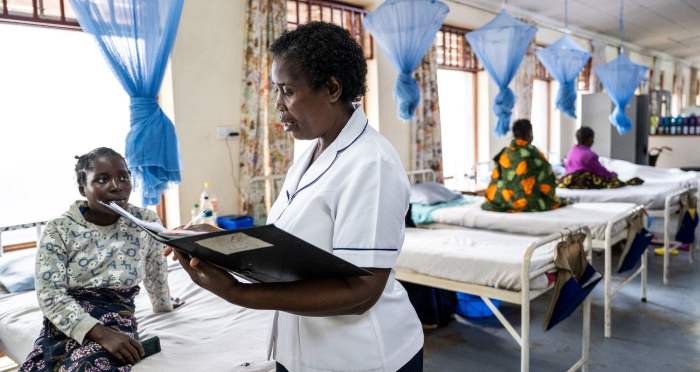
Tanzania’s position at the top of the 2023 funding table reflects its deep engagement in programs like PEPFAR and malaria initiatives, which have been central to strengthening its public health infrastructure.
The broad distribution of funds across eastern and southern Africa also highlights how US support has functioned as a regional stabilizer.
Countries with high infectious disease burdens or large treatment programs – notably Nigeria, South Africa, and Uganda – depended heavily on predictable multilateral-style assistance.
Shift to bilateral deals raises red flags
That model is now under strain. The head of the Africa Centres for Disease Control and Prevention has warned of “huge concerns” about new US proposals that prioritize bilateral health agreements tied to Washington’s “America First” strategy. Critics say the shift risks fragmenting Africa’s previously coordinated health architecture.
Recent developments underscore the unease. Zimbabwe withdrew from negotiations over a proposed US$367 million agreement, arguing that data-sharing provisions were too one-sided.
Meanwhile, Zambia is seeking to renegotiate a deal worth more than US$1 billion, saying earlier terms did not align with national interests, according to Reuters.
The concerns centre on sovereignty and equity. African health officials worry that pathogen-sharing clauses could require countries to hand over sensitive biological data without guaranteed reciprocal benefits – an issue that gained prominence during the COVID-19 pandemic when vaccine access disparities exposed weaknesses in global health solidarity.
Tanzania’s strategic position
For Tanzania, the stakes are particularly high. As the largest 2023 recipient of US health aid in Africa, any disruption or restructuring of funding flows could have material implications for HIV treatment continuity, malaria programs, and broader health system financing.
However, Tanzania also enters this new phase from a position of relative strength. Years of heavy investment have expanded laboratory capacity, surveillance systems, and community health networks. If managed carefully, the country could leverage its importance to negotiate terms that preserve both funding and data sovereignty.
Still, the broader continental picture is more fragile. Many lower-income health systems remain deeply dependent on external financing, and abrupt shifts from multilateral aid to individually negotiated deals could widen inequalities between countries with strong bargaining power and those without.
DRC deal signals Washington’s new direction
Washington is pressing ahead. The Democratic Republic of the Congo recently signed a US$1.2 billion co-investment agreement in which the US will finance roughly three-quarters of the package over five years, with Kinshasa covering the remainder.
The structure reflects the new philosophy: shared financing, country-by-country negotiations, and closer linkage to US strategic priorities.
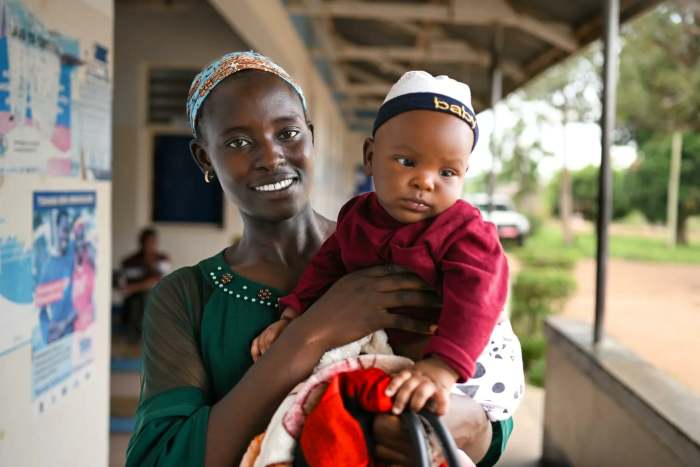
Supporters of the approach argue it could promote greater local ownership and sustainability. Critics counter that it risks politicizing health cooperation and undermining decades of multilateral progress.
What comes next
Africa’s response is likely to be mixed. Larger economies and countries with established health systems – including Tanzania, Nigeria, and South Africa – may push for renegotiated terms rather than outright rejection. Smaller or more aid-dependent nations could face harder choices.
What is clear is that the era reflected in the 2023 funding chart – one of broad, relatively predictable US health support across much of Africa – is ending.
The emerging bilateral model introduces both opportunity and uncertainty. For Tanzania and its peers, the coming months will test whether they can preserve the life-saving gains achieved under previous US assistance while safeguarding national interests in an increasingly transactional global health landscape.