By Correspondent Benny Mwaipaja, Washington DC
Africa’s long-term economic stability will increasingly depend on how effectively countries manage and invest in water resources, Tanzania’s Finance Minister, Khamis Mussa Omar, has said.
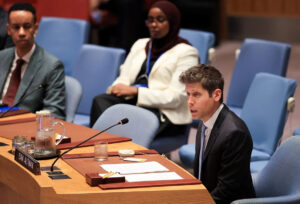
Speaking during a high-level session on water security at the World Bank Spring Meetings held alongside the International Monetary Fund in Washington D.C., Omar called for a shift towards structured water governance and financing frameworks.
He underscored that water is no longer merely a social service issue but a core economic asset requiring deliberate policy alignment and investment planning.
Translation and key points
The minister emphasised that African countries must develop comprehensive strategies to ensure access to safe water for both domestic use and economic activities, while safeguarding water sources from degradation.
He noted that water resources – rivers, lakes, and aquifers – must be mapped, protected, and integrated into short-, medium-, and long-term national development plans.
He further stressed the need to prevent pollution, encroachment, and wastage, warning that rapid population growth across Africa is intensifying pressure on already constrained water systems. To address financing gaps, he called for stronger collaboration between governments, private sector players, and development partners.
Water as economic infrastructure
The intervention reflects a growing recognition across African policy circles that water security underpins multiple sectors – from agriculture and energy to mining and urban development. In Tanzania, for instance, irrigation remains central to agricultural productivity, while hydropower projects such as the Julius Nyerere Hydropower Project (JNHPP) depend heavily on reliable water flows.
Yet across Sub-Saharan Africa, water infrastructure financing remains significantly underfunded. According to development finance estimates, the continent requires tens of billions of dollars annually to meet water and sanitation targets. This gap presents a major opportunity for blended finance models, public-private partnerships, and climate-linked funding mechanisms.
Omar’s remarks also align with broader global trends where water is increasingly treated as an economic enabler. Industrialisation, urbanisation, and energy transition initiatives – particularly in gas and renewable sectors – are all water-intensive, making resource sustainability critical to long-term growth.
Strategic implications for Tanzania and the region
For Tanzania, the push to integrate water into national economic planning dovetails with its broader development agenda, including Vision 2050 and ongoing infrastructure expansion.
Efficient water management will be essential to support industrial zones, agricultural transformation, and urban growth in cities such as Dar es Salaam and Dodoma.
Moreover, the emphasis on partnerships signals a shift towards mobilising private capital in traditionally public-sector-dominated areas. Institutions such as the World Bank and other multilateral lenders are increasingly prioritising water resilience projects, particularly those linked to climate adaptation.
The minister’s call for a “Marshall Plan-style” approach in previous engagements further suggests that African governments are seeking large-scale, coordinated financing frameworks to unlock infrastructure bottlenecks – including water systems.
A continental priority
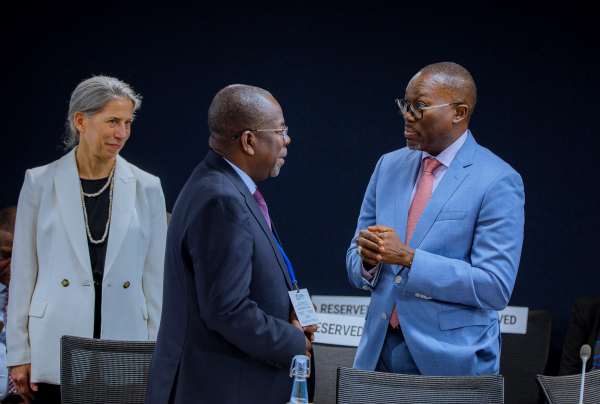
The meeting brought together finance ministers and development stakeholders from African member states, focusing on how policy reforms, institutional changes, and investment strategies can expand access to safe water. As climate risks intensify and populations grow, water security is poised to become one of Africa’s defining economic challenges – and opportunities. Countries that move early to structure, protect, and monetise this resource could gain a decisive edge in sustaining growth.