By Correspondent Benny Mwaipaja, Washington DC
Tanzania has called on the World Bank to intensify efforts to empower Africa’s private sector, arguing that sustainable economic growth across the continent will increasingly depend on stronger, more resilient domestic enterprises.
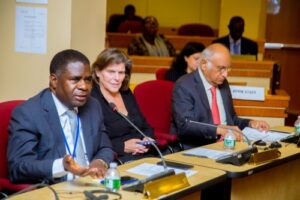
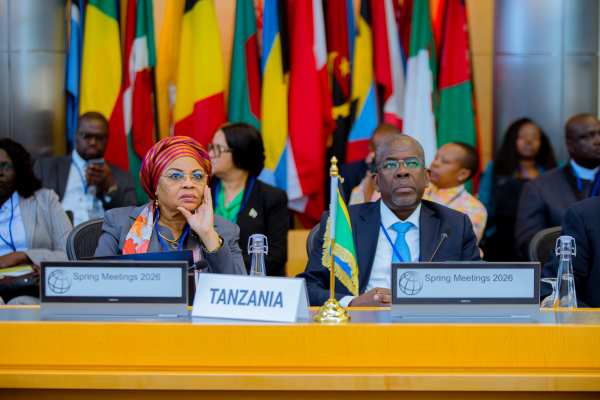
The appeal was made by Finance Minister Khamis Mussa Omar during a high-level meeting of the Africa Group 1 Constituency – comprising 22 Sub-Saharan African member states – held at the World Bank’s headquarters in Washington DC.
Speaking during the session, Omar emphasised that while African economies must continue improving domestic revenue mobilisation, long-term growth hinges on unlocking private sector potential. He argued that a well-supported private sector can mobilise both domestic and foreign capital, reducing overreliance on external borrowing.
“A strengthened private sector can serve as a powerful engine for growth, capable of attracting investment flows comparable to foreign direct investment,” he noted.
Debt pressures and a shift in strategy
Omar’s remarks come at a time when many African economies are grappling with rising debt burdens and tightening fiscal space. Several countries are approaching or have reached borrowing limits, forcing governments to reconsider traditional financing models.
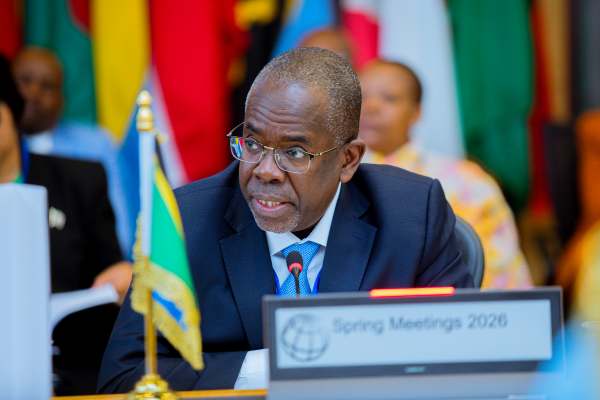
He warned that increasing tax burdens to boost domestic revenues risks disproportionately affecting low-income populations. Instead, he proposed a strategic pivot – one that prioritises private sector-led growth as a more inclusive and sustainable pathway.
In a notable comparison, Omar urged the World Bank to adopt a model similar to the Marshall Plan – the United States-backed initiative that helped rebuild Europe after World War II through infrastructure investment, technology transfer, and trade expansion.
Such an approach, he argued, could help African economies overcome structural constraints, particularly in infrastructure, industrial capacity, and access to finance.
World Bank’s US$100 billion push
The World Bank, for its part, is already moving in that direction. According to Executive Director Zarau Wendelin Kibwe, the institution is mobilising up to $100 billion to support member countries in addressing economic challenges and strengthening private sector participation.
The funding is expected to focus on inclusive growth, with targeted interventions aimed at expanding employment opportunities – particularly for youth, women, and marginalised communities – while enhancing social protection systems.
Programmes under this initiative will prioritise high-impact sectors such as agriculture, energy, health, and mining, reflecting a broader shift towards job-rich investments.
These sectors are seen as critical to addressing Africa’s demographic pressures, with the continent expected to add millions of young job seekers annually over the coming decades.
Reform agenda
Tanzania’s position aligns with its broader economic reform agenda under its long-term development blueprint, Dira 2050, which places significant emphasis on private sector participation.
The government has already initiated tax and regulatory reforms aimed at improving the investment climate and attracting capital.
Recent policy efforts have included reviewing tax systems, streamlining investment procedures, and strengthening public-private partnerships – moves designed to position Tanzania as a competitive investment destination in East Africa.
The country’s participation in the Africa Group 1 Constituency, which includes economies such as Kenya, Uganda, and Ethiopia, also reflects a broader regional push to coordinate development strategies and amplify Africa’s voice within global financial institutions.
A continental imperative
Analysts note that the call for private sector empowerment is gaining traction across Africa, particularly as governments seek to balance fiscal consolidation with economic expansion.
Infrastructure gaps, limited industrialisation, and access to finance remain key bottlenecks – areas where institutions like the World Bank can play a catalytic role.
If effectively implemented, a scaled-up, private sector-focused financing model could accelerate Africa’s transition towards more diversified and resilient economies, while reducing vulnerability to external shocks. For Tanzania, the message is clear: the next phase of growth will not be driven by public spending alone, but by a dynamic partnership between government, investors, and development finance institutions.