
By Business Insider Reporter, Dodoma
The Tanzanian government has called on employees of the Ministry of Finance to strengthen professionalism, integrity and innovation in public service delivery as the country intensifies efforts to improve governance, institutional efficiency and economic management.
The call was made by Deputy Minister for Finance, Laurent Luswetula, speaking on behalf of Finance Minister Khamis Mussa Omar during the opening of the 39th Workers’ Council Meeting of the Ministry of Finance for the 2025/26 financial year held at Treasury Square in Dodoma.
The meeting brought together 222 delegates from workers’ unions, ministry management, heads of institutions under the ministry, and representatives from various departments and units to discuss staff welfare, institutional performance and public sector efficiency.
Addressing participants, Mr. Luswetula said public servants in the finance ministry occupy a strategic position in safeguarding the country’s economic stability and implementing key government priorities, making adherence to ethics, laws and public service regulations essential.
“There is a need for employees to remain innovative, professional, ethical and cooperative in order to improve the quality and efficiency of services delivered by the ministry,” he said.
He stressed that stronger communication systems and improved stakeholder engagement would be critical in enhancing implementation of government programmes and strengthening accountability within public institutions.
The remarks come at a time when Tanzania is implementing ambitious economic reforms aimed at boosting domestic revenue mobilisation, improving public financial management and accelerating delivery of strategic national development projects under Dira 2050.
The Ministry of Finance remains central to these reforms, overseeing fiscal policy, budget implementation, debt management and coordination of development financing.
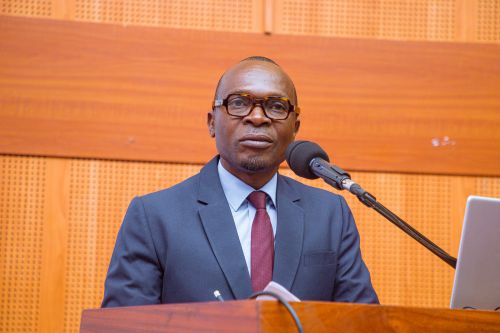
Mr Luswetula further urged ministry staff to become role models in protecting public resources and ensuring timely implementation of government directives.
“Working at the Ministry of Finance is not accidental. We have been entrusted with an important responsibility to serve the nation. Let us avoid unethical conduct and remain patriotic in fulfilling our duties,” he said.
In a notable shift towards employee wellness, the Deputy Minister also encouraged workers to prioritise their health by participating in ministry-organised medical screening programmes, engaging in regular physical exercise and following professional advice on healthy nutrition to reduce the growing burden of non-communicable diseases.
Analysts say the government’s emphasis on employee health reflects increasing recognition that workforce productivity and institutional performance are closely linked to staff wellbeing, particularly within critical economic institutions.
Earlier, Deputy Permanent Secretary responsible for Treasury Services, Mr Nsubili Joshua, said the Workers’ Council meeting was being held in accordance with Tanzania’s Employment and Labour Relations Act, Chapter 366, which promotes employee participation in workplace governance and institutional decision-making.
He described the forum as an important platform for strengthening workplace relations, improving staff welfare and enhancing operational efficiency within the ministry.
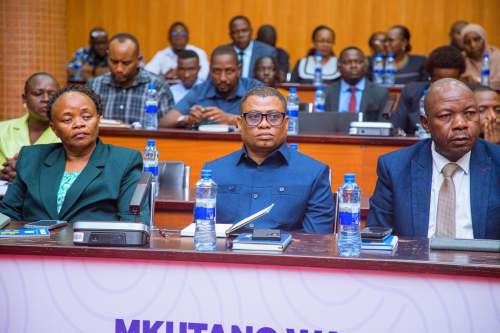
“The council provides an opportunity for members to discuss various issues affecting the ministry and contribute ideas aimed at improving institutional performance and service delivery,” Mr. Joshua said.
Participants also attended presentations and discussions covering administrative reforms, public service performance, workplace cooperation and institutional development.
During the meeting, Mr. Ramadhani Kipambe was elected Secretary of the Ministry of Finance Workers’ Council. The Finance Ministry’s renewed emphasis on ethics, accountability and innovation aligns with broader government efforts to modernise Tanzania’s public sector institutions as the country seeks to attract investment, improve service delivery and sustain economic growth amid increasing fiscal and global economic pressures.