
By Business Insider Reporter
The Tanzanian government has intensified scrutiny of the country’s fast-growing small-scale mining sector after suspending operations along the Mtisi River in Katavi Region and ordering a nationwide review of all Technical Support Agreements (TSAs) involving foreign investors.
The move, announced by Minerals Minister Anthony Mavunde, signals a broader policy shift aimed at protecting local miners, strengthening environmental compliance and closing legal loopholes that authorities say have enabled foreign interests to dominate artisanal mining activities.
The suspension followed an inspection in Mpanda Municipality and Nsimbo District, where the minister found widespread environmental degradation, unregulated mining activities and foreign nationals directly operating machinery inside small-scale mining sites – a practice prohibited under Tanzania’s mining laws.
“We cannot allow foreigners to operate small-scale licences as though they are Tanzanian licence holders,” Mavunde said during the inspection, adding that several sites lacked environmental management plans and permits from the National Environment Management Council.
A growing concern in mining economy
The crackdown comes at a time when Tanzania is increasingly positioning mining as one of the key pillars of economic growth under the government’s industrialisation and resource-value-addition agenda.
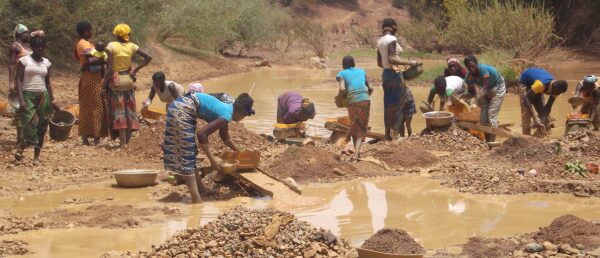
Small-scale mining contributes significantly to employment and rural incomes, particularly in gold-producing regions such as Geita, Shinyanga, Katavi and Chunya.
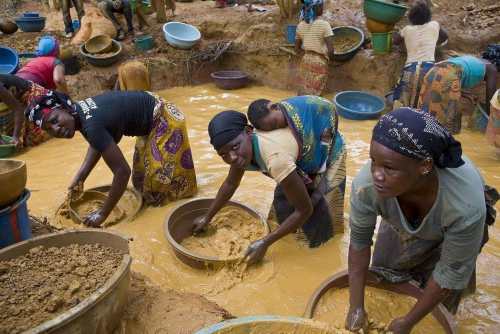
Industry estimates indicate that hundreds of thousands of Tanzanians depend directly or indirectly on artisanal mining activities for livelihoods.
However, the sector has also become a battleground over ownership, environmental protection and revenue sharing.
Technical Support Agreements were introduced under the Mining (Technical Support for Small Scale Miners) Regulations 2025 to allow Tanzanian Primary Mining Licence holders to partner with foreign investors who provide financing, equipment and technical expertise.
The framework was designed to modernise small-scale mining while ensuring Tanzanians retain ownership and receive at least 30 per cent of gross profits after statutory deductions.
But government investigations and industry reports suggest that some foreign investors – particularly from China – have exploited the arrangement to gain de facto control of mining operations through local proxies.
Environmental and economic risks
Authorities say the misuse of TSAs has triggered multiple economic and environmental concerns, including displacement of artisanal miners, water pollution and loss of government revenue.
In some mining zones, large mechanised operations have reportedly replaced thousands of local workers, fundamentally altering the socio-economic structure of mining communities.
Environmental experts have also raised alarm over river contamination, land degradation and unsafe excavation practices in areas where enforcement capacity remains weak.
The Mtisi River suspension is therefore being viewed not merely as a local enforcement action, but as part of a broader effort to restore order in a sector increasingly attracting foreign capital.
Government pushes for sector reforms
The latest directive follows several recent reforms by the Ministry of Minerals aimed at increasing accountability and expanding local participation in mining.
In April 2026, the government revoked 40 mineral exploration licences over non-compliance, unpaid fees and speculative hoarding of mineral blocks. The licences are expected to be reassigned to Tanzanian miners through the “Mining for a Brighter Tomorrow” initiative.
Earlier this year, the ministry also signed a financing agreement with CRDB Bank Plc to improve access to affordable credit for artisanal miners, reducing their dependence on informal and often exploitative foreign financing arrangements.
Analysts say improving financial inclusion, legal awareness and technical training for local miners will be critical if Tanzania is to balance foreign investment with sustainable local participation. The government’s latest intervention underscores a growing determination to ensure that the country’s mineral wealth delivers broader economic benefits while safeguarding environmental standards and national interests.