
By Business Insider Correspondent, Arusha
Tanzania’s Minister of Finance, Khamis Mussa Omar (pictured), has called on financial institutions to reduce lending rates and bank charges in an effort to improve access to capital for citizens, particularly young entrepreneurs seeking to invest in productive economic activities.
Speaking during the opening of the 31st Shareholders’ Annual General Meeting seminar for CRDB Bank at the Arusha International Conference Centre, the minister said high borrowing costs continue to be a major concern for many Tanzanians and risk slowing business expansion and financial inclusion.
The seminar, held under the theme “Youth and Investment in Shares”, brought together shareholders, regional leaders, regulators, capital market stakeholders and financial sector executives to discuss strategies for expanding youth participation in investment and capital markets.
“There is a public outcry regarding interest rates and banking service charges,” Omar said. “I urge CRDB and other financial institutions, especially banks, to take concrete measures to reduce the cost burden on customers, particularly those opening accounts and conducting transactions.”
Government pushes financial inclusion agenda
The minister’s remarks come as Tanzania intensifies efforts to deepen financial inclusion and expand private sector participation in economic growth under the government’s broader development agenda.
Access to affordable financing remains one of the biggest challenges facing small businesses and youth-led enterprises in Tanzania despite rapid growth in the banking sector over the past decade.
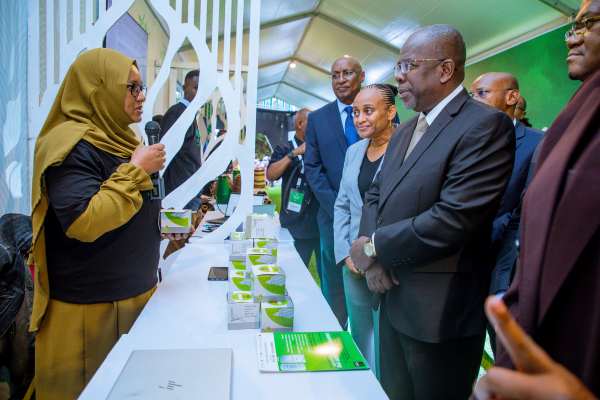
The government has increasingly encouraged banks to develop innovative and inclusive financial products capable of supporting entrepreneurship, industrialisation and long-term investment.
Minister Omar praised CRDB Bank for its growing contribution to Tanzania’s economy, noting that the lender currently accounts for nearly 29 percent of private sector lending in the country.
He also commended the bank’s strong financial performance, revealing that CRDB posted a net profit of TSh 725 billion in 2025 – a milestone he said signals the institution’s potential to reach TSh 1 trillion in annual profit in the near future.
Capital Markets and Islamic finance gain momentum
The minister further applauded CRDB’s role in promoting innovative capital market products, including its participation in the Samia Infrastructure Bond initiative, green bond mobilisation efforts and the expansion of Sharia-compliant financial instruments such as Sukuk.
He said the government would continue strengthening the investment environment through policy reforms, improved legal frameworks and stronger financial infrastructure aimed at accelerating business growth and boosting national income.
Omar also urged young Tanzanians to embrace investment opportunities available in shares and capital market products as a pathway towards long-term financial security and wealth creation.
CRDB expands youth banking products
Speaking at the seminar, CRDB Bank Group Chief Executive Officer Abdulmajid Nsekela said the bank has introduced specialised financial products targeting youth participation in the economy.
The products include Youth Banking, Junior Jumbo, Teens Account, Scholar Account and Boom Advance, all designed to increase access to financial services among younger customers.
Nsekela said CRDB has continued to record rapid growth across its core business segments.
By early 2026, the bank’s total assets had reached TSh 23.9 trillion, customer deposits rose to TSh 16.3 trillion, while the loan portfolio expanded to TSh 14.7 trillion.
He added that the bank’s 2025 profit represented growth of more than 1,000 per cent over recent years, underlining CRDB’s emergence as one of East Africa’s strongest-performing lenders.
The bank has also intensified innovation efforts through green financing initiatives, Sharia-compliant banking products and programmes designed specifically for young investors and entrepreneurs.
Shareholder base nearly triples
Meanwhile, CRDB Board Chairperson Neema Mori said the bank’s shareholder base has expanded significantly in recent years, reflecting rising public interest in equity investment.
According to Mori, the number of CRDB shareholders increased from 30,141 in 2021 to 89,194 by March 2026 – an increase of nearly 196 percent.

“The growing participation of young people in purchasing bank shares demonstrates increasing public confidence in capital markets,” she said, adding that CRDB has evolved from being a household banking brand into a strong investment brand attracting both small and large-scale investors. The seminar also focused on dividend distribution, youth investment mobilisation and strategies for increasing citizen participation in Tanzania’s capital markets.