By Business Insider Correspondent, Morogoro
The Ministry of Finance Tanzania has intensified efforts to modernise government operations after directing the development of digital business processes aimed at improving efficiency, accountability and oversight across key public finance functions.
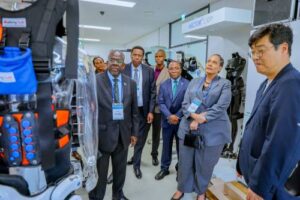
The directive was issued by the Deputy Permanent Secretary in the Ministry of Finance, Nsubili Joshua (pictured abive), during a high-level internal control training session for the ministry’s management team held in Morogoro.
Speaking on behalf of the deputy permanent secretary, the Director of Government Asset Management at the ministry, Chotto Sendo, said the digital transformation agenda will focus on automating and strengthening several strategic government operations through electronic monitoring and evaluation systems.
The planned digital business processes will cover monitoring of the National e-Procurement System (NeST), revenue tracking through big data analysis, oversight of Public-Private Partnership (PPP) projects, alternative financing initiatives, government contributions to international institutions, and monitoring of non-tax revenues.
According to Sendo, the move forms part of broader reforms intended to build a modern and data-driven public financial management system capable of supporting Tanzania’s long-term economic ambitions and improving service delivery.
“The Monitoring and Evaluation Unit has been directed to coordinate the development of these business processes in digital form in order to simplify monitoring and evaluation of the ministry’s operations while strengthening accountability, transparency and operational efficiency,” he said.
The reforms come at a time when Tanzania is accelerating digital transformation across public institutions to reduce bureaucracy, improve fiscal discipline and enhance real-time oversight of government spending and revenue collection.
Economists and governance analysts increasingly view digitalisation of public finance systems as critical in reducing leakages, strengthening compliance and improving investor confidence, particularly as Tanzania expands infrastructure investment and public-private partnerships under its Dira 2050 agenda.
Sendo noted that the internal control training programme would equip ministry officials with advanced understanding of risk management, internal control mechanisms and performance assessment systems aligned with international standards.
He said the new Internal Control Guidelines are expected to strengthen digital monitoring and evaluation systems, improve internal auditing practices in line with the 2024 International Internal Audit Standards, and establish measurable indicators for evaluating institutional performance.
“This guideline will help strengthen operational systems and improve the management of public resources, which is essential for sustaining national economic growth,” Sendo added.
Participants were also urged to apply the new knowledge in their respective departments and units to reinforce internal control systems and improve efficiency in public sector operations.
Acting Chief Internal Auditor at the Ministry of Finance, Kenneth Nindie, called on government departments to fully utilise the guidelines to improve institutional procedures and ensure ministry objectives are achieved effectively.
Meanwhile, Assistant Chief Internal Auditor Abraham Msechu said the training would help strengthen internal control systems and improve institutional governance within the ministry.
One of the participants, Assistant Commissioner in the Debt Management Department, Omary Khama, pledged to implement the lessons learned in order to support the government’s broader objectives on public sector accountability and financial oversight.
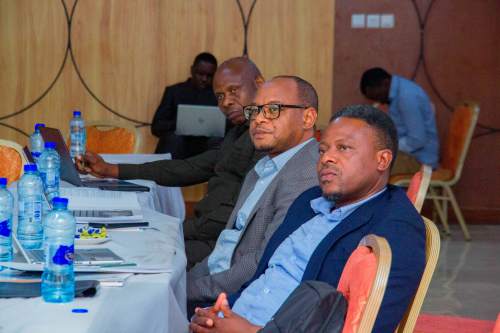
The training brought together senior management and staff from the Ministry of Finance alongside facilitators from global advisory firm KPMG. The government’s growing focus on digital governance aligns with wider reforms already underway in Tanzania, including the expansion of electronic procurement systems, digital tax administration and integrated financial management platforms aimed at improving transparency and reducing operational inefficiencies across the public sector.