By Correspondent Benny Mwaipaja, Doha
Tanzania has secured about US$6.7 million in grants to prepare three strategic transport and energy projects, strengthening efforts to develop investment-ready infrastructure as the country enters a new phase of its economic transformation agenda.
Finance Minister Ambassador Khamis Mussa Omar said the support, channelled through coordinating institutions including the African Development Bank (AfDB), is being used to prepare two regional energy projects and the proposed Standard Gauge Railway (SGR) linking Tanzania and Burundi.
The energy projects are the 400kV Tanzania-Malawi Power Interconnector and the Songwe Basin power generation and transmission project.
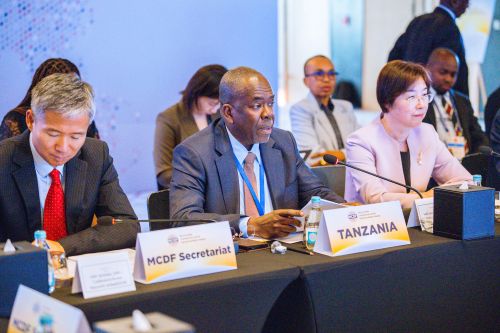
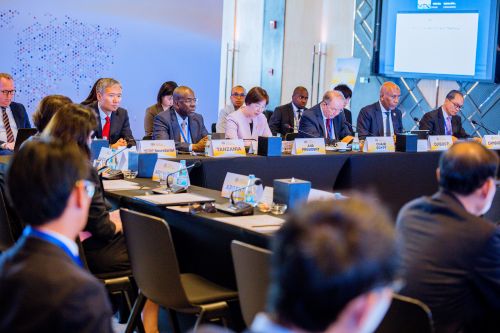
Omar disclosed the funding while addressing a meeting of the Multilateral Cooperation Center for Development Finance (MCDF) attended by finance ministers who serve as governors of the Asian Infrastructure Investment Bank (AIIB).
The meeting was held on the sidelines of the 11th Annual Meeting of the AIIB Board of Governors in Doha, Qatar.
Omar said Tanzania valued its partnership with MCDF, particularly its role in improving project preparation and helping countries develop infrastructure projects capable of attracting financing and investment.
“Since joining MCDF as an observer in July last year, Tanzania, through coordinating institutions including the African Development Bank, has benefited from grants of approximately US$6.7 million for the preparation of three strategic projects,” Omar said.
For Tanzania, the financing addresses a critical stage in infrastructure development: transforming major project concepts into sufficiently prepared investments that can move towards financing and implementation.
Infrastructure at centre of growth plan
The minister said the MCDF partnership comes as Tanzania begins implementing its Fourth Five-Year Development Plan, covering 2026/27 to 2030/31, which places investment in energy, transport and digital technology at the centre of economic transformation.
The Tanzania-Burundi railway project could strengthen regional transport connectivity, while the two electricity projects are designed to expand cross-border energy infrastructure.
Omar said Tanzania would continue strengthening cooperation with MCDF, AIIB and other development partners as it pursues its infrastructure programme.
He also welcomed MCDF’s proposed 2027–2031 strategy, highlighting regional connectivity, project quality and climate resilience as important priorities.
The focus on project preparation is particularly significant for governments seeking to mobilise large-scale infrastructure capital, as projects generally need detailed technical, financial and institutional groundwork before lenders and investors can commit financing.
Turning infrastructure needs into bankable projects
AIIB President Zou Jiayi said MCDF plays an important role in helping developing economies convert infrastructure requirements into projects capable of securing financing.
She described MCDF as more than a trust fund, saying it serves as a strategic partner by providing technical assistance and capacity building to turn investment needs into implementable projects.
“The fund is changing its business model to include bridge financing and new sectors such as smart housing and digital education,” Zou said.
She said the changes were taking place against a broader shift in development finance in which emerging economies are playing an increasingly important role, including through South-South cooperation.
AIIB will continue supporting MCDF as the fund enters its next phase from 2027, she added, while maintaining transparency and discipline in the management of resources contributed by member countries and other partners.
For Tanzania, the US$6.7 million may be small compared with the eventual capital requirements of major railway and electricity infrastructure. Its significance, however, lies in financing the preparatory work needed to move those projects closer to implementation and larger-scale investment. As Tanzania seeks to use infrastructure to deepen regional trade and accelerate economic transformation, the ability to build a pipeline of well-prepared and financeable projects will be as important as mobilising the billions of dollars ultimately required to construct them.