By Correspondent John Mapepele, New York
Tanzania is positioning domestic pharmaceutical and medical supplies manufacturing at the centre of its healthcare and industrialisation strategy, seeking to cut dependence on imports while tapping into Africa’s multi-billion-dollar market for medicines and health products.
Health Minister Mohamed Mchengerwa said Tanzania would continue prioritising local production of medicines, health commodities, medical devices and hospital equipment as part of a broader drive to strengthen health security and build more resilient supply chains.
Speaking in New York on the sidelines of the 81st United Nations General Assembly (UNGA 81), Mchengerwa said the strategy was not merely about reducing the country’s import bill, but also about ensuring that Tanzania and Africa are better protected against global supply disruptions and price volatility.
“Africa spends more than US$28 billion annually purchasing medicines and health products, while a large proportion of these requirements comes from outside the continent,” he said.
The dependence, he argued, exposes African healthcare systems to disruptions in international supply chains and fluctuations in global prices – vulnerabilities highlighted particularly during major international health emergencies.
For Tanzania, expanding domestic production therefore presents both an economic opportunity and a health-security imperative.
Mchengerwa said the government had designated local manufacturing of pharmaceuticals, medical supplies, medical devices and hospital equipment as a national priority.
The policy potentially opens investment opportunities across the healthcare value chain, including pharmaceutical plants, diagnostic products, medical equipment, logistics, technology transfer, research and development and specialised healthcare services.
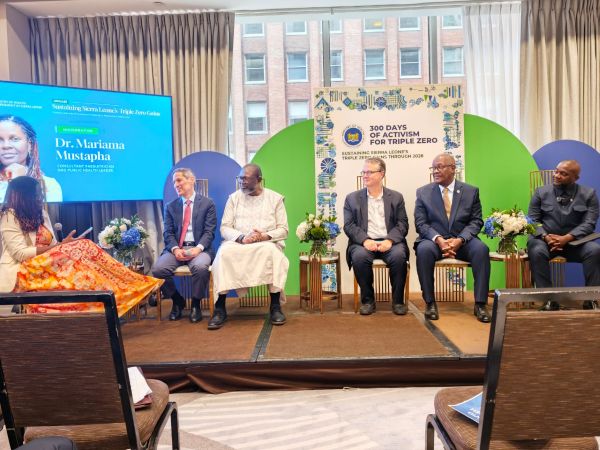
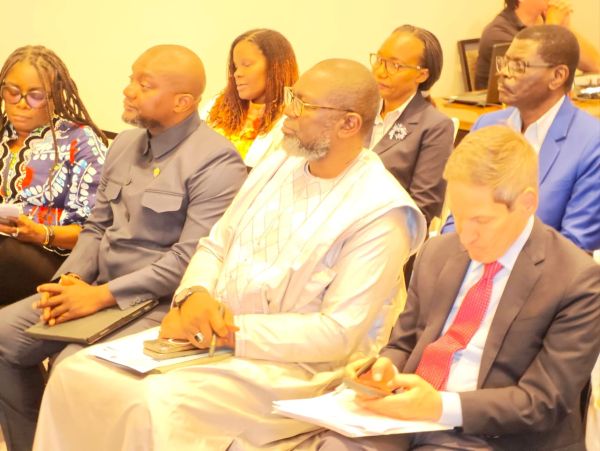
Mchengerwa was speaking during a high-level session titled “Sustaining Sierra Leone’s Triple Zero Gains Through 2028”, organised by the Government of Sierra Leone on the margins of UNGA 81.
He was accompanied by Health Ministry Permanent Secretary Dr. Grace Magembe.
The meeting examined approaches to sustaining progress in reducing maternal and newborn deaths and increasing immunisation coverage.
Mchengerwa said Tanzania strongly supported the African Union Champion Roadmap 2026–2030 and its “Triple Zero” objectives: zero unattended home births, zero preventable maternal and newborn deaths, and zero children missing vaccinations.
He said President Samia Suluhu Hassan’s role as an African Union champion of the agenda had placed Tanzania among countries pushing for stronger health systems and improved maternal and child healthcare across the continent.
“Tanzania is proud to have our President, Dr. Samia Suluhu Hassan, as the African Union Champion for this agenda,” Mchengerwa said. “Under her leadership, we fully support the AU Champion Roadmap 2026–2030 and the Triple Zero agenda.”
Healthcare financing takes centre stage
Beyond manufacturing, Tanzania is also seeking to diversify the way it finances healthcare as demand for services increases.
Mchengerwa said the government was strengthening Universal Health Insurance while expanding access to essential maternal and child healthcare and protecting households against potentially catastrophic medical expenses.
The country is pursuing several financing mechanisms, including public-private partnerships, direct health facility financing, electronic payment systems and targeted levies on selected products.
Medical tourism is also being developed as another component of Tanzania’s emerging healthcare economy.
The government, Mchengerwa said, would continue increasing resources for primary healthcare as well as emergency maternal and newborn services.
The combination of expanded insurance coverage, investment in health infrastructure and domestic manufacturing could have wider economic implications. A larger insured population can create more predictable demand for healthcare services and medical products, potentially improving the commercial case for investment in pharmaceutical production and specialised healthcare.
Local manufacturing could similarly reduce exposure to foreign exchange pressures associated with importing medicines and equipment while creating industrial jobs and supporting related sectors such as packaging, logistics and distribution.
Building an African health industry
Mchengerwa called on African Union member states and development partners to coordinate investment, technology transfer and industrial policies to accelerate production of healthcare products on the continent.
He said African countries also needed to develop regional value chains, strengthen regulatory authorities and support home-grown innovation.
Such cooperation could become increasingly important as individual African markets seek sufficient scale to attract major pharmaceutical and medical technology investments.
Tanzania’s approach is also centred on bringing basic healthcare closer to communities while allowing referral hospitals to concentrate on specialised treatment.
“Tanzania continues to ensure that essential healthcare services are available within a distance of no more than five kilometres from every community, while referral hospitals are increasingly used for patients requiring specialised services,” Mchengerwa said.
The strategy suggests that Tanzania increasingly views healthcare not only as a social service, but also as an economic sector capable of attracting private capital, supporting manufacturing and creating skilled employment.
Tanzania at UNGA 81
The 81st session of the UN General Assembly has brought together representatives of the UN’s 193 member states in New York.
Tanzania’s delegation is being led by Vice-President Deogratius Ndejembi, representing President Samia Suluhu Hassan.
World leaders are using this year’s gathering to discuss issues ranging from peace and security and armed conflicts to climate change, artificial intelligence, global health, development and progress towards the Sustainable Development Goals.
UNGA 81 is being held under the theme “Restoring Trust, Managing Transformation.” For Tanzania, the gathering also provides an opportunity to present its healthcare ambitions to international investors and development partners. The government’s message is that reducing Africa’s reliance on imported medicines will require more than additional health spending: it will require investment in factories, technology, skills, regulation and regional supply chains capable of turning the continent’s huge healthcare demand into an industrial opportunity.