
By Joseph Mahumi and Peter Haule, Dodoma
Tanzania is moving to widen access to credit by creating a legal framework that will allow businesses and individuals to use movable assets as collateral, a reform the government says could unlock more lending and deepen financial inclusion.
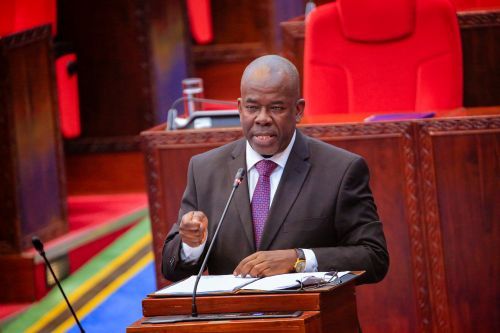
Finance Minister Khamis Mussa Omar has tabled the Movable Property Security Interests Bill, 2026 in Parliament, proposing a comprehensive framework for the use, registration, management and enforcement of security interests over movable assets.
The reform is part of the government’s broader effort to expand access to financial services and make credit more accessible to businesses that may not own traditional forms of collateral such as land and buildings.
Presenting the Bill in Dodoma, Mr Omar said the government aims to increase the use of banking services from 22 percent in 2023 to 50 percent by 2030.
The government also wants to raise private-sector credit as a share of GDP from 22.5 percent in 2024 to 50 percent by 2030, while increasing the contribution of the financial sector to the economy from 17.1 percent in 2024 to 20 percent by 2030.
The proposed legislation could be particularly significant for small businesses, farmers and entrepreneurs whose assets are predominantly movable but who struggle to secure bank financing because they lack land or buildings to pledge as security.
Under the proposed framework, a wider range of assets could be used as collateral, including tangible and intangible assets, depending on regulations to be established under the law.
Tackling the collateral problem
A major weakness the Bill seeks to address is the absence of a unified system for registering movable assets used as collateral.
The government says this has created a risk whereby the same asset could potentially be pledged against more than one loan without other lenders being aware of existing claims.
Such gaps can increase lending risks and contribute to the accumulation of non-performing loans across the financial sector.
The proposed framework would establish clearer rules for registering security interests, checking existing claims, modifying or cancelling registrations and determining priority among competing creditors.
For lenders, greater visibility over collateral could reduce the cost and risk of assessing borrowers. For businesses, it could translate into more financing options and potentially better borrowing conditions.
The Bill also recognises that movable assets present different risks from fixed property. Some assets can depreciate rapidly, lose value or deteriorate, making clear rules for their management, storage and enforcement particularly important.
More certainty for lenders and borrowers
The proposed law is divided into 10 parts covering the establishment and operation of the security-interest framework.
The first section sets out introductory provisions, including the name and application of the proposed law, while the second establishes provisions relating to the Bank of Tanzania’s role in overseeing security interests and sets out the powers and delegation of responsibilities.

The third section defines security interests covering one or more loans and identifies categories of assets that may be used as collateral. It also requires the Bank of Tanzania to consult the Minister before declaring assets eligible for use as security.
The fourth section focuses on registration, including the validity of registrations, amendments, cancellations and access to registered information.
The fifth addresses security interests against third parties, proceeds arising from collateral and situations where movable assets securing a loan have been combined with other property.
Another important element is the proposed priority framework. The sixth section establishes rules for determining priority between competing creditors, including the treatment of proceeds and payments and the implications of borrower insolvency.
This could become increasingly important as Tanzania seeks to deepen private-sector lending while strengthening financial-sector stability.
Protecting both sides
The proposed framework also seeks to balance the interests of lenders and borrowers.
The seventh section sets out rights to inspect collateral, obligations to provide information and duties relating to the care and preservation of secured assets. It also addresses the rights and obligations of debtors and protections available to borrowers.
The eighth section deals with enforcement when a borrower fails to meet their obligations. It includes provisions covering enforcement notices, disposal of collateral, the use of collateral to settle outstanding obligations and procedures for challenging proposed enforcement actions.
It also establishes rules covering the storage of collateral, associated costs and the borrower’s right to choose an alternative place for the asset to be stored in certain circumstances.
The ninth section provides broader safeguards, including remedies for breaches of obligations, compensation, offences relating to false information, complaints and reviews of decisions made by the Bank of Tanzania.
The Minister would also have powers to make regulations necessary to give effect to the proposed law.
The final section proposes consequential amendments to various laws, including legislation governing the Bank of Tanzania, companies, insolvency and other laws dealing with financial and asset management.
A potential boost for business finance
The government’s argument is that a more predictable collateral regime can help address one of the longstanding barriers to credit: the limited ability of businesses to provide acceptable security.
For Tanzania’s private sector, particularly smaller enterprises, the significance of the reform could extend beyond simply obtaining loans.
Better access to working capital and investment finance can enable businesses to expand production, purchase equipment, increase inventories, create jobs and invest in new markets.
For banks and other lenders, meanwhile, a transparent registration and enforcement system could improve the quality of credit information and reduce uncertainty over competing claims to collateral.

The proposed law therefore represents more than a technical change to collateral rules. If effectively implemented, it could become part of the infrastructure needed to expand private-sector financing and support Tanzania’s broader financial-sector development ambitions. The immediate challenge will be ensuring that the new system is transparent, efficient and accessible enough for smaller businesses to use it. Its success will ultimately be measured not by the creation of the legal framework, but by whether more Tanzanian businesses can use their productive assets to obtain affordable finance and grow.