


By Business Insider Correspondent, Nairobi
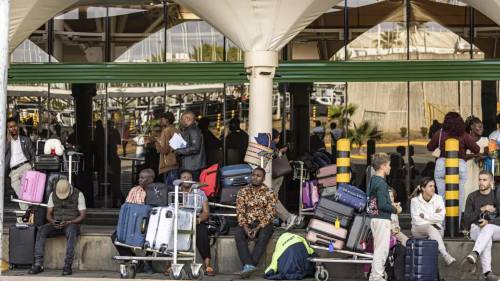
A two-day strike by aviation workers at Nairobi’s Jomo Kenyatta International Airport (JKIA) has disrupted thousands of passengers and exposed how heavily East Africa’s regional air travel network depends on a handful of major hubs.
The Kenya Aviation Workers’ Union (KAWU) began the go-slow action over longstanding labour disputes, including unresolved collective bargaining agreements with the Kenya Civil Aviation Authority, salary review issues and grievances involving the Kenya Airports Authority and Kenya Airways’ low-cost subsidiary Jambojet.
The action, which began on Sunday, forced airlines to delay and cancel flights into and out of Nairobi, with the disruption spreading to neighbouring countries.
Kenyan authorities and the union reached a return-to-work agreement on Tuesday, ending the strike while negotiations on the outstanding issues continue. Kenya’s Transport Minister Davis Chirchir said the parties had agreed on a framework to address three collective bargaining agreements that had been suspended since 2015.
But the episode has highlighted a bigger economic vulnerability: when Nairobi’s aviation system slows, the effects quickly travel beyond Kenya’s borders.
A regional aviation shock
JKIA is not simply Kenya’s main international airport. It is one of the principal gateways connecting East African economies with one another and with international markets.
Airlines operating routes to and from Tanzania, Uganda, Rwanda, Burundi, Somalia and Mauritius were among those forced to cancel or reschedule services during the disruption, according to Reuters.
RwandAir, for example, cancelled two flights after citing air-traffic-control challenges in Nairobi.

For passengers travelling between Dar es Salaam, Zanzibar, Nairobi, Kigali, Entebbe and other regional destinations, the disruption demonstrated how a problem at one airport can rapidly become a regional travel problem.
The implications extend beyond passengers.
Hotels, tour operators, conference organisers, airlines, airport service providers, restaurants, taxi operators and businesses that depend on frequent cross-border movement can all feel the effects when regional aviation is disrupted.
Tanzania could feel the impact
For Tanzania, the disruption is particularly relevant because Kenya remains an important aviation and tourism gateway for travellers moving across East Africa.
A traveller arriving in Nairobi from Europe, North America, Asia or the Middle East may use the Kenyan capital as a connection point before continuing to Tanzania, Uganda or Rwanda.
Any prolonged disruption therefore risks affecting not only Kenyan tourism but also regional travel flows.
Tanzania’s tourism industry is increasingly dependent on international air connectivity as it seeks to expand visitor numbers and develop markets beyond traditional source countries.
The disruption also comes at a time when Tanzania is expanding the role of its own aviation infrastructure and national carrier.
Air Tanzania has been expanding its international network towards the Middle East, Asia and other markets, while Dar es Salaam’s Julius Nyerere International Airport is positioning itself as an increasingly important regional gateway. The airline has added or planned services to destinations including Moscow, Muscat, Mumbai and Guangzhou as part of its wider international expansion.
That creates both a risk and an opportunity.
An opportunity for alternative hubs
When Nairobi experiences a prolonged disruption, airlines and passengers have an incentive to consider alternative gateways.
For Tanzania, that could strengthen the commercial case for Dar es Salaam, Kilimanjaro and Zanzibar as alternative entry points into East Africa.
The same applies to Entebbe in Uganda and Kigali in Rwanda.
However, converting disruption in Nairobi into lasting business for other airports requires more than spare airport capacity.
Airlines need reliable schedules, competitive charges, efficient immigration and customs systems, adequate ground handling, fuel availability and strong onward connections.
The region has been investing heavily in airport infrastructure. Kenya, Tanzania, Uganda, Rwanda and Ethiopia are among countries committing billions of dollars to new airports and major upgrades as they compete to become regional aviation hubs.
The challenge is to ensure that infrastructure investment translates into more reliable and affordable regional connectivity, rather than simply creating competing facilities.
Business travel takes a hit
The economic consequences of aviation disruptions are often underestimated because the immediate focus is on stranded passengers.
But East Africa’s businesses increasingly depend on short-haul air travel.
Executives travel between Nairobi, Dar es Salaam, Kampala, Kigali and other commercial centres for meetings, investment negotiations, conferences and project supervision.
A cancelled Nairobi connection can therefore mean a missed meeting in Kampala, a delayed investment transaction in Dar es Salaam or an abandoned conference trip to Kigali.
For multinational companies operating across the region, unreliable air links also increase the cost of doing business.
The problem becomes more significant when airlines operate relatively few frequencies on some regional routes, leaving passengers with limited alternatives when a flight is cancelled.
Tourism is equally exposed
Tourism is another major area of vulnerability.
East Africa increasingly markets itself as a connected destination, with travellers combining several countries in one trip – for example, Kenya’s Maasai Mara, Tanzania’s Serengeti and Zanzibar, or Uganda’s gorilla tourism with Kenya’s coast.
Such multi-country itineraries depend on predictable connections.
A disruption at a major hub can therefore affect an entire itinerary rather than a single destination.
This makes aviation reliability an important part of the region’s tourism competitiveness. For Tanzania, improving direct international connections could reduce dependence on foreign hubs and give travellers more options for reaching the country’s safari circuits, beaches and business centres.