By Mwanamkasi Jumbe
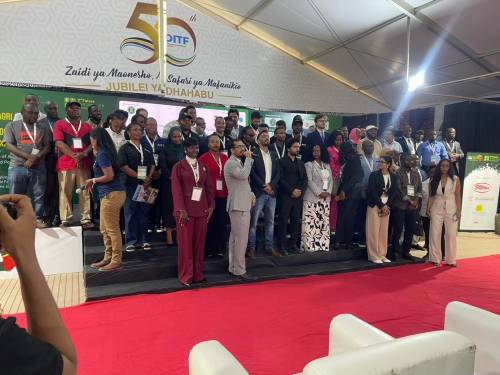
The 10th Global African Agri-Expo and 3rd Future Food and Livestock Expo concluded in Dar es Salaam this September, bringing together stakeholders to explore the future of agriculture in Tanzania and the wider East African region.
According to Tahir Hulgari, CEO and MD of TAB Group*, the organizing company, Tanzania has positioned itself as a central hub for agribusiness growth.
“Tanzania is one of the main gateways of business in the East African region and I think the policies the agricultural ministries, the fisheries and poultry ministries are making along with strong intent of international companies to come up and explore investment opportunities in the region, they are immense and we’re playing our role in making sure that we’re trying to open up the market for international companies, bridging the gap between them and the local policy makers and the companies and ultimately trying to make sure that people are coming together, working together in a sustainable way,” Hulgari said.
He identified technical know-how as one of the biggest opportunities for the country.
“I think one of the biggest opportunities is technical know-how. It’s the transfer of the knowledge, it’s the transfer of the technology. Along with that, it’s opportunity for Tanzanian or the African companies as well to explore business opportunities with international companies as it is with the international companies to look into the market, find opportunities here.”
For Hulgari, the focus must now shift to value addition and mechanization.
“We already know there are huge opportunities, there are big areas of land share in the region, there are people who are trying to work hard, they’re putting their efforts, but I think mechanisation, technological advancement, value addition to these products, it’s very important because I think it’s about how much value you are adding to the product.”
He also noted that the cost of adopting new technologies is becoming more affordable, which is critical for small-scale farmers.
“We have seen companies who specifically have product solutions and technologies that are specifically related to agriculture… there are definitely technologies that are specifically designed for small-scale farmers and I’m very sure that with those, you will definitely see an increase in the yield, increase in the product.”
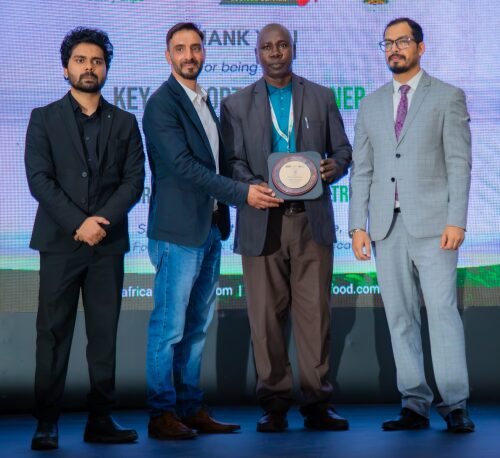
International interest remains strong. Hulgari confirmed that companies from India, Europe and the Middle East are actively looking at Tanzania.
“Of course there are companies who are coming in from India, from Europe, from Middle East companies who have had experience with the local authorities, who know how the environment is for investment, what are the licencing protocols, what are the other important documentation or strategies they need to keep in mind.”
He praised the support from local authorities and associations who are guiding international companies.
“I’m very happy about is the support from the local authorities and associations who sort of work as a guiding force for these international companies to show them the way, to show them what opportunities are here, how they can set up things correctly here.”
On youth participation, Hulgari was optimistic.
“What I observed is that there has been a very active participation from the youth, not just the people who are already taking up agriculture as their business or as their jobs, but the people who are still trying to evaluate whether that’s something that we can do. And I think the important factor behind that is, as we’re talking about the digitalisation or using technological advancements, because that’s something that fascinates them.”
He concluded that platforms like the Agri Expo are essential for creating impact.
“It’s just that platforms like these, they have the power to create an impact where you bring the different stakeholders together, where you bring the ecosystem together and then try to learn, try to network, try to get into business partnerships. That’s what makes the change.”
TAB Group has committed to returning to Tanzania annually.
“We are moving to, we have a few events in Dubai post this, they’re all related to agriculture and agriculture technology, but we’re definitely 100% coming back to Tanzania with a bigger show. We’re making it annual now.”
From the exhibitor side, Salvatory Chengula, Marketing Officer at Agricom Africa Limited, said the company uses the platform to connect directly with farmers and stakeholders.
“The company provides end to end solutions for farmers. This includes supplying durable and reliable agricultural requirement designed for efficiency and low maintenance. To achieve this Agricom Africa Limited works with various partnership including manufactures of premium equipment brands such as Field King and Kubota as well as financial institutions.”
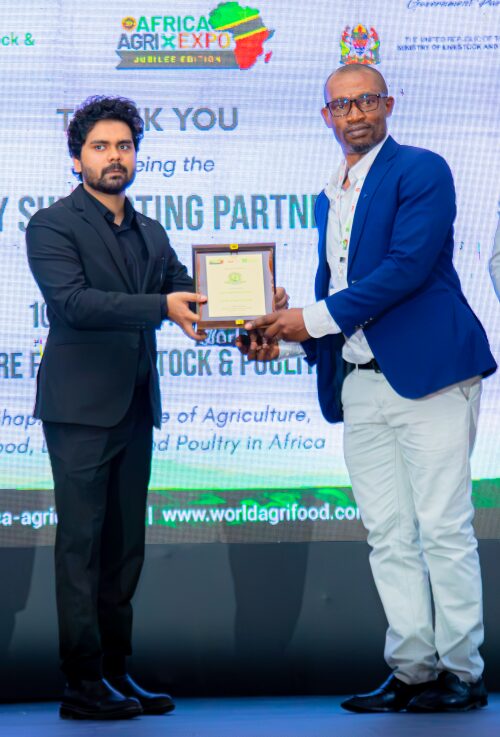
Chengula explained that participation in the 10th Agri Expo has helped the company expand its network.
“_Participating in the 10th Agri Expo has helped the company build a new network of stakeholders.
He highlighted how partnerships help address one of the biggest challenges for farmers: access to finance for machinery. With technology becoming more accessible, new partnerships forming, and a commitment to an annual event, the 10th Agri Expo signals a clear direction for Tanzania’s agriculture sector: collaboration, value addition, and investment in solutions tailored for local farmers.