By Business Insider Reporter
Tanzania is investing TSh12.6 billion in critical infrastructure upgrades across the Serengeti National Park as part of a broader strategy to safeguard the country’s most valuable tourism asset while strengthening its position as one of Africa’s leading safari destinations.
The investment, spearheaded by the Tanzania National Parks Authority (TANAPA), comes at a time when the government is intensifying efforts to transform tourism into a key driver of economic growth under the country’s long-term development agenda. The programme focuses on improving transport infrastructure to enhance year-round accessibility, reduce climate-related disruptions and preserve the ecological integrity of one of the world’s most celebrated wildlife ecosystems.
The Serengeti is the cornerstone of Tanzania’s tourism industry. Recognised as a UNESCO World Heritage Site, the park is globally renowned for the annual Great Migration of more than two million wildebeest, zebras and gazelles. It attracts hundreds of thousands of visitors annually and remains one of the country’s strongest foreign exchange earners.
Tourism contributes significantly to Tanzania’s economy through foreign currency earnings, employment, investment and tax revenues. Industry analysts note that maintaining world-class infrastructure in key tourism destinations is becoming increasingly important as countries compete for high-value international travellers.
According to TANAPA’s Assistant Conservation Commissioner for Corporate Communications, Catherine Mbena, the infrastructure investment demonstrates the government’s commitment to ensuring that increased international marketing of Destination Tanzania is matched by improved visitor facilities.
“The Sixth Phase Government, through the Ministry of Natural Resources and Tourism, continues to invest substantially in infrastructure to ensure that visitors enjoy safe, reliable and high-quality tourism services while preserving the country’s natural heritage,” she said.
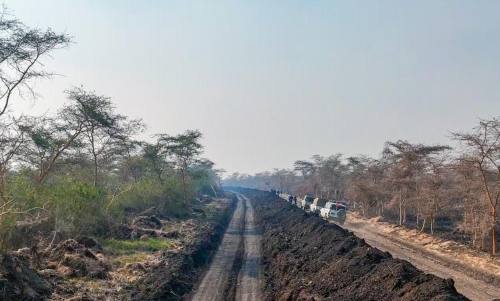
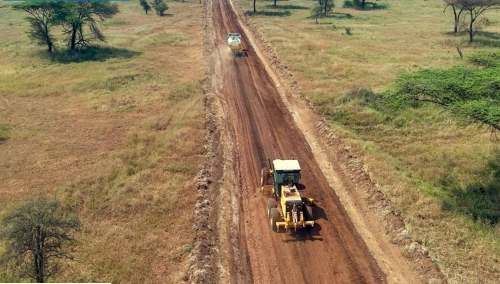
At the centre of the programme is the rehabilitation of the 121-kilometre Ndabaka-Seronera road, the principal gateway linking western Tanzania to the heart of the Serengeti.
The TSh4.5 billion project includes full road grading, construction of seven reinforced box culverts and raising sections of the road vulnerable to seasonal flooding. Construction began in June and is expected to be completed by December.
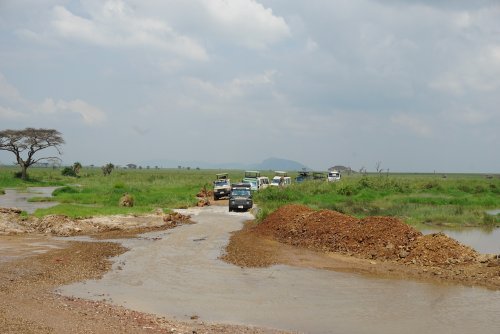
In addition, TANAPA has allocated TSh8.1 billion for the construction of permanent bridges and river crossings at five strategic locations – Banagi, Mti wa Rangi, Naabi, Kwa Bona and Mokas. Geotechnical investigations have already been completed, while detailed engineering designs are currently underway before construction commences.
TANAPA Conservation Commissioner Musa Nasoro Kuji said the investments are guided by a conservation-first approach that ensures infrastructure development strengthens rather than compromises ecosystem protection.
“Our objective is to develop infrastructure that supports effective conservation management, improves visitor experiences, strengthens emergency response capabilities and promotes sustainable tourism without undermining the ecological integrity of the Serengeti,” he said.
The projects also reflect the increasing need for climate-resilient infrastructure as extreme weather events become more frequent across East Africa. Flood-prone roads have previously disrupted tourist movements, wildlife management operations and logistical support within the park.
Building infrastructure inside the Serengeti presents unique engineering and environmental challenges due to the park’s internationally protected status.
TANAPA engineer Abubakari Avanda Mshamu said every construction project must comply with strict engineering and environmental standards designed to protect sensitive habitats.
“Every infrastructure intervention inside the Serengeti must meet rigorous engineering and environmental requirements. Materials, construction techniques and designs are carefully selected to preserve the park’s Outstanding Universal Value as a UNESCO World Heritage Site,” he explained.
The investment forms part of Tanzania’s broader strategy to increase tourism’s contribution to the national economy through higher visitor spending, improved service quality and sustainable destination management.
Over the past four years, the government has significantly expanded investment in tourism infrastructure, international destination marketing and conservation programmes under President Samia Suluhu Hassan’s administration. These efforts have contributed to a strong rebound in visitor arrivals following the COVID-19 pandemic and have attracted renewed private investment in hotels, lodges and tourism services.
Industry observers argue that protecting globally recognised attractions such as the Serengeti requires more than conservation alone. Reliable roads, bridges and visitor facilities are increasingly viewed as strategic economic assets that enable sustainable tourism while supporting local communities and protecting biodiversity. For Tanzania, the Sh12.6 billion investment is therefore more than a road improvement programme. It is a long-term investment in the country’s tourism competitiveness, ensuring that the Serengeti continues to generate jobs, foreign exchange and inclusive economic growth while preserving one of the world’s greatest natural wonders for future generations.