
By Correspondent Joseph Mahumi
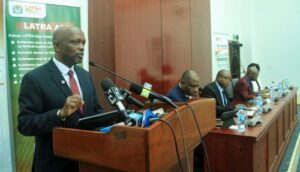
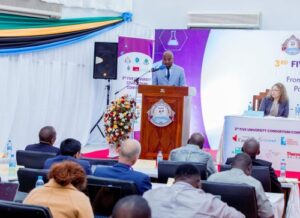
Tanzania’s Finance Minister, Ambassador Khamis Mussa Omar, has called on businesses and individual taxpayers to strengthen voluntary tax compliance as the Government embarks on an ambitious drive to mobilise nearly TSh36 trillion in tax revenue during the 2026/27 financial year to finance infrastructure, public services and economic transformation.Taxpayer Appreciation Run and Walk, organised ahead of the President’s Taxpayer Awards and the 30th anniversary of the Tanzania Revenue Authority (TRA),
Speaking in Dar es Salaam during the the minister said domestic revenue remains the cornerstone of Tanzania’s fiscal sustainability and development agenda.
The Government expects domestic revenue to reach TSh46 trillion in 2026/27, with tax collections accounting for approximately TSh36 trillion, representing more than one-third of the national budget. The target reflects Tanzania’s continued strategy of reducing dependence on external borrowing while increasing the financing of development projects through internally generated resources.
“Every financial year presents a new beginning with higher targets,” Ambassador Omar said. “As we enter July, we embark on a new journey. We wish businesses and investors success in their economic activities, but that success must go hand in hand with paying taxes voluntarily, on time and in full.”
The minister noted that strong tax compliance has enabled the Government to implement some of the country’s largest strategic investments, including the Standard Gauge Railway (SGR), the rehabilitation of the TAZARA Railway, and the Julius Nyerere Hydropower Project (JNHPP).
These projects, he said, demonstrate the direct link between tax revenues and Tanzania’s long-term economic competitiveness.
“The transformation taking place across the country is largely financed by taxes paid by citizens and businesses,” he said. “The SGR, for example, is revolutionising transport by moving thousands of passengers in a single journey, easing road congestion and improving the efficiency of economic activity.”

The remarks come as Tanzania continues to pursue an aggressive domestic revenue mobilisation strategy under its medium-term fiscal framework. Over the past decade, the Government has prioritised broadening the tax base, digitising tax administration and improving voluntary compliance rather than relying solely on higher tax rates. Recent budget reforms have also sought to simplify tax administration, enhance taxpayer services and support formalisation of businesses, particularly small and medium-sized enterprises (SMEs).
The Finance Minister praised the performance recorded during the 2025/26 financial year, revealing that TRA exceeded its monthly revenue collection target by three percent in the previous month, expressing confidence that the authority would meet its annual target by the end of June.
Beyond revenue mobilisation, Ambassador Omar emphasised the importance of maintaining a healthy workforce, arguing that productivity and public finance are closely connected.
He encouraged TRA employees, taxpayers and tax consultants to embrace regular physical exercise, noting that a healthier population contributes to higher productivity, lower healthcare costs and stronger economic output.
“A healthy body enhances sound decision-making and improves service delivery,” he said. “Improved productivity ultimately contributes to increased Government revenue.”
He also underscored the importance of peace and political stability as fundamental drivers of investment, business growth and revenue generation.
“Without peace and stability, economic activities cannot flourish,” Ambassador Omar said. “It is our collective responsibility to safeguard the peaceful environment that enables businesses to grow, people to earn incomes and taxpayers to contribute to national development.”
The event also marked three decades since the establishment of the Tanzania Revenue Authority in 1996, a period during which the institution has undergone extensive institutional and technological reforms. Today, digital tax systems, electronic fiscal devices, online taxpayer registration and automated customs platforms have significantly improved compliance while reducing administrative costs.
TRA Commissioner General Yusuph Juma Mwenda attributed the authority’s improving performance to growing trust between the tax administration and taxpayers.

“The relationship between TRA and taxpayers has become one of partnership rather than enforcement alone,” Mwenda said. “This collaboration has strengthened Government revenue collection and enabled continued investment in national development and essential public services.”
He said TRA would continue investing in digital technology, innovation and taxpayer education to improve the ease of doing business, expand the taxpayer base and support sustainable economic growth.
“Digital systems have reduced bureaucracy, improved transparency and accountability, and made it easier for taxpayers to access services,” Mwenda said. “Our focus remains on creating a business-friendly tax environment while ensuring the Government mobilises the resources needed to deliver its development priorities.” As Tanzania implements its 2026/27 Budget, tax policy is expected to play an increasingly central role in balancing fiscal consolidation with economic expansion. Sustaining voluntary compliance, broadening the tax base and improving administrative efficiency are likely to remain critical if the Government is to finance its ambitious infrastructure pipeline while maintaining macroeconomic stability and supporting private sector-led growth.