By Correspondent Benny Mwaipaja, Washington
Tanzania is stepping up efforts to diversify its development financing sources, strengthening ties with the Asian Infrastructure Investment Bank (AIIB) in a move expected to unlock new funding for large-scale infrastructure and green economy projects.
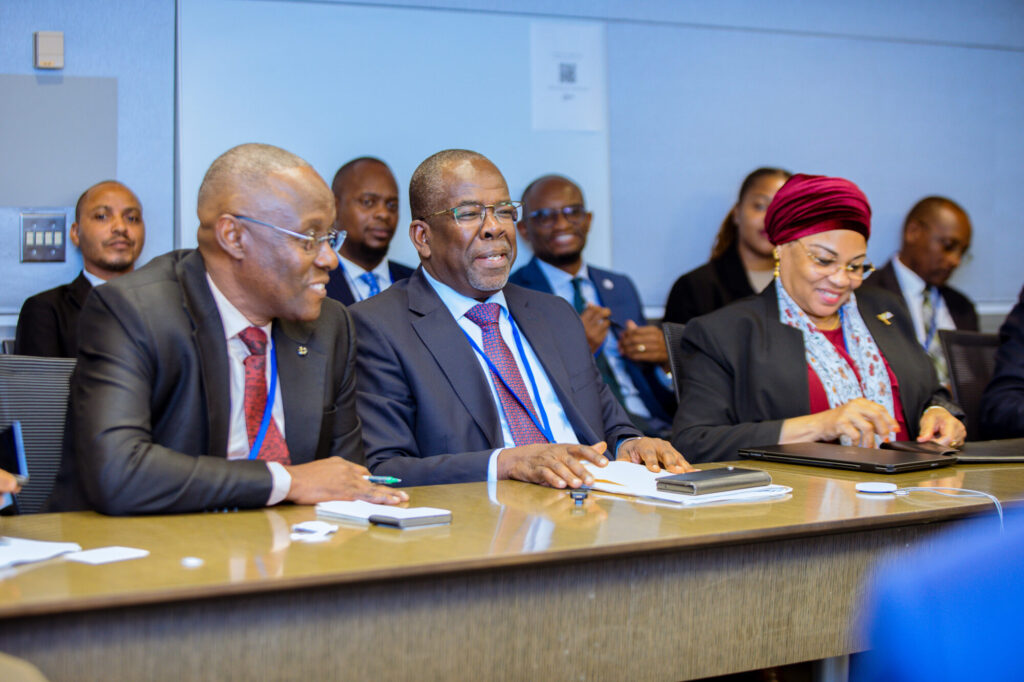
The renewed engagement was formalised during high-level talks in Washington D.C., where Finance Minister Khamis Mussa Omar led a delegation in discussions with AIIB President Zou Jiayi on the sidelines of the World Bank and IMF Spring Meetings.
At the centre of the discussions was Tanzania’s ambition to mobilise long-term, affordable capital to finance strategic sectors, including water, energy, transport, information and communications technology (ICT), and climate-resilient infrastructure.
Financing Tanzania’s next growth phase
Zou Jiayi described Tanzania as a key partner within the Beijing-headquartered lender, signalling AIIB’s readiness to support the country’s long-term development agenda.
Priority areas identified include modern railway systems, energy infrastructure, water projects, and digital connectivity – critical pillars for accelerating productivity and improving service delivery.
For Tanzania, the engagement reflects a broader strategy to align infrastructure development with its Dira 2050 framework, which targets a transition to a US$1 trillion economy by mid-century. Delivering on this ambition will require substantial capital inflows, particularly in capital-intensive sectors such as transport and energy.
Strategic projects in focus
During the meeting, Omar invited AIIB to explore participation in several flagship projects, including the expansion of the Port of Dar es Salaam, development of the Standard Gauge Railway (SGR), and construction of the Mbegani Port in Zanzibar.
Additional areas of collaboration include youth employment initiatives in the technology sector and other mutually agreed investment opportunities.
These projects are central to Tanzania’s industrialisation drive, aimed at improving logistics efficiency, reducing the cost of doing business, and strengthening regional trade linkages across East and Central Africa.
Private sector at the core
A key theme in the discussions was the role of private capital in delivering Tanzania’s development goals. The government estimates that more than 70 percent of the investments required to achieve Vision 2050 will need to come from the private sector.
Omar underscored the importance of AIIB support in unlocking financing for private enterprises, enabling them to scale operations and participate more actively in infrastructure delivery.
This aligns with global trends where multilateral lenders are increasingly blending public and private finance to de-risk large projects.
AIIB’s expanding global footprint
Established in 2016, the Asian Infrastructure Investment Bank has rapidly emerged as a major multilateral development financier, with a focus on sustainable infrastructure under its “Infrastructure for Tomorrow” strategy.
Although initially Asia-focused, the bank has expanded its footprint globally, including into Africa, where infrastructure deficits remain a major constraint to growth.
Tanzania, as a non-regional member, views AIIB as a strategic partner in broadening its financing base beyond traditional institutions such as the World Bank and the International Monetary Fund.
The partnership also reflects a wider shift among African economies towards tapping alternative sources of development finance, particularly for climate-resilient and green infrastructure projects.
Outlook
As Tanzania accelerates infrastructure investment, the success of its engagement with AIIB will depend on project readiness, governance standards, and the ability to structure bankable deals that attract co-financing from global investors. If effectively leveraged, the partnership could significantly enhance Tanzania’s capacity to deliver transformative infrastructure while supporting inclusive and sustainable economic growth.