
By Staff Reporter
The Muhimbili Orthopaedic Institute (MOI) is bringing together specialist surgeons from Italy, the United States and Palestine for a five-day medical camp aimed at improving access to corrective treatment for children with scoliosis, a spinal condition that can cause severe physical deformities if left untreated.
Scheduled for December 2–7, 2026, at the institute’s premises in Dar es Salaam, the camp will focus on screening, diagnosis, consultations and corrective surgery for children under the age of 10.
The initiative highlights the growing importance of specialised healthcare investment in Tanzania, particularly in areas where limited local expertise has historically forced families to seek expensive treatment abroad.
According to an official statement issued by MOI Acting Public Relations Manager Abdallah Nassoro, the international specialists will work alongside Tanzanian orthopaedic and spine surgeons to provide comprehensive treatment.
The collaboration is expected to deliver immediate benefits to children requiring specialised care while creating opportunities for knowledge exchange and skills transfer among local medical professionals.
Scoliosis is a condition in which the spine curves sideways, often forming an S or C shape. Although it can affect people of different ages, early-onset scoliosis presents particular challenges because the condition can progress as a child grows.
Without appropriate treatment, severe cases may lead to physical deformity, chronic pain and breathing difficulties. Early assessment and intervention are therefore important in improving long-term outcomes.
MOI says the camp is specifically designed to address the needs of children below 10 years, when timely intervention can make a significant difference to their development and quality of life.
Building local capacity in specialised surgery
Beyond treating patients, the initiative reflects MOI’s strategy of developing specialised surgical expertise within Tanzania.
The institute says it is currently the only facility in the country offering this highly specialised treatment and has provided scoliosis services for decades.
Bringing international experts to work with local teams allows Tanzanian specialists to exchange experience, improve surgical techniques and strengthen their ability to manage complex spinal deformities.
This is particularly important in a medical field where advanced surgical skills, specialised equipment and coordinated post-operative care are essential.
For Tanzania’s healthcare system, developing such capabilities locally has implications beyond clinical outcomes. It can reduce the financial and logistical burden on families who might otherwise have to seek treatment outside the country.
Medical referrals abroad often involve substantial costs, including hospital charges, travel, accommodation and follow-up care. For families with limited financial resources, these expenses can make specialised treatment difficult to access.
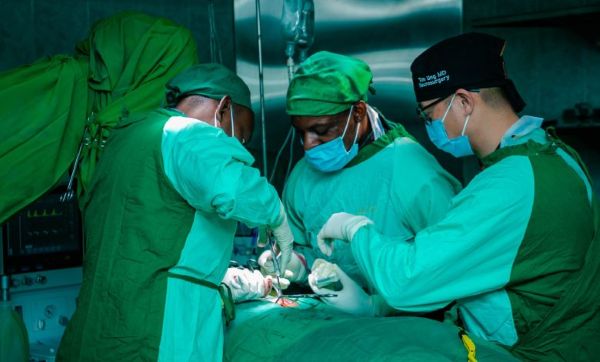
By strengthening local capacity, MOI is seeking to make advanced orthopaedic services more accessible while reducing dependence on foreign medical facilities.
Reducing the cost of seeking treatment abroad
The scoliosis camp also comes at a time when Tanzania is seeking to strengthen specialised healthcare services and retain more medical expenditure within the country.
The Ministry of Health, through institutions such as MOI, has been investing in specialist services to improve the country’s capacity to manage complicated medical conditions.
The involvement of international surgeons offers a practical model for achieving this objective: rather than relying entirely on sending patients abroad, local institutions can bring specialist expertise into the country while developing their own professionals.
The benefits could extend to future patients long after the five-day camp has ended, particularly if the knowledge gained translates into stronger local surgical teams and sustained treatment capacity.
MOI says adequate preparations have been made, including medical personnel, equipment and facilities for post-operative care, to ensure the safety and smooth delivery of services.
The institute has encouraged parents and guardians with children suspected of having scoliosis to take advantage of the opportunity and bring them for assessment during the camp.
Parents seeking information, screening arrangements or appointments can contact MOI through 0713 827 770. For the families involved, the immediate priority will be obtaining appropriate diagnosis and treatment for their children. For Tanzania’s healthcare sector, however, the initiative represents a wider investment in specialist knowledge, local surgical capacity and access to advanced medical services without the added burden of travelling abroad.