
By Mwanamkasi Jumbe
Groundwater is emerging as a strategic economic resource for Southern Africa, with countries in the region being urged to strengthen its management, protect shared aquifers and increase investment in infrastructure and research to secure water supplies against climate change.
The call was made at the conclusion of the 8th SADC Groundwater Conference in Dar es Salaam, where policymakers, researchers and water experts agreed that groundwater must become a central part of regional water planning rather than remain a reserve tapped mainly when surface water runs short.
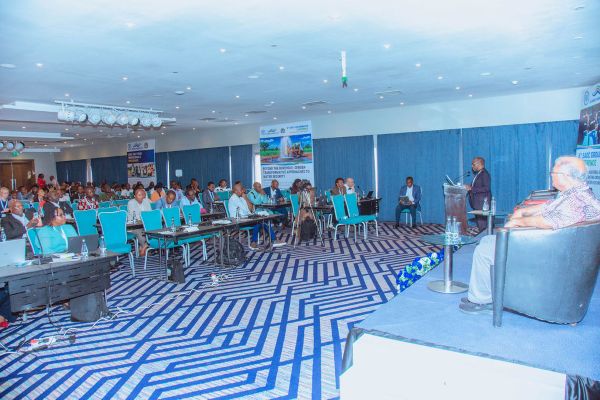
The three-day meeting, held from November 18 to 20, 2026, brought together more than 100 participants from SADC member states, river basin organisations, development partners, research institutions and universities. A total of 32 papers were presented under the theme, “Shared Aquifer, Equal Voices: Accelerating Groundwater Resilience for a Water Secure Future.”
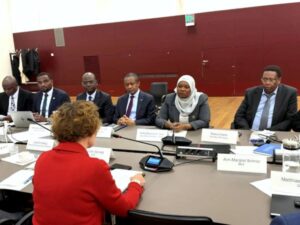
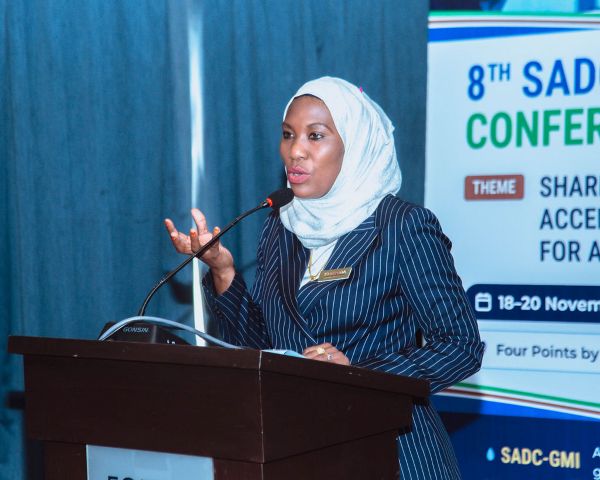
Opening the conference, Permanent Secretary in the Ministry of Water, Engineer Mwajuma Waziri (pictured above), said climate-related droughts and floods were putting increasing pressure on rivers, lakes and dams, threatening household supplies, agriculture, livestock and wider economic activity.
Groundwater, she said, offered a more dependable source of water during periods of climate stress and deserved greater attention in national and regional investment plans.
Tanzania has an estimated 105 billion cubic metres of surface water and 21 billion cubic metres of groundwater, according to Eng Waziri. However, the country’s groundwater resources remain underutilised, presenting an opportunity to expand water access and support productive sectors.
She pointed to cooperation with the SADC Groundwater Management Institute (SADC-GMI), a regional centre of excellence, as an important part of Tanzania’s efforts to identify aquifers, attract investment and develop productive wells.
Projects in Nzuguni, Kilimanjaro and Fufu in Dodoma were cited as examples of the benefits of that collaboration.
Eng Waziri called for water policies to give groundwater a stronger place, including through funding for scientific research, protection of aquifers and investment in modern equipment and qualified specialists capable of assessing water availability and quality.
From discussion to action
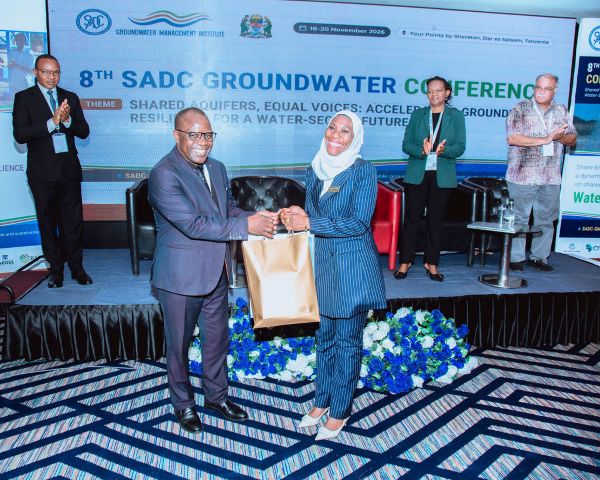
Closing the conference, SADC-GMI Executive Director Eng James Sauramba said the meeting had moved beyond general calls for action to examine practical ways of improving groundwater management.
“We have taken the call from Johannesburg and turned it into a practical, action-oriented dialogue,” he said.
The technical discussions focused on three areas: data-driven approaches to water security, technology and cooperation in managing transboundary aquifers, and innovation to strengthen climate adaptation.
Special sessions also examined groundwater’s contribution to inclusive economic development, financing options, the needs of growing cities and stronger governance of aquifers shared by neighbouring countries.
Eng Sauramba highlighted five messages emerging from the discussions.
The first was the growing pressure on groundwater governance. Aquifers are facing depletion and pollution, while weak institutions, limited scientific data and inadequate cooperation make it difficult to manage resources that cross national borders.
A keynote presentation by Dr. Rafiq drew lessons from groundwater reforms in India, Kenya, Morocco, South Africa and Tanzania, offering examples of approaches that could inform regional policy.
The second message was that communities must have a meaningful role in decisions affecting water resources. Women, young people and marginalised groups should not simply be consulted but recognised as stakeholders whose views influence policy and investment.
The third concerned inequality in access to water resources. Eng Sauramba cited an example in which women held around 1.2 percent of ground allocation, highlighting the need for better gender-disaggregated data and fairer allocation systems.
The fourth was that infrastructure performance and local conditions directly affect water security. A case study from northern Ghana, where more than half of water points had failed, illustrated the cost of inadequate maintenance and weak management.
The fifth was the need to protect groundwater as a strategic resource, drawing on experiences from Tanzania, Angola, Mauritius, Mozambique and Namibia.
“Although groundwater is invisible, its importance to our communities and economies and our future is unmistakable. We must safeguard it for future generations as well as for present needs,” Eng Sauramba said.
A regional investment and governance agenda
The conference’s rapporteur, Flora Bruno, presented the final report on November 20, setting out the main areas of agreement. These included recognising groundwater as a strategic resource for water security and climate resilience, strengthening scientific knowledge of aquifers, managing surface water and groundwater as interconnected resources, and improving policies, legal frameworks and governance.
For governments, the discussions point to a growing need to treat groundwater management as an investment priority. This involves more than drilling boreholes. It requires reliable data, monitoring systems, infrastructure maintenance, pollution controls and institutions capable of managing resources sustainably.
The economic implications are significant. Reliable water supplies support agriculture, livestock production, urban development and industrial activity. Poorly managed aquifers, on the other hand, can expose communities and businesses to shortages, rising costs and greater vulnerability during prolonged droughts.
The conference outcomes are expected to inform regional water policies and contribute to preparations for the forthcoming UN Water Conference, with a focus on translating scientific evidence into investment and practical action.
Eng Sauramba thanked the Government of Tanzania and the University of Dar es Salaam for hosting the meeting, as well as development partners and sponsors, including IUCN, UNDP, the Government of Ghana, UNESCO and the World Meteorological Organization.
Tanzania’s hosting of the conference also provided an opportunity to reinforce its role in regional groundwater development, building on experience from projects designed to sustain communities when conventional water sources come under pressure. The meeting ended with a commitment to strengthen cooperation across borders and ensure that groundwater is managed for the benefit of present and future generations. For the SADC region, the challenge now is to turn that commitment into better policies, stronger institutions and sustained investment.