By Business Insider Reporter
Tanzania’s ambition to transform its mineral wealth into greater industrial and economic value will require coordinated investment in processing facilities, supporting infrastructure and local businesses, Stanbic Bank Tanzania has said, highlighting the critical role of financial institutions in accelerating the country’s mineral value addition agenda.
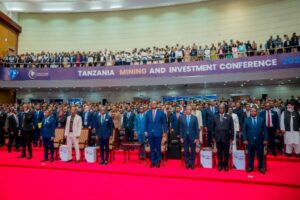
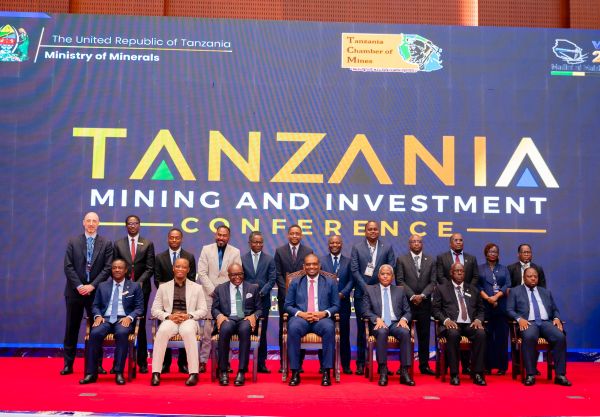
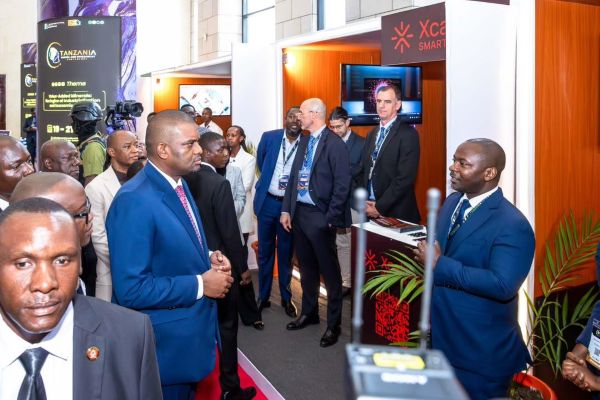
The bank made the call as the seventh Tanzania Mining and Investment Conference (TMIC) opened in Dar es Salaam on November 19, bringing together more than 1,700 delegates from over 50 countries to discuss opportunities under the theme, “Value Added Minerals: The Engine of Industrialization and Economic Growth”.
With mining contributing 10.3 percent of Tanzania’s gross domestic product in 2025, the sector is increasingly central to the country’s economic transformation ambitions.
Government revenue from minerals rose by 30.2 percent to TSh1.394 trillion in 2025/26, exceeding the target of TSh1.2 trillion. Tanzania has also improved its international investment standing, ranking fourth in Africa and 34th globally in mining investment attractiveness, according to the Fraser Institute.
The Government’s push for domestic processing is already producing tangible results. Six gold refineries are operating in the country, while the Government has completed a Mineral Value Addition Strategy. In 2025/26, the Bank of Tanzania purchased 21,710 kilogrammes of gold, equivalent to 75.64 percent of gold sold through domestic refineries, to strengthen national reserves.
Another major development is the niobium project at Panda Hill in Mbeya, where the Government signed an agreement in March 2026 covering the development of a ferroniobium processing plant, described by the Ministry of Minerals as the first of its kind in Africa. The project is expected to generate 1,600 direct jobs and create procurement opportunities worth US$1.77 billion locally.
“Our policy is clear. Tanzania will add value to its minerals here at home,” said the Minister for Minerals, Anthony Mavunde. “We welcome investors and financial institutions to partner with Government in building the refineries, smelters and industries that will carry our economy towards Vision 2050.”
However, Stanbic says achieving this ambition requires investors to look beyond the extraction of minerals and consider the infrastructure and financing needed to make processing commercially viable. Smelters and refineries require reliable electricity, roads, railways, water and skilled labour, often before production and revenue generation begin.
The bank identifies three priorities: coordinating infrastructure financing with investment in processing facilities, strengthening the capacity of local suppliers, and connecting Tanzanian mineral producers with international markets more efficiently.
“There is a difference between a nation that sells its minerals and a nation that builds with them. The first earns a price. The second builds industries, skills and jobs that last for generations,” said Erick Mushi, Acting Head of Corporate and Investment Banking at Stanbic Bank Tanzania.
“Government has set a clear direction. Behind every refinery is a financing decision, and our responsibility as financial institutions is to bring capital, expertise and partners alongside that national ambition. Tanzania is our home, and we drive her growth,” he added.
Strengthening local participation is equally important. Mining companies purchased goods and services worth some US$1.46 billion from Tanzanian businesses between July and December 2025. Meanwhile, the number of Tanzanians employed in mining increased from 6,668 in 2018 to more than 18,800 in 2024, representing over 97 percent of the industry’s workforce, according to the Ministry of Minerals.
Elias Ngunangwa, Head of Client Coverage, Corporate and Investment Banking at Stanbic, said expanding local supplier capacity would help retain more economic benefits within the country.
“Every mine depends on contractors, transporters and suppliers, and that is where much of the value of our minerals can stay at home,” he said.
“When a Tanzanian contractor can finance new equipment and carry the cost of a large contract, more jobs follow. The projects that will define the next decade need lenders who understand the sector from the pit to the port, and who can bring partners from across Africa and the world to the table.”
He said Stanbic remained a close partner to the Government and mining sector stakeholders, drawing on more than 30 years of experience in Tanzania to facilitate investment in strategic sectors, including mining.
“To date, we have provided more than US$100 million in financing to mining companies in Tanzania. Over the past two years, we have also committed approximately US$60 million to support activities across the mining value chain,” Mr Ngunangwa said.
Stanbic’s position is reinforced by its international banking network as part of Standard Bank Group, whose relationship with the Industrial and Commercial Bank of China provides connections to capital, strategic partners and buyers across Africa and international markets.
Euromoney has recognised Stanbic Bank as Tanzania’s Best Investment Bank for six consecutive years, reflecting its role in facilitating investment and supporting major economic sectors. The bank says it will continue working with the Ministry of Minerals, Mining Commission, Bank of Tanzania, Tanzania Chamber of Mines and investors to support the next phase of mineral value addition. Its sponsorship of TMIC, which runs until November 21, underscores its commitment to advancing investment, local participation and industrial development in Tanzania’s mining sector.