

By Correspondents Chedaiwe Msuya and Abdul Madenge, Dodoma
Tanzania’s drive to expand employment and build a more competitive economy will depend increasingly on graduates who can create businesses, develop new products and employ others, rather than relying solely on the limited opportunities available in the formal job market.
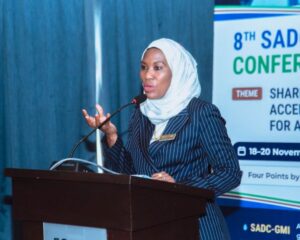
That was the message from Deputy Minister for Finance Laurent Deogratius Luswetula (pictured above), who challenged graduates of the Institute of Rural Development Planning (IRDP) to turn their academic knowledge and professional skills into productive economic activities.
Speaking on behalf of Finance Minister, Ambassador Khamis Mussa Omar, at the institute’s 40th graduation ceremony in Dodoma, Luswetula said the government was working to create an enabling environment for young people to access education, capital, technology and markets.
He said graduates had a responsibility to become active participants in economic transformation by identifying opportunities, addressing community challenges and creating employment.
“Graduates should use the knowledge and skills they have acquired to become part of the solution to economic and social challenges by developing self-employment opportunities and creating jobs for others,” he said.
More resources for education and youth enterprise
The government is backing this ambition with increased investment in higher education financing and economic empowerment programmes.
Luswetula said the budget for higher education student loans had increased from TSh916.7 billion in the 2025/26 financial year to TSh1.06 trillion in 2026/27, representing growth of 15.6 per cent.
The number of expected beneficiaries is projected to rise from 252,773 to 289,932 students.
The government has also allocated TSh9.6 billion through the Samia Scholarship programme to support 2,738 students pursuing science, technology, engineering, mathematics and medical courses.
In addition, TSh200 billion has been earmarked for the National Youth Economic Empowerment Programme to promote entrepreneurship and expand employment opportunities.
Another instrument is the allocation of 10 per cent of local government authorities’ revenues for loans to young people, women and persons with disabilities. The government has also reserved 30 percent of public procurement opportunities for these groups.
For graduates in rural development planning, the opportunities extend beyond establishing conventional businesses. They include agricultural value addition, rural infrastructure development, consultancy, community-based enterprises, natural resource management and the development of services that respond to local economic needs.
IRDP turns innovation into commercial opportunities
A notable development at IRDP is the establishment of the Mipango Entrepreneurship and Innovation Centre (MEI), designed to help students transform creative ideas into marketable products and services.
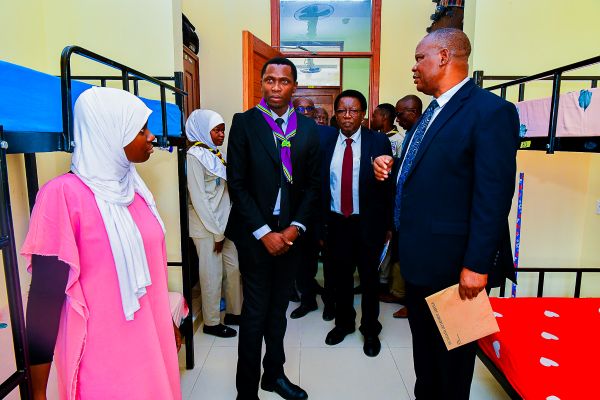
Luswetula commended the institute for investing in the centre, saying it provided an important link between academic training, innovation and the practical demands of the market.
The initiative is particularly relevant to Tanzania’s efforts to strengthen the relationship between higher education institutions and the private sector.
Rather than limiting innovation to academic research, the centre seeks to encourage students to develop commercially viable solutions capable of generating income and employment.
IRDP Principal Professor Mayaya said the institution had so far supported 228 students through its innovation and entrepreneurship programmes.
One of its success stories was a student whose Kalinga Fresh Fish Farm enterprise secured second place in the Bahari Innovation Challenge. The business received TSh29.8 million, alongside additional commercial opportunities.
The institute also secured TSh68 million through the United Nations Development Programme’s FUNGUO Youth Ignite programme to improve the centre’s infrastructure.
Such initiatives demonstrate how universities and specialised training institutions can contribute to enterprise development by providing students with opportunities to test business ideas, access support and engage with potential markets.
Investment in training infrastructure
The 40th graduation ceremony also highlighted the government’s continued investment in IRDP’s physical and academic infrastructure.
Professor Mayaya said 6,076 students, comprising 2,741 men and 3,335 women, had graduated from programmes ranging from basic certificates to master’s degrees.
He said the training combined classroom instruction with practical assignments, research, fieldwork and community engagement to prepare graduates for the realities of development planning.
Among the major infrastructure projects is a four-storey academic building completed under the Higher Education for Economic Transformation (HEET) Project. The facility can accommodate 1,628 people at a time.
The government is also financing two student accommodation projects, each designed to house 320 students.
The fourth hostel at the Miyuji campus in Dodoma is valued at TSh4.18 billion, while the second hostel at the Lake Zone Training Centre in Kisesa, Magu District, Mwanza Region, is valued at TSh3.70 billion. The latter has reached the roofing stage.
The investments are expected to improve the learning environment and expand the institute’s capacity to accommodate students.
Luswetula also expressed government support for IRDP’s proposal to establish a Southern Highlands regional training centre in Songwe, which would widen access to development planning education.
Skills for Vision 2050
Beyond graduation, IRDP intends to strengthen its role in long-term and short-course training, research and consultancy in development planning and management.

This is particularly important as Tanzania prepares to implement Development Vision 2050, which seeks to build a competitive, inclusive and productive economy while expanding employment and income-generating opportunities.
The institute’s contribution will increasingly be measured by how effectively its graduates translate development knowledge into practical solutions for communities, businesses and public institutions. For the 6,076 graduates, the immediate challenge is to turn their qualifications into economic value.