
By Business Insider Reporter
Tanzania’s ambition to build a more self-reliant healthcare system is creating a policy and investment agenda that extends beyond the construction of hospitals to domestic pharmaceutical production, sustainable financing, digital health and locally driven medical research.
The agenda took centre stage at the 13th Tanzania Health Summit (THS), held at Mlimani City in Dar es Salaam from October 5–7, 2026, under the theme “Building Health Sovereignty and Strengthening Health Systems in a Changing Global Order.”
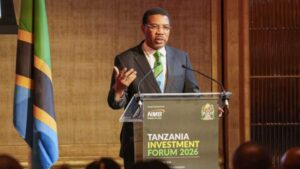
Opening the summit on behalf of President Dr Samia Suluhu Hassan, Health Minister Mohamed Mchengerwa called for health sovereignty to be treated as a national security priority, emphasising the need to strengthen domestic capacity while continuing to work with international partners.
The urgency is underscored by the expected reduction in external development assistance to the health sector in the 2026/27 financial year. The government is therefore seeking to strengthen domestic financing and expand the country’s capacity to produce essential health products.
Mr Mchengerwa said the health sector had been allocated TSh1.8 trillion for the current financial year, with 64 per cent earmarked for development projects. He also highlighted measures intended to channel revenue from levies on imported cigarettes and sugar products to the Universal Health Insurance Fund.
The government’s ambition to meet 80 percent of national demand for essential medicines through domestic production by 2030 offers a particularly important opportunity for investors. The proposed pipeline of 50 strategic projects covers pharmaceuticals, vaccines, diagnostics, medical devices and specialised hospital infrastructure.
However, experts argue that converting these ambitions into a stronger healthcare economy will require more than investment announcements. Manufacturers need reliable demand, access to financing, predictable regulation, skilled personnel and efficient supply chains. Public procurement policies that give locally manufactured products a viable market will also be critical.
The THS 2026 highlighted several areas where research and innovation could contribute to better health outcomes.
Researchers from the Ifakara Health Institute presented work examining changing patterns of asymptomatic malaria across Tanzanian councils between 2023 and 2025. Another presentation demonstrated how bioinformatics could help move gene-expression research towards potential drug candidates.
These studies illustrate the value of strengthening local research capacity and translating scientific findings into practical solutions for public health.
Maternal healthcare was another focus. Prime Health Initiative Tanzania presented findings and implementation lessons from the Mlinde Mama Project, including the integration of group antenatal care into routine services, digital maternal-health interventions and respectful maternity care.
Meanwhile, discussions convened by the Tanzania Food and Nutrition Centre and Nutrition International examined nutrition sovereignty and the preparation of a proposed 25-year national nutrition plan.
The sessions reinforced a common message: stronger health systems depend on evidence, effective implementation and the ability to sustain successful interventions within existing institutions.
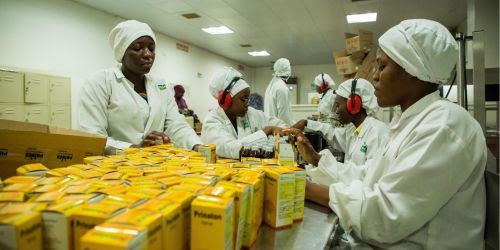
The economic case for health sovereignty also extends to workforce productivity. Safer working environments, better-supported healthcare professionals and more accessible services are essential to maintaining the quality and reliability of care.
For Tanzania, the challenge is to ensure that greater domestic financing and private-sector participation translate into measurable improvements in affordability, access and quality. The government is also seeking to expand specialised services and position Tanzania as a regional referral centre. Achieving this ambition will require investment in advanced equipment, specialist skills, reliable diagnostics and quality standards that inspire confidence among patients from Tanzania and neighbouring countries.
THS 2026: Areas of potential investment & commercial development.
| Area | Opportunity or challenge highlighted |
| Pharmaceuticals and medical supplies | Expand domestic production and reduce import dependence. |
| Digital health | Scale technologies that improve diagnostics, maternal care and health-system efficiency. |
| Healthcare workforce | Improve working conditions, safety, retention and staff capacity. |
| Nutrition | Strengthen food systems, community programmes and evidence-based interventions. |
| Research and innovation | Translate Tanzanian research into practical solutions, products and policy improvements. |
| Health financing | Mobilise sustainable domestic resources and ensure spending produces measurable results. |
The summit’s wider Healthcare Business and Investment Platform was designed to connect businesses and investors with opportunities in medical technology, digital health, pharmaceuticals, hospital management, medical tourism and healthcare supply chains.