By Correspondent Joseph Mahumi
Tanzania is pushing for an overhaul of accounting education and professional training as Artificial Intelligence (AI) threatens to transform – and potentially eliminate – some traditional roles performed by accountants and auditors.
Deputy Finance Minister Laurent Luswetula has called on the National Board of Accountants and Auditors (NBAA) to accelerate curriculum reforms to ensure professionals entering the labour market have the skills required in an increasingly automated financial environment.
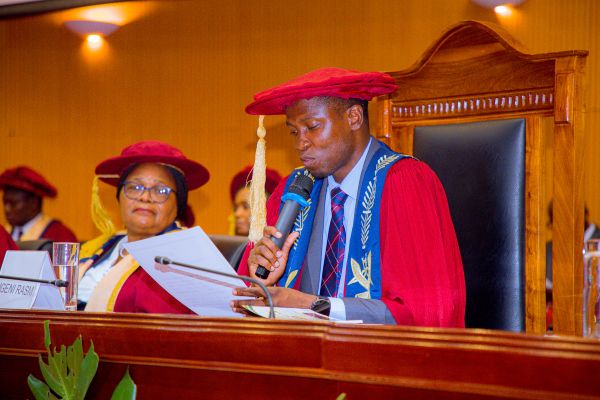
Speaking on behalf of Finance Minister Ambassador Khamis Mussa Omar at NBAA’s 49th graduation ceremony at the APC Conference Centre in Mbweni, Dar es Salaam, Luswetula said the accounting profession could not afford to lag behind technological change.
“The whole world is moving towards the use of artificial intelligence, and NBAA, together with other stakeholders, needs to assess how prepared we are for this revolution, particularly by ensuring that our training curricula have been revised to reflect the direction the world is taking,” he said.
The warning reflects a changing environment for accounting professionals as technology increasingly takes over routine processes, requiring accountants to develop skills that complement rather than compete with automation.
Luswetula said professionals should be prepared to use AI to improve efficiency and productivity, rather than risk being left behind as technology changes the way financial work is performed.
Skills gap remains
Technology, however, is only one part of the challenge.
Luswetula said Tanzania still needs to increase the number of qualified accountants and auditors to meet demand from both the public and private sectors.
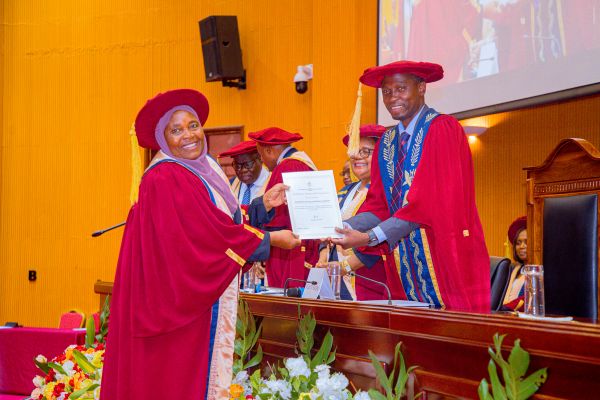
He stressed that expansion should not come at the expense of professional standards, saying competence, integrity and trust remain central to a profession responsible for safeguarding and managing financial resources.
Accountants and auditors, he said, occupy a critical position in protecting national resources and supporting the wider economy.
The government also wants NBAA to address the gap between classroom education and workplace requirements.
Luswetula said many accounting graduates acquire substantial theoretical knowledge but encounter difficulties when they enter employment because they have had insufficient exposure to practical working environments.
“I urge NBAA, in collaboration with various stakeholders, to find a solution to the shortage of practical training opportunities for accounting graduates,” he said.
The government, he added, would continue working with NBAA, including supporting efforts to ensure the professional body has sufficient skilled personnel to perform its regulatory and development functions.
90,000 professionals by 2050
NBAA Board Chairperson CPA Prof Sylvia Temu said the regulator is positioning the profession to support Tanzania’s long-term economic transformation under the National Development Vision 2050.
Under its five-year strategic plan, NBAA aims to help Tanzania build a pool of at least 90,000 highly qualified accounting professionals by 2050, while aligning professional standards with international requirements.
Prof Temu said NBAA continued to administer professional examinations, oversee the integrity of accounting and audit firms and provide continuing professional development to accountants, auditors, candidates, trainers and other stakeholders during 2025/26.
The Board is also expanding into emerging areas of professional practice as businesses face new reporting and governance requirements.
These include environmental, social and governance (ESG) issues and sustainability reporting, areas that are becoming increasingly relevant to companies, investors and financial institutions.
NBAA also participates in international and regional professional bodies, including the International Federation of Accountants (IFAC), the Pan African Federation of Accountants (PAFA) and the association of professional accounting bodies in East Africa.
According to Prof Temu, those relationships are intended to strengthen the competitiveness of Tanzanian professionals in the domestic, African and international professional-services markets.
681 professionals graduate
NBAA Executive Director CPA Prof Siasa Mzenzi said the Board has held graduation ceremonies twice annually since 2022, enabling successful candidates to receive their certificates sooner and use their qualifications for employment and career progression.
He called on public and private-sector employers to absorb the newly qualified professionals while pledging continued investment in emerging disciplines, particularly sustainability reporting.
A total of 681 professionals graduated from seven programmes at the 49th ceremony.
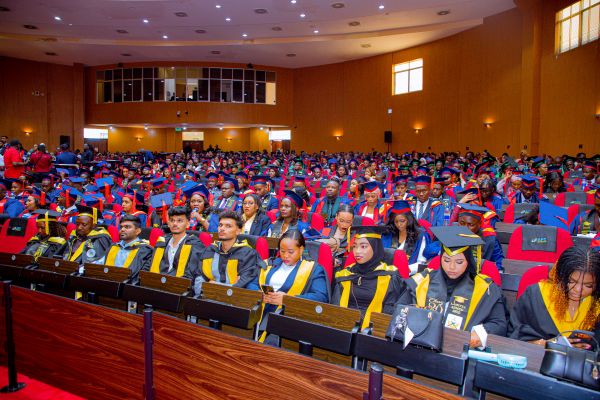
They included graduates in Accounting Technician qualifications, Certified Public Accountant (CPA), CPA Equivalent, International Public Sector Accounting Standards (IPSAS), Internal Auditing and Sustainability Reporting.
As AI takes on a growing share of routine financial work, Tanzania’s challenge will increasingly extend beyond producing more accountants. The bigger task will be producing professionals equipped for an era in which technology handles more of the processing, while human expertise shifts towards analysis, judgement, assurance, strategy and accountability.