
By Business Insider Reporter
The sharp pullback in global gold prices is emerging as a watch point for Tanzania’s external sector, where the precious metal has become the country’s single largest merchandise export and a major source of foreign-exchange earnings.
Spot gold fell more than two percent on Tuesday, its lowest level in two weeks, as rising US Treasury yields and a stronger dollar reduced the appeal of the non-yielding asset, while a break below its 200-day moving average triggered additional technical selling.
Spot gold fell 2.4 percent to US$4,342.20 an ounce, according to market data cited by Reuters, after touching its lowest level since August 19. The decline followed a more than three percent fall on Friday, extending a pullback from the metal’s more than three-month high reached last week.
For Tanzania, however, the significance of the correction goes beyond financial markets.
Gold has become the country’s most important merchandise export and one of its largest sources of foreign exchange. This means sustained movements in international prices can have a direct bearing on the value of Tanzania’s exports, the supply of dollars into the economy and, ultimately, the country’s trade and current-account position.
Data from the Bank of Tanzania (BoT) show that the value of gold exports rose to US$5.44 billion in the year ending April 2026, from US$3.82 billion a year earlier. That means gold accounted for almost half of Tanzania’s merchandise export earnings during the period.
The scale of the exposure is even clearer when compared with Tanzania’s overall trade position. Strong gold exports have helped offset the country’s merchandise trade deficit by providing substantial foreign-exchange receipts with which to finance imports.
A sustained fall in gold prices, therefore, could reduce the dollar value of Tanzania’s exports even if mining companies maintain the same physical production volumes.
The impact would not necessarily be immediate or one-for-one, since export earnings also depend on production volumes, the exchange rate, costs, taxes, royalties and the timing of shipments. Nevertheless, with gold representing such a large share of merchandise exports, prolonged weakness in bullion prices could become an important external-sector consideration.
The latest gold sell-off has been driven largely by developments in the United States and global financial markets.
US Treasury yields climbed to multi-year highs as renewed Middle East tensions pushed up inflation concerns and contributed to a global bond sell-off. Higher yields increase the opportunity cost of holding gold, which does not generate interest income.
At the same time, the dollar strengthened, making gold priced in US dollars more expensive for buyers using other currencies.
Markets have also increased expectations of tighter US monetary policy after Federal Reserve Chair Kevin Warsh indicated that more work could be required to bring inflation back towards the central bank’s two percent target. Traders were pricing in about a 66 percent probability of a September rate increase at the time of Tuesday’s sell-off.
The combination creates a difficult short-term environment for gold: stronger yields make interest-bearing assets more attractive, while a stronger dollar weighs on demand for dollar-denominated bullion.
What it means for Tanzania
For Tanzania’s gold exporters, the immediate implication is potentially lower export revenue per ounce if the price decline persists. But the effect on the national economy depends on how deep and prolonged the correction becomes.
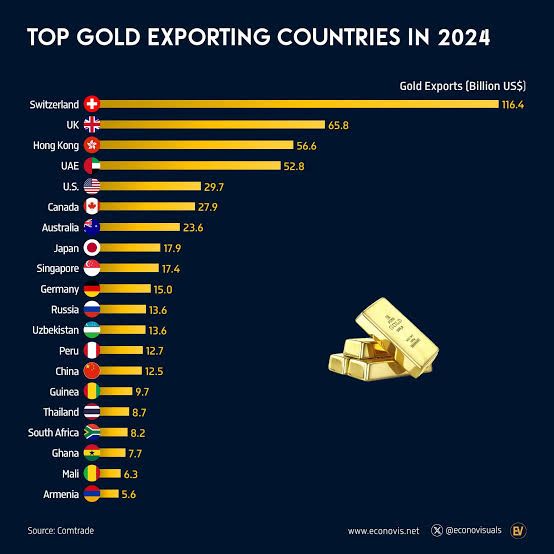
Gold’s contribution extends beyond mining companies. Export receipts generate foreign currency that can help finance imports, support foreign-exchange liquidity and reduce pressure on the balance of payments.
The precious metal is therefore an important component of Tanzania’s current-account story. Stronger gold receipts have contributed to the improvement in the country’s external position, alongside tourism, manufactured goods and agricultural exports.
This makes diversification increasingly important.
A gold price correction does not automatically signal a deterioration in Tanzania’s economy, particularly if other exports continue to expand. But the latest market movement reinforces the importance of developing a broader export base capable of generating foreign exchange across different commodity and service cycles. For policymakers and the mining industry, the current episode also highlights the importance of maximising the domestic economic value of gold while prices remain favourable—from production and formalisation of small-scale mining to local procurement, investment, government revenues and value addition.