By Business Insider Reporter
Africa is entering one of the most consequential periods of its development journey.
With the 2030 deadline for the Sustainable Development Goals (SDGs) drawing closer and the African Union’s Agenda 2063 continuing to shape the continent’s long-term ambitions, the central question is no longer whether Africa can recover from successive shocks, but whether it can use those shocks to accelerate structural transformation.
That is the powerful message emerging from the 2026 Africa Sustainable Development Report, released on August 7, which assesses the continent’s development trajectory against a backdrop of geopolitical instability, climate pressures, fiscal constraints, demographic change and a fragmented global economic environment.
Its warning is particularly relevant to Tanzania, which has just entered the implementation phase of its own long-term development strategy, Dira 2050.
The report argues that Africa must move beyond a cycle of crisis management towards “transformative, coordinated and forward-looking action”. For Tanzania, this is more than a continental policy recommendation. It provides a timely test of whether Dira 2050 can equip the country to withstand external shocks while simultaneously building a more productive, competitive and resilient economy.
A changing global environment
The report highlights how instability in the Middle East has amplified energy and food-price volatility, disrupted trade routes and increased uncertainty across African economies. These developments demonstrate an uncomfortable reality: African development is increasingly influenced by events far beyond the continent’s borders.
For Tanzania, the implications are significant. Energy prices affect manufacturing, transport, agriculture and household costs. Food-price shocks directly affect consumers and farmers. Disruptions to international shipping can affect imports, exports and supply chains.
The strategic response, therefore, cannot simply be to manage each crisis as it emerges. Tanzania needs to strengthen the domestic productive capacity that reduces its vulnerability to external shocks.
This places food security, energy security, industrialisation, infrastructure and efficient logistics at the centre of the Dira 2050 implementation agenda.
Dira 2050 meets Africa’s new development reality
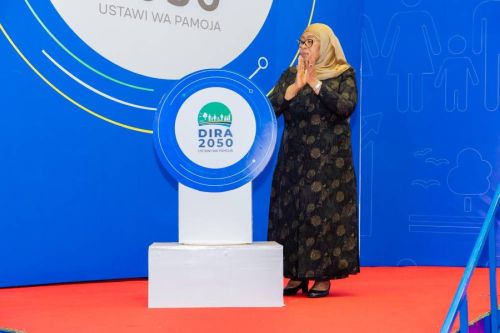
The timing could hardly be more appropriate. Tanzania formally began implementing Dira 2050 on July 1, 2026, with the Fourth Five-Year National Development Plan providing the first major implementation vehicle. The Government has also explicitly linked the SDGs to Dira 2050, stating that the long-term vision will accelerate implementation of the global goals by embedding them into national development plans.
This alignment is important because Tanzania does not have to choose between the SDGs and its own development ambitions. Properly implemented, the two agendas can reinforce each other.
Indeed, Tanzania has identified modern agriculture, industrial development, the blue economy, climate resilience, digital transformation, human-capital development and domestic resource mobilisation among its priorities for the coming period. These priorities closely correspond with the structural challenges identified by the African report.
The real challenge is now execution.
From natural resources to productive wealth
Africa’s greatest development opportunity remains its enormous natural and human-resource base. But resources alone do not create prosperity.
For Tanzania, the issue is how to convert agricultural land, minerals, fisheries, forests, tourism assets, strategic geography and a growing population into higher productivity, better jobs, stronger exports and greater domestic value addition.
Agriculture provides perhaps the clearest example. Greater food production is important, but the bigger opportunity lies in moving from primary production into storage, processing, packaging, logistics and regional and international markets.
The same principle applies to minerals, fisheries and the blue economy. Tanzania’s development challenge is increasingly about capturing more value from resources within the country rather than simply extracting or exporting them in relatively low-value forms.
This is where industrialisation becomes central to sustainable development.
The Government’s five-year partnership with UNIDO for inclusive and sustainable industrial development reflects this direction, bringing together government, the private sector, development partners and financial institutions to support implementation of Dira 2050.
The demographic opportunity
The report’s emphasis on demographic pressures also carries a major lesson for Tanzania. A young and expanding population can either become one of the country’s greatest economic assets or one of its biggest development pressures.
The difference will depend on whether Tanzania can create productive employment, provide relevant skills and connect young people to expanding sectors of the economy.
This makes human-capital development inseparable from economic transformation. Education must increasingly be connected to employability, entrepreneurship, technology and the needs of productive sectors.
The same logic applies to digital transformation. Digitalisation should not be viewed merely as an improvement in government services. It can reduce transaction costs, widen financial access, improve business efficiency, create new industries and connect Tanzanian enterprises to regional and global markets.
Financing the transformation
The report also highlights fiscal pressures confronting African countries. This is an important warning because ambitious development plans require equally ambitious financing strategies.
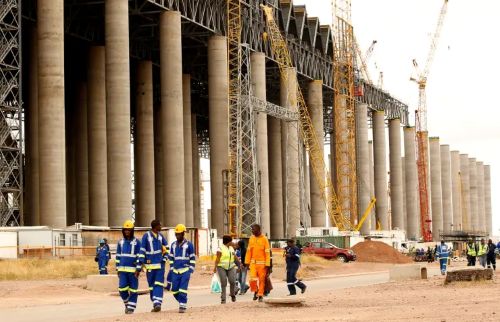
Tanzania will need to mobilise more domestic resources while creating an environment capable of attracting private capital and long-term investment.
This means improving tax administration and compliance, but also expanding the productive economy so that the tax base grows with it.
Equally important is ensuring that public resources are directed towards investments capable of generating long-term economic returns.
The development of infrastructure, energy systems, irrigation, digital networks, industrial parks, logistics and human capital should therefore be viewed not simply as expenditure, but as foundations for future productive capacity.
Climate resilience is economic resilience
Climate change adds another dimension to the transformation challenge.
For Tanzania, climate resilience is directly linked to agriculture, water, infrastructure, tourism, coastal communities and food security. Building resilience therefore cannot remain an environmental side issue. It must become part of mainstream economic planning and investment.
This is consistent with Dira 2050’s broader ambition of building a resilient and sustainable economy. The Vision envisages Tanzania becoming an industrialised, knowledge-based upper-middle-income country with a US$1 trillion economy by 2050, supported by productive agriculture, skilled human capital, reliable electricity, modern infrastructure and digital transformation.
The real test is implementation
Ultimately, the 2026 Africa Sustainable Development Report presents Tanzania with a strategic opportunity.
The country already has a long-term vision. It has begun implementing Dira 2050, aligned it with the SDGs and identified many of the sectors required for structural transformation.
The challenge now is to convert strategy into measurable economic outcomes.
The success of Dira 2050 will not be determined simply by the number of projects launched or the rate of headline GDP growth. It will be judged by whether Tanzania can generate more productive jobs, higher incomes, stronger domestic enterprises, greater value addition, increased exports, improved resilience and better living standards.
That is ultimately the difference between recovering from crises and transforming because of them. For Tanzania, the message from Africa’s 2026 sustainability assessment is therefore clear: the next phase of development cannot be about merely absorbing shocks. It must be about building an economy strong enough, diversified enough and innovative enough to withstand them—and ambitious enough to turn Africa’s structural challenges into opportunities for sustainable prosperity.