By Our Correspondent, Arusha
East African Community (EAC) countries are stepping up efforts to harmonise education systems, strengthen skills development and increase investment in teachers as the region seeks to build a workforce capable of powering deeper economic integration.
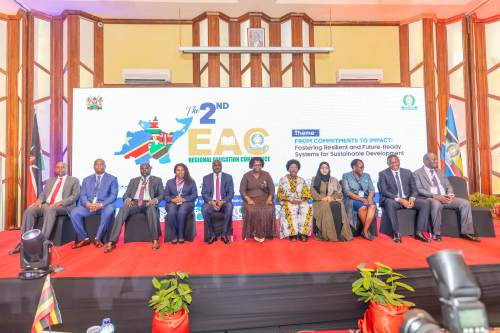
More than 600 policymakers, education leaders, researchers and other stakeholders from the eight EAC Partner States are meeting in Nairobi for the second EAC Regional Education Conference, where education is being positioned as a critical pillar of the region’s economic transformation.
The four-day conference is examining persistent learning gaps, unequal access to education, skills mismatches and pressure on national education systems, while seeking practical measures to make education more responsive to the needs of East Africa’s increasingly integrated economy.
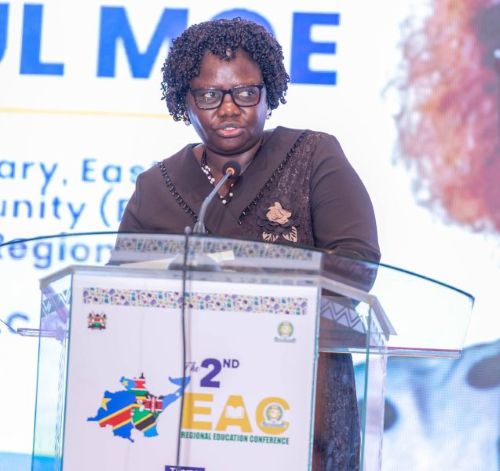
Opening the conference, Kenya’s Cabinet Secretary for East African Community (EAC) and Arid and Semi-Arid Lands, Beatrice Askul Moe, representing President William Ruto, called for greater investment in teacher training, professional development and better working conditions.
“As regional integration deepens, our systems must become more interoperable,” she said, stressing that learners should be able to move between Partner States without disruption to their education.
She also called for curriculum reforms to be matched by investment in teachers, arguing that educators should increasingly be viewed as part of an East African professional community rather than confined to individual national systems.
The push for greater harmonisation comes as the EAC seeks to remove barriers to the movement of people, capital, goods and skills across the region. Education systems that recognise common qualifications and produce workers with comparable competencies could become an important enabler of that process.
Skills at the centre
Uganda’s First Deputy Prime Minister and Minister for East African Community Affairs, Rebecca Alitwala Kadaga, said education policies, curricula and qualifications need to be better aligned to support the movement of learners and skilled workers across borders.
The EAC has already begun laying the institutional foundations for such integration.
EAC Deputy Secretary General responsible for Productive and Social Sectors, Ariik Malueth, said the Community has developed an East African TVET Qualifications Framework, which is awaiting approval.
The framework is expected to improve recognition of technical and vocational qualifications, facilitate skills mobility and strengthen the connection between training institutions and the regional labour market.
For businesses, that could be significant. A more integrated skills market would make it easier for companies operating across East Africa to recruit workers with recognised qualifications while reducing mismatches between what education systems produce and what employers need.
The EAC is also developing guidelines for compiling comparable education statistics and advancing the East African Common Higher Education and Research Area, with a focus on innovation, partnerships and mobility of knowledge and graduates.
“These initiatives demonstrate that regional cooperation in education is already producing practical frameworks,” Malueth said. “Our responsibility now is to ensure that these frameworks translate into better learning, stronger institutions, relevant skills and greater opportunities for East Africans.”
Tanzania backs foundational learning
Tanzania’s Minister for Education, Science and Technology, Prof Adolf Mkenda, called for greater emphasis on foundational learning, alongside continued investment in teachers, quality education and skills development.
He said stronger education systems would be essential to equipping young people with the knowledge, competencies and adaptability required in a rapidly changing world of work.
The challenge, however, extends beyond access.
Despite significant expansion of education across the region, inequalities remain pronounced among rural and marginalised communities, children with disabilities and other vulnerable groups. Teacher shortages, limited resources and weak transitions between education levels continue to constrain opportunities for millions of young East Africans.
For businesses and policymakers, the implications are broader than education policy. Persistent skills gaps can limit productivity, constrain investment and make it harder for economies to capture opportunities created by regional integration.
Dr Mary Goretti, Executive Director of Uwezo Uganda and Board Chair of RELI Africa, urged policymakers to strengthen the connection between evidence, policy and implementation so that education reforms deliver measurable improvements in learning.
From policy to implementation
The Nairobi meeting is reviewing progress since the first regional education conference held in Arusha in 2024, with particular attention to implementation gaps.
Discussions are focusing on early and foundational learning, teacher development, inclusive education, digitalisation, innovation, TVET, industry-education linkages, research and data, financing and governance.

The conference is expected to produce policy recommendations and a roadmap outlining regional commitments, priority initiatives, timelines and implementation steps.
The economic case for such action is becoming increasingly difficult to ignore.
As East Africa pursues deeper integration and seeks to attract investment, expand manufacturing, accelerate digitalisation and create jobs for its rapidly growing young population, the quality and portability of its human capital will increasingly determine how much value the region extracts from those opportunities. The conference therefore represents more than an education policy gathering. It is part of a wider regional conversation about whether East Africa can build the skills base needed to compete, produce and innovate as a single, increasingly connected market.