
By Business Insider Reporter
Rwanda has signalled interest in becoming an investor in Nigerian billionaire Aliko Dangote’s proposed oil refinery in East Africa, a move that could reshape the region’s energy landscape and strengthen Africa’s push for industrial self-reliance.
President Paul Kagame said Rwanda would be pleased to participate in the project, although discussions remain at an early stage.
Speaking at a press conference in Kigali on August 24, Kagame confirmed that conversations had taken place regarding Rwanda’s potential acquisition of a stake in the planned refinery, which is expected to be constructed in the Kenyan port city of Lamu.
“In a way, there has been [a conversation]. But it is too early to talk about the details because I think it is work in progress. Things are still being thought out,” Kagame said.
“What I can say is that Rwanda would be very happy to be part of that kind of investment.”
The refinery, estimated to cost around US$16 billion, is expected to process up to 700,000 barrels of crude oil per day, placing it among the world’s largest refining facilities and matching the scale of Dangote’s flagship refinery in Lagos, Nigeria.
Media reports indicate that Kenya, Rwanda and Uganda have been offered a combined 30 percent stake in the project, with regional investments potentially reaching US$1.5 billion.
Beyond the refinery itself, additional investments in petrochemical industries and port infrastructure could raise the total value of the project to nearly US$20 billion, according to David Ndii, economic adviser to Kenyan President William Ruto.
Construction is expected to begin later this year, with the project likely to take between three and five years to complete.
Transforming East Africa’s energy economy
The proposed refinery comes at a time when African economies are increasingly seeking to process their own natural resources instead of exporting raw materials and importing expensive refined products.
East Africa currently relies heavily on imported fuels from the Middle East, Asia and Europe, exposing countries to global price fluctuations, supply disruptions and foreign exchange pressures.
A large regional refinery could significantly reduce these vulnerabilities by creating a stable supply of petroleum products closer to key markets.
For Tanzania, the project carries important strategic implications.
As one of East Africa’s fastest-growing economies and a major logistics hub, Tanzania stands to benefit from improved regional fuel security, lower transportation costs and expanded trade opportunities in petroleum products.
The country’s growing demand for fuel – driven by industrialisation, transport, mining and infrastructure development – means that regional refining capacity could become an important factor in supporting economic growth.
The refinery also aligns with broader continental efforts to promote value addition, industrialisation and regional integration under the African Continental Free Trade Area (AfCFTA).
Dangote’s expanding African footprint
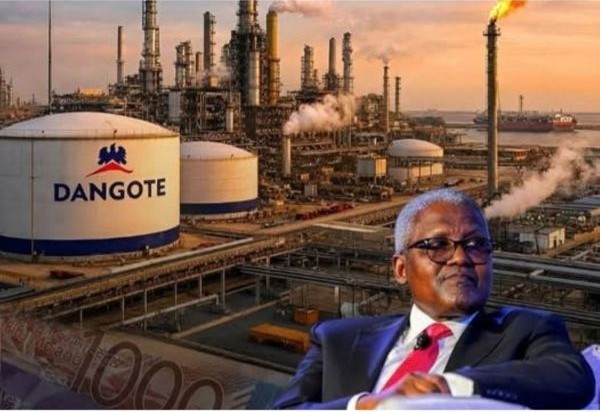
The planned East African facility would build on the success of Dangote Petroleum Refinery in Lagos, which has a processing capacity of 650,000 barrels per day and has already transformed Nigeria’s downstream petroleum sector.
The Nigerian refinery has reduced the country’s reliance on imported fuel while opening new export markets across Africa.
An East African refinery of similar scale would further strengthen Dangote Group’s influence in Africa’s energy industry and could position the continent as a major player in refined petroleum products.
For regional governments, participation in such projects is increasingly viewed not merely as an investment opportunity but as a strategic move to secure energy supplies and accelerate industrial transformation.
Rwanda’s interest, therefore, may signal the beginning of a new model of African-led investment in large-scale infrastructure projects – one where countries pool resources to develop industries capable of driving long-term economic growth.
If realised, the Lamu refinery could become one of East Africa’s most significant industrial investments, reshaping energy trade patterns and deepening economic integration across the region. For Tanzania and its neighbours, the project offers a glimpse of a future where Africa not only produces energy resources but also processes, trades and benefits from them within the continent.